![[등록] 2026-09-01 15:48:31](/support/_updata/banner2/tl181982910_6749.png)


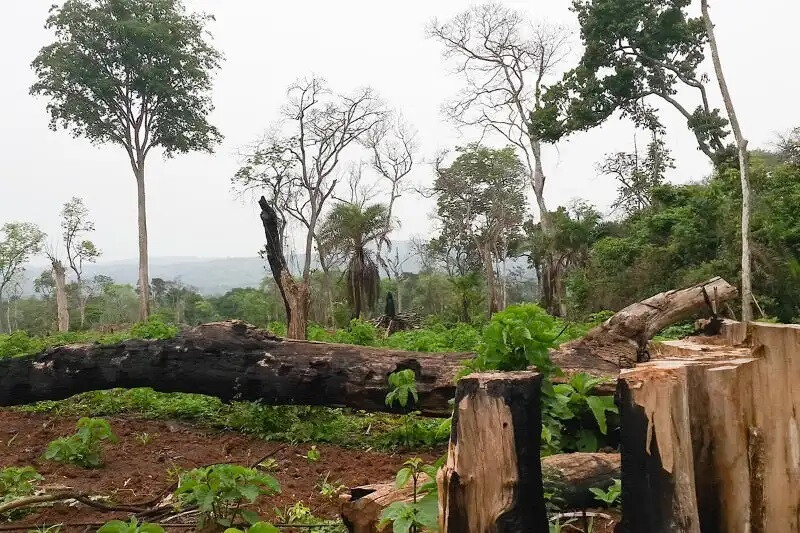
The Philippines embarked on one of the world's most ambitious reforestation efforts, but recent satellite data and field reports are raising doubts about the program's effectiveness. Despite the vast number of trees planted, there's growing skepticism about whether the program is genuinely restoring forests.
Ambitious Plans, Frustrated Reality
Launched in 2011, the Philippine National Greening Program (NGP) was envisioned as an ambitious response to decades of rampant deforestation in the 1970s and 1980s. The program aimed to plant 1.8 billion seedlings across 2 million hectares (approximately 4.9 million acres). Professor Marlo Mendoza of the University of the Philippines, a designer of the program, acknowledged the disconnect with reality, stating, "We mobilized every citizen to plant trees, but where exactly were those trees planted?"
The NGP's initial goals included enabling indigenous and farming communities to cultivate crops within forests, former loggers to manage tree plantations, and planting millions of native trees to sequester carbon and protect wildlife. However, Professor Mendoza confessed, "I created the manual, but many of its provisions were not followed."
Satellite Analysis Reveals Shocking Truth: 'Greenwashing' Controversy
Analysis of millions of satellite images revealed that large-scale deforestation occurred on 1 in 25 hectares of NGP sites. This paradoxical situation means that instead of barren land being reforested, forests were cleared either just before or during the greening efforts. Environmental investigators are pointing to these findings as a new pattern of "greenwashing" – a marketing tactic that makes products or services appear more environmentally friendly than they are.
Timber and fruits, the most commonly cultivated crops on NGP sites, have the potential to receive a 'green stamp' and be exported globally. This is happening despite the European Union Deforestation Regulation (EUDR), which prohibits trade in products sourced from land deforested after 2020. Investigators suggest that products from these sites are falsely claimed to be sustainably grown.
Furthermore, analysis indicates that forest loss on NGP sites could be even more extensive than previously understood. Some communities even utilized NGP funds to clear old-growth forests. Eduardo Corona, a forest ranger in Palawan, expressed his frustration at being unable to prevent NGP from being used to clear native forests. Similar issues were discovered in the UNESCO-recognized Mount Mantalingahan Protected Landscape.
In response, the Forest Management Bureau (FMB) of the Philippine Department of Environment and Natural Resources (DENR) stated that some deforestation was part of site preparation, particularly in areas dominated by invasive species, and was necessary for native species to thrive. They also explained that program monitoring after the three-year planting contract is limited due to budget constraints, and field checks are conducted through sampling rather than full verification.
Lack of Community Support and Monoculture Problems
Independent audits and field reports point to deeper issues within the NGP, including inappropriate site selection, insufficient community support, and weak long-term sustainability plans.
One of the NGP's main selling points was to provide communities with unused land to sustain their livelihoods and prevent them from clearing forests. However, the process for applying for long-term land tenure is so complex that most communities only secure three-year short-term tenure. Professor Mendoza warned, "Community groups can become frustrated and resort to illegal dealings, forcing them to illegally cut down trees."
Moreover, while the NGP was designed to allow communities to grow local produce for self-sufficiency, most communities are forced to cultivate risky cash crops for overseas export, including to the EU. Mendoza emphasized that for the NGP to work as intended, communities should be given time and the option to figure out a sustainable mix of crops that ensures family income.
Even when communities secure tenure guaranteeing land access for 25 years, the government's mandate for community groups to cultivate single cash crops is problematic. Monoculture is vulnerable to all the problems of single cropping, including market collapse, disease, and biodiversity loss. Of the 1 million hectares of designated production sites, only half have tenure, and 6 out of 10 hectares of these are monoculture, offering very low sustainability for communities. One-third of NGP land has neither tenure nor monoculture, which is considered the least sustainable combination.
Forgotten Native Forests and Biodiversity
The NGP aimed to regenerate and protect native rainforests. However, in some protected areas—where native rainforests and their accompanying biodiversity should thrive—among the 130,000 NGP sites covering over 2 million hectares across the Philippines, there is little to no tree cover. The latest satellite images show that over a third of these sites have no tree cover at all. This highlights the urgent challenge that the NGP must not just plant trees, but truly focus on restoring ecosystems and building a sustainable future.
Despite its ambitious beginnings, the Philippines' NGP is revealing serious flaws in terms of qualitative aspects and sustainability, beyond just emphasizing quantitative achievements. These issues suggest the need for a reevaluation of government policy, expanded community participation, promotion of sustainable crop cultivation, and stronger efforts to protect native forests.
Philippines' Large-Scale Reforestation Project: A 'White Elephant' Controversy
The Philippines initiated one of the world's most ambitious reforestation projects, the National Greening Program (NGP), to combat decades of deforestation. However, criticisms are mounting that its actual achievements fall short of expectations. Satellite data and field reports are intensifying doubts about whether this program is genuinely restoring forests.
Ambitious Goals, Dismal Reality
Launched in 2011, the NGP set a target of planting 1.8 billion seedlings across 2 million hectares (approximately 4.9 million acres). Professor Marlo Mendoza of the University of the Philippines, the project's designer, envisioned an ideal scenario where millions of native trees would be planted to sequester carbon and support wildlife, and even indigenous and farming communities would cultivate crops within forests, while former loggers managed tree plantations. However, Professor Mendoza himself admitted that this dream was far from the reality on the ground. He questioned, "We mobilized the entire nation to plant trees, but where have all those trees gone?" He also pointed out that the guidelines he created were not properly followed.
Shocking Results from Satellite Data and Field Reports
Analysis of millions of satellite images raises serious concerns that the NGP might be nothing more than "greenwashing." The analysis shows that 1 in 25 hectares of NGP project sites experienced significant forest destruction. In other words, instead of barren land being reforested, there was a paradoxical situation where forests were cleared either before or during the reforestation efforts. This was particularly evident in areas managed by communities with short-term land access rights. These communities were tied to unstable international commodity markets and were forced to cultivate single cash crops, failing to secure a stable income.
Even in the Mount Mantalingahan Protected Landscape, a UNESCO World Heritage site in the Philippines, there were reports of native forests being cleared using NGP funds. Local forest monitor Eduardo Corona expressed his powerlessness despite his efforts to prevent such situations. The Forest Management Bureau (FMB) of the Department of Environment and Natural Resources (DENR) explained that some forest clearing was part of site preparation and a necessary measure to help native species grow in areas dominated by invasive species. They also added that program monitoring is limited due to budget constraints, and field checks are conducted through sampling rather than comprehensive surveys. However, independent audits and field reports indicate that fundamental issues such as inappropriate site selection, limited community support, and the absence of long-term sustainability plans remain unresolved.
Community Neglect and the Harms of Monoculture
One of the NGP's main advantages was to provide communities with unused land, eliminating the need to clear forests for livelihood. However, the process of securing land ownership is so complex that most communities forgo long-term ownership and can only access the land for three years. Professor Mendoza cited cases of communities gaining land access but not harvesting rights, which often leads to despair and illegal logging.
Furthermore, while the NGP was designed to allow communities to grow local produce for self-sufficiency, most communities were forced to cultivate risky cash crops exported to the European Union (EU). Monoculture is an unsustainable farming practice, vulnerable to market fluctuations, diseases, and biodiversity loss. Of the 1 million hectares of designated production sites, just over half had long-term ownership secured, and 6 out of 10 hectares of these were monoculture sites. This is considered the most vulnerable combination, hindering the sustainable livelihoods of communities.
Forgotten Native Forests
The NGP aimed to restore and protect native rainforests. However, in some areas designated as protected within the 130,000 NGP sites covering over 2 million hectares across the Philippines, there was little to no tree cover. The latest satellite images show that over a third of these sites are completely barren. This clearly indicates that the NGP is far from its original goal of restoring native forests.
Despite its ambitious start, the Philippines' NGP has failed to achieve its expected outcomes due to complex administrative procedures, community neglect, the imposition of monoculture, and inadequate monitoring. Evidence of ongoing deforestation alongside greenwashing controversies suggests that the Philippines' reforestation efforts may currently be nothing more than a 'white elephant.' Concerns are growing that this could lead to the failure of both sustainable forest restoration and symbiotic relationships with local communities.
[Copyright (c) Global Economic Times. All Rights Reserved.]