![[등록] 2026-09-01 15:48:31](/support/_updata/banner2/tl181982910_6749.png)


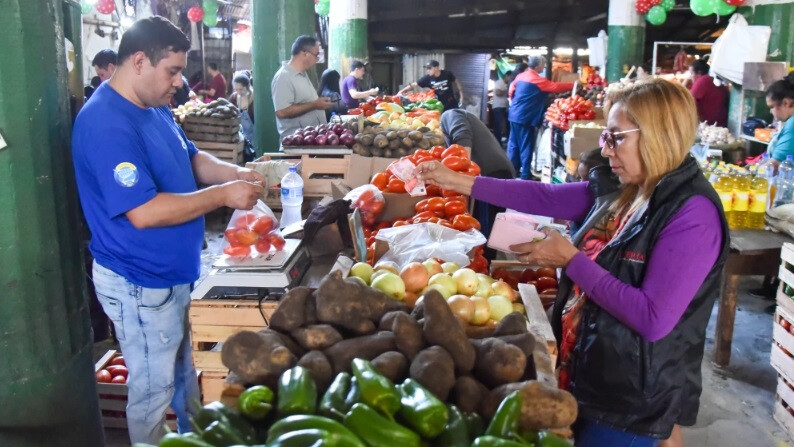
In Paraguay, the prices of vegetables and fruits have surged by an average of over 30% in the past five months, placing a significant burden on household economies. According to a recent report by the Central Bank of Paraguay (BCP), vegetable and fruit items recorded a price increase of up to 30.8% between December 2024 and April 2025. Although some items saw price decreases in April, high price levels have persisted into May, continuing to strain consumers.
This sharp rise in vegetable and fruit prices is considered a particularly serious issue as these are essential consumer goods for Paraguayan households. The increase in food prices directly leads to a greater burden on household expenses, inevitably having a negative impact on the overall economy of ordinary citizens.
The main causes of the price surge are analyzed to be a combination of poor harvests due to climate change, increased logistics costs, and Paraguay's high dependence on imports. In particular, fluctuations in supply due to seasonal factors are also pointed out as a factor exacerbating price volatility.
According to the BCP report, there was a slight decrease in the price of some items in April. However, an analysis of wholesale market data from the Ministry of Agriculture and Livestock (MAG) confirmed that the prices of many vegetable and fruit items remain high. This suggests that temporary price adjustments alone are insufficient to resolve the fundamental price instability.
Price Fluctuation Trends by Item
Tomatoes have shown the most significant price volatility in recent months. Due to a decrease in domestic production and high prices in neighboring countries, the price of tomatoes has skyrocketed by a staggering 233% from December of last year to May 2nd of this year. The price of a box of tomatoes, which was previously 55,000 guaraníes, has soared to 183,500 guaraníes, equivalent to an increase of approximately 6,500 guaraníes per kilogram. According to the BCP's inflation report, tomatoes were one of the main drivers of overall inflation in April, recording a price increase of 20.6% in that month alone.
Bell peppers (locally known as "locote") also showed a high cumulative price increase of 184% over the past five months. The price of bell peppers rose from 3,700 guaraníes to 10,500 guaraníes per kilogram. However, they showed a somewhat stable trend in April with a price decrease of -25.4%.
The price of domestically produced squash has risen by 135% since December 2024, with the price of a bag increasing significantly from 56,700 guaraníes to 133,500 guaraníes.
In addition, the price of red bell peppers almost doubled, rising from 125,000 guaraníes to 230,000 guaraníes per box, and the price of leeks (locally known as "puerro") increased by 33% from 15,000 guaraníes to 20,000 guaraníes per dozen. The prices of cabbage, arugula, and celery have also заметно increased per bag or dozen, adding to the burden on consumers' grocery bills.
In the fruit category, the price of fiberless mangoes saw a notable surge, increasing by 118,500 guaraníes from 50,000 guaraníes to 168,500 guaraníes per box. The price of red grapes from Argentina also rose by 80,000 guaraníes from 140,000 guaraníes to 220,000 guaraníes per box, and the price of green apples increased by 8%. Pineapples and kumquat bananas also recorded slight price increases.
On the other hand, lemons showed a clear downward price trend. The price of Japanese lemons plummeted by over 70% from 113,500 guaraníes to 31,700 guaraníes over the past five months, and the price of Tahitian lemons also fell significantly from 110,000 guaraníes to 50,000 guaraníes. This illustrates how changes in the supply and demand of specific items can significantly impact price fluctuations.
Meanwhile, the price of rice remained stable at 7,000 guaraníes per kilogram, and the prices of white corn and feijão (beans) saw slight decreases, providing a minimal level of relief to consumers.
Future Outlook and Policy Challenges
Experts predict that the upward trend in vegetable and fruit prices in Paraguay will be difficult to halt in the short term. The uncertainty of climate change and high import dependence are likely to continue exerting upward pressure on prices. In particular, instability in global supply chains and fluctuations in international oil prices should not be overlooked as they can indirectly affect Paraguayan prices.
Therefore, the Paraguayan government must actively work on long-term investments to improve agricultural productivity and formulate policies to stabilize the domestic supply chain. It needs to seek ways to reduce import dependence and strengthen the competitiveness of local farmers. Additionally, as short-term measures to stabilize prices, efforts to strengthen price monitoring and eradicate unfair trade practices should be carried out in parallel.
The continued rise in food prices, which are directly linked to household livelihoods, can amplify social unrest and hinder economic vitality. The Paraguayan government must prioritize price stability and promptly implement effective policies. Consumers, for their part, should pay close attention to price trends and cope wisely with the era of high prices through rational consumption habits.
[Copyright (c) Global Economic Times. All Rights Reserved.]