• 2025.12.13 (Sat)
  • All articles
  • LOGIN
  • JOIN
Global Economic Times
APEC2025KOREA가이드북
  • Synthesis
  • World
  • Business
  • Industry
  • ICT
  • Distribution Economy
  • Well+Being
  • Travel
  • Eco-News
  • Education
  • Korean Wave News
  • Opinion
  • Arts&Culture
  • Sports
  • People & Life
  • Column
    • Cho Kijo Column
    • Lee Yeon-sil Column
    • Ko Yong-chul Column
    • Cherry Garden Story
  • Photo News
  • New Book Guide
MENU
 
Home > World

"I Just Want To Live In Peace" - Malaysian Indian Urges Racial Unity Amidst Social Media Hate

Yim Kwangsoo Correspondent / Updated : 2025-03-28 18:56:51
  • -
  • +
  • Print

KUALA LUMPUR, MALAYSIA - In an increasingly digital age where social media platforms have become breeding grounds for negativity, a Malaysian Indian man has taken to TikTok to passionately call for racial unity and an end to online hate speech. His heartfelt plea resonates with many who are weary of the racial disharmony often stoked by irresponsible users on social media.

The man, who remains unnamed in the initial report, began his message by highlighting the everyday interdependence of Malaysia's diverse communities. "When the Malays are fasting, it's hard for me to get food," he pointed out, illustrating the reliance on Malay vendors. He further humorously noted, "When Indian barbers are not around to give haircuts, the mat rempits become mat tarzans," referring to a local term for motorcycle riders and playfully suggesting they'd have unkempt hair. He also mentioned the necessity of Chinese hardware stores, particularly for those living outside urban centers. "This is the reality of our country," he emphasized, underscoring the interconnectedness of daily life for Malaysians of all backgrounds.

Despite this reality, the man expressed his frustration with the prevalence of hate messages online. "But, we always spread messages of hate on media. What do you get out of this? Even I don’t know," he lamented. He then shared a lighthearted yet poignant reason for his inability to harbor racial animosity towards Malays: "I weigh 80 kilograms. 40 kilograms of my body is made up of the Malay food I eat. Can I hate the Malays? No, I can’t," he declared, using a humorous anecdote to highlight the unifying power of food in Malaysian culture.

The man further illustrated the issue with anecdotes of situations mishandled on social media. He spoke of a car parked illegally, suggesting the appropriate response would be to report it to authorities rather than public shaming online. He also recounted a story of a minor misunderstanding at an office service counter that was resolved amicably, only for one of the involved parties to later post a video alleging racial discrimination. "When I hear about all this, I can’t accept it," he stated, clearly exasperated by the unnecessary escalation of minor incidents into racial accusations online.

His message concluded with a direct and heartfelt appeal: "Please, I just want to live peacefully in this country. Settle our problems, and let’s live together in harmony."

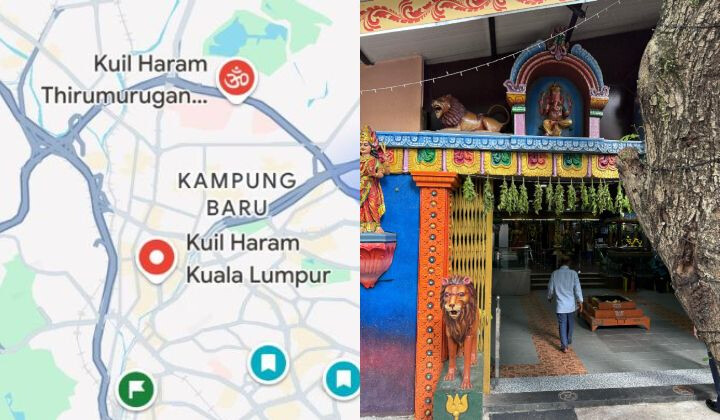
His sentiments echo a growing concern about the misuse of social media to incite racial tensions. The article also referenced a recent incident involving the relocation of the Dewi Sri Pathrakaliamman temple in Jalan Masjid India to accommodate the construction of a mosque. While the matter was resolved amicably between the temple committee, landowner, and government, the situation initially sparked accusations of racial bias online. This example served to highlight the man's central point: "if there’s no problem, why create one? And if you have a problem with someone, why spread them on social media for everyone to see?"

The article concludes by emphasizing the importance of exercising restraint when sharing content online, particularly content that could be harmful to individuals or entire communities. While laws governing social media platforms exist, personal responsibility and a commitment to peaceful coexistence remain crucial in fostering a harmonious online and offline society in Malaysia. The man's simple yet powerful message, "I just want to live in peace," serves as a timely reminder for all Malaysians to prioritize unity over division in the digital age.

[Copyright (c) Global Economic Times. All Rights Reserved.]

  • #globaleconomictimes
  • #글로벌이코노믹타임즈
  • #한국
  • #중기청
  • #재외동포청
  • #외교부
  • #micorea
  • #mykorea
  • #newsk
  • #nammidonganews
  • #singaporenewsk
Yim Kwangsoo Correspondent

Popular articles

  • North Korea Publicly Executes ‘Big-Hand’ Business Couple Over ‘Arrogance’ and Anti-State Charges

  • Hanmi Science Takes Aim at Global Market, Unveiling Three Surgical Hemostats in Germany

  • Kim Whanki's Abstraction Fetches $8.4 Million in New York, Securing Second Highest Price for Korean Art

I like it
Share
  • Facebook
  • X
  • Kakaotalk
  • LINE
  • BAND
  • NAVER
  • https://www.globaleconomictimes.kr/article/1065606931936269 Copy URL copied.
Comments >

Comments 0

Weekly Hot Issue

  • South Korea officially enters 'Multicultural Society' as Migrant-Background Population Surpasses 5%
  • International Multicultural Future Strategy Promotion Agency and Jinjam Hyanggyo Sign Cooperation Agreement: Fusing Tradition and Multiculturalism for Community Harmony
  • South Korea’s Path to Multiculturalism: A Mark of a Top-10 Global Economy
  • Covert Operation: Venezuelan Nobel Laureate Machado's High-Stakes Escape to Claim Peace Prize
  • International Organizations Raise China's Growth Forecasts, Citing Stimulus and Exports
  • US-Japan Counteract Sino-Russian Drills with Joint Bomber Exercise in East Sea Airspace

Most Viewed

1
A Garden Where the City's Rhythm Stops: Dongdaemun's 'Cherry Garden', Cooking Consideration and Diversity
2
The Sudden Halt of Ayumi Hamasaki's Shanghai Concert: Unpacking the Rising Sino-Japanese Tensions
3
Choi Bun-do, Chairman of PTV Group, Assumes Presidency of the Korean Chamber of Commerce and Industry in South Central Vietnam
4
The Paradox of the 'Juvenile Offender' (Chokbeop Sonyeon): Impunity or Unfinished Rehabilitation?
5
South Korea Unveils 'K-Med': A Gigantic leap in Medical AI, Challenging Global Tech Giants
광고문의
임시1
임시3
임시2

Hot Issue

Samsung Launches 'Galaxy Z TriFold,' Draws Crowds Despite $2,750 Price Tag

Mexico Hikes Tariffs on 'Strategic Goods' from South Korea, China, and Other Non-FTA Nations

Tech Tensions Flare: DeepSeek Allegedly Smuggles Banned NVIDIA Blackwell Chips for New AI Model

Netflix Stock Plummets 10% on Credit Downgrade Fears Following Blockbuster Warner Bros. Acquisition

Let’s recycle the old blankets in Jeju Island’s closet instead of incinerating them.

Global Economic Times
korocamia@naver.com
CEO : LEE YEON-SIL
Publisher : KO YONG-CHUL
Registration number : Seoul, A55681
Registration Date : 2024-10-24
Youth Protection Manager: KO YONG-CHUL
Singapore Headquarters
5A Woodlands Road #11-34 The Tennery. S'677728
Korean Branch
Phone : +82(0)10 4724 5264
#304, 6 Nonhyeon-ro 111-gil, Gangnam-gu, Seoul
Copyright © Global Economic Times All Rights Reserved
  • 에이펙2025
  • APEC2025가이드북TV
  • 독도는우리땅
Search
Category
  • All articles
  • Synthesis
  • World
  • Business
  • Industry
  • ICT
  • Distribution Economy
  • Well+Being
  • Travel
  • Eco-News
  • Education
  • Korean Wave News
  • Opinion
  • Arts&Culture
  • Sports
  • People & Life
  • Column 
    • 전체
    • Cho Kijo Column
    • Lee Yeon-sil Column
    • Ko Yong-chul Column
    • Cherry Garden Story
  • Photo News
  • New Book Guide
  • Multicultural News
  • Jobs & Workers