![[등록] 2026-09-01 15:48:31](/support/_updata/banner2/tl181982910_6749.png)


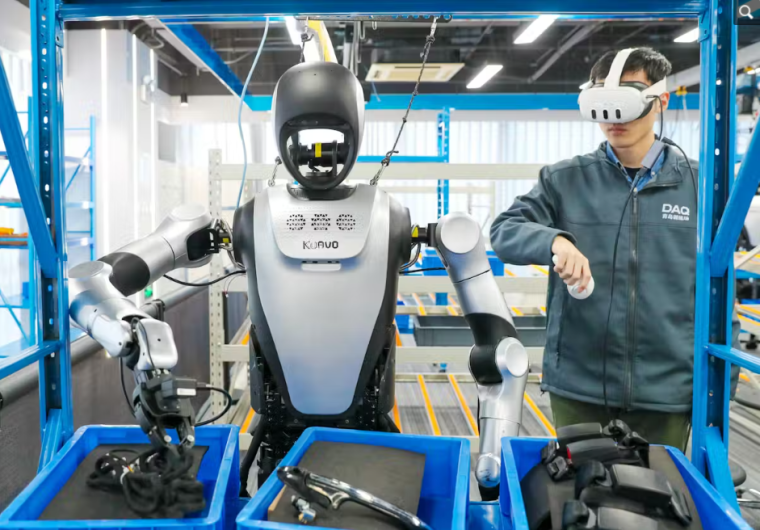
In a monumental milestone for the global robotics ecosystem, Unitree Robotics, one of China’s most prominent humanoid robotics developers, has successfully cleared the regulatory hurdles required for its initial public offering (IPO) on the Shanghai Stock Exchange. The exchange announced via its official portal that Unitree’s application for the Sci-Tech Innovation Board (popularly known as the STAR Market) has been formally approved by the listing review committee, paving the way for a massive capital influx intended to supercharge the company’s technological capabilities.
According to the exchange's statement, Unitree has comprehensively satisfied all prerequisites regarding issuance conditions, structural listing criteria, and stringent information disclosure mandates. The Hangzhou-based robotics innovator is now poised to undergo the final administrative rounds, which include registration and formal signing-off by the China Securities Regulatory Commission (CSRC) before trading commences.
Unitree initially submitted its formal prospectus to the Shanghai bourse on March 20. Through this landmark public float, the company aims to raise approximately 4.202 billion yuan (equivalent to roughly $580 million or 936 billion Korean won). The proceeds are strategically earmarked for a series of high-priority capital expenditures, including the next-generation research and development of sentient humanoid systems, the aggressive expansion of automated production facilities, and the injection of supplementary working capital to sustain its competitive edge in a rapidly crowded marketplace.
Financial Trajectory & Growth Deceleration Unitree’s financial disclosures offer a complex, dual-layered narrative of soaring top-line performance contrasted against compressed profitability metrics. For the first quarter of this fiscal year, Unitree posted a revenue of 423 million yuan ($58.4 million / 94.2 billion won), representing a robust year-on-year increase of 68.49%. While this double-digit expansion would be the envy of legacy industries, it indicates a pronounced deceleration when compared to the staggering 332.64% year-on-year growth trajectory recorded during the corresponding period last year.
Simultaneously, the bottom-line metrics underscore the immense capital intensity currently required to lead the robotics race. Driven by ballooning expenditures in core engineering talent, complex hardware prototyping, and global marketing initiatives, Unitree’s net profit—excluding non-recurring items—slid to 40.25 million yuan ($5.5 million / 9.0 billion won). This marks a sharp 52.55% contraction compared to the first quarter of the prior year, illustrating how severely intense research overheads are biting into current profit margins.
Despite immediate pressure on profitability, Unitree’s management maintains an optimistic forward outlook. The company projected its first-half revenues to range between 1.052 billion and 1.128 billion yuan ($145 million to $155 million). This forecast reflects an anticipated year-on-year growth rate of 35.62% to 45.41%, indicating a stabilizing demand curve as industrial and consumer adoption of quadrupeds and humanoid models gains wider traction globally.
From Martial Arts to Record-Breaking Speed Established in 2016, Unitree Robotics has rapidly ascended to become the poster child of Chinese robotic engineering. The company captured widespread mainstream attention earlier this year during China’s high-profile Lunar New Year Spring Festival Gala, where a fleet of its highly agile robots performed choreographed martial arts routines, showcasing extraordinary degrees of freedom, balance, and real-time kinetic control.
Beyond entertainment, Unitree has consistently pushed the boundaries of mechanical performance. Just last month, the firm announced that its latest proprietary humanoid model had achieved a record-breaking sprint speed of 10.1 meters per second (over 22.5 mph) in short-distance trials. This feat places Unitree at the absolute vanguard of locomotive physics, outstripping many Western counterparts and solidifying its reputation as a formidable challenger to global pioneers like Boston Dynamics and Tesla’s Optimus program.
"Unitree's public listing is more than a corporate milestone; it represents a highly strategic deployment within Beijing's broader master plan to secure absolute sovereignty over foundational frontier technologies."
The Geopolitical and Macroeconomic Underpinnings Market analysts emphasize that Unitree's expedited listing path cannot be viewed in isolation from Beijing's macro-policy framework. Under the overarching national doctrine of 'technological self-reliance and self-strengthening,' the Chinese central government is actively coordinating capital markets to nourish domestic deep-tech champions. The STAR Market has become the primary financial vehicle utilized by authorities to funnel public liquidity directly into strategic sectors, including artificial intelligence, advanced semiconductors, and high-end robotics.
This structural backing is evidenced by a recent flurry of high-tech listings. Memory giant Changxin Memory Technologies (CXMT) recently secured regulatory clearance for its own massive STAR Market IPO, while prominent large language model developer MiniMax has finalized preparatory frameworks for its impending market debut. These sequential market entries signal a highly deliberate, state-encouraged migration of technology firms into domestic capital pools.
Furthermore, this domestic listing boom aligns with aggressive state interventions aimed at halting historic capital flight. Last month, a coalition of eight regulatory bodies, including the CSRC, enacted sweeping policies targeting foreign-linked investment brokerages. This coordinated crackdown led to the forced exit of numerous offshore intermediaries, a move designed to restrict domestic wealth from seeking foreign assets and instead force liquidity back into domestic tech equities.
According to data compiled by Bloomberg, China experienced an unprecedented exodus of short-term speculative capital last year, totaling an estimated $1.04 trillion—the highest volume on record since data collection began. By establishing highly lucrative, technologically progressive local investment options like Unitree and CXMT, while simultaneously blocking outward financial conduits, Beijing seeks to stabilize its capital accounts. The resulting environment effectively transforms domestic savings into the fuel required to win the global robotics war.
[Copyright (c) Global Economic Times. All Rights Reserved.]