• 2026.11.25 (Wed)
  • All articles
  • LOGIN
  • JOIN
Global Economic Times
한인동포뉴스(상단)
  • Synthesis
  • World
  • Business
  • Industry
  • ICT
  • Distribution Economy
  • Well+Being
    • Pet Life
    • Halal Horizon
  • Travel
  • Eco-News
  • Education
  • Korean Wave News
  • Opinion
  • Arts&Culture
  • Sports
  • People & Life
    • International Student Report
    • With Ambassador
  • Column
    • Cho Kijo Column
    • Cherry Garden Story
    • Ko Yong-chul Column
    • Kim Bong-seon's Photo Column
    • Kim Seul-Ong Column
    • Lee Yeon-sil Column
    • Professor Lee Soo-young’s Life Essays
  • Photo News
  • New Book Guide
MENU
 
Home > World

Bangladesh Raises Garment Workers’ Minimum Wage by 36% Following Weeks of Unrest 

Ana Fernanda Reporter / Updated : 2026-11-25 19:10:32
  • -
  • +
  • Print


DHAKA, Nov. 25, 2026 — Bangladesh has approved a 36 percent increase in the monthly minimum wage for its massive garment manufacturing sector, raising base pay to 17,000 taka (approximately $138) following nearly a month of disruptive labor protests. 

The decision was reached early Wednesday morning after a marathon 12-hour negotiation session in Dhaka by the government-appointed Minimum Wage Board, which comprises representatives from the state, factory owners, and labor unions. In a 4–2 vote, the board approved raising the entry-level (Grade 4) monthly wage by 4,500 taka from the current 12,500 taka set in 2023. The two dissenting members voted in favor of a counterproposal of 18,000 taka. 

Under the newly adopted four-tier pay structure, monthly wages will range from 17,000 taka for Grade 4 workers up to 21,500 taka for Grade 1 workers. The revised structure takes effect on December 1, with workers scheduled to receive their adjusted paychecks starting in January. 

Smallest Percentage Hike in Four Decades

While the adjustment comes three years after the last review—breaking from the country’s traditional five-year wage revision cycle—the 36 percent increase marks the smallest percentage hike since Bangladesh established its first garment minimum wage in 1986. By comparison, wages were raised by 56 percent in 2023, 51 percent in 2018, and 77 percent in 2013. 

Labor representatives urged workers to return to the factory floors, framing the deal as a pragmatic compromise amid severe inflation.

"While we are not entirely satisfied, the outcome is not altogether bad," said Babul Akhter, a workers' representative on the wage board. "In the past, workers received wage hikes every five years, whereas this increase comes after just three." 

Lingering Tensions and Steep Economic Losses 

Despite the agreement, it remains uncertain whether rank-and-file laborers—who initially demanded 30,000 to 32,000 taka to cope with soaring living costs—will accept the terms. Shortly after the announcement on Wednesday, fresh clashes broke out in the industrial hub of Gazipur on the outskirts of Dhaka, where demonstrating workers blocked a major highway before being dispersed by police. 

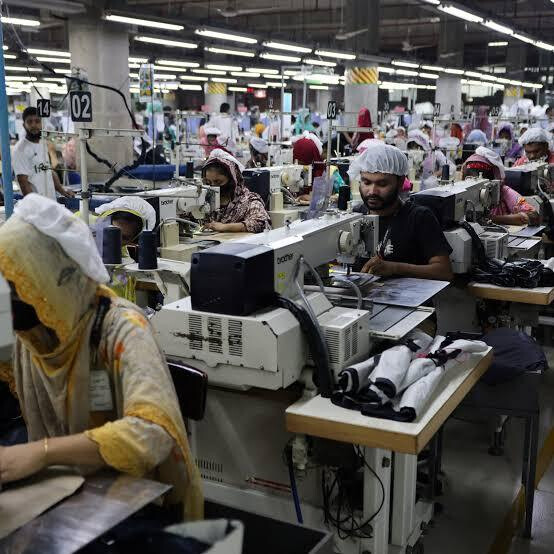
The unrest, which began on October 31 and escalated into violent confrontations in early November, has taken a heavy toll on the world’s second-largest apparel exporter after China. Employing roughly 4 million workers across 4,000 factories, the Ready-Made Garment (RMG) sector generates about $39 billion annually—accounting for roughly four-fifths of Bangladesh’s total export earnings—primarily supplying major Western retailers in the United States and the European Union. 

According to the Bangladesh Garment Manufacturers and Exporters Association (BGMEA), hundreds of factories were forced to halt operations during the demonstrations. A survey of 317 affected factories estimated production losses at $428 million (free-on-board value), while international buyers diverted approximately $254 million worth of orders to rival manufacturing nations. 

Industry Concerns Over Competitiveness 

Factory owners, who initially offered 15,000 taka before conceding to 17,000 taka, warned that higher labor costs could erode Bangladesh's price advantage against competitors such as India, Vietnam, Indonesia, and Pakistan. Industry leaders have called on global fashion brands to share the financial burden by adjusting purchasing prices, noting that local manufacturers cannot absorb the increased wage bill alone.

[Copyright (c) Global Economic Times. All Rights Reserved.]

  • #Cherry Garden
  • #HalalFood
  • #Halal
  • #Petlife
  • #Cats
  • #Dogs
  • #Halalhorizone
  • #Hormuz Impasse
  • #Joseon
  • #globaleconomicti
Ana Fernanda Reporter

Popular articles

  • US Army Conducts Rare Temporary Burial Drills to Prepare for Worst-Case Large-Scale War Scenarios

  • "Stay Out, Get Paid, or Have Police Stay With You": Shenzhen Imposes Strict Security Ahead of APEC Summit

  • US Midterm Elections Complicate Trade Calculus... Persistent Uncertainty Over Tariffs and Investment

I like it
Share
  • Facebook
  • X
  • Kakaotalk
  • LINE
  • BAND
  • NAVER
  • https://www.globaleconomictimes.kr/article/1065607777231808 Copy URL copied.
Comments >

Comments 0

Weekly Hot Issue

  • Pets at Home Forecasts Top-End FY27 Profit as First-Half Earnings Surge 44% 
  • Samsung’s Galaxy SmartTag3 Turns Pet Collars Into Connected Care Hubs
  • Indonesia Expands Halal Oversight to Cosmetics Retailers and E-Commerce Platforms Amid 2028 Product Deadline Extension
  • Sabah Ramps Up Halal Certification Drive to Unlock Regional and Global Markets for Local MSMEs
  • Istanbul Convenes Global Halal Leaders for 2026 Trade Expo and Summit
  • Six Arrested on Felony Animal Cruelty Charges at Orlando Slaughterhouse

Most Viewed

1
South Korean Burger Chain Lotteria Expands Singapore Footprint with Halal Certification and New Teriyaki Lineup
2
AI Semiconductor Stocks Plummet: Philadelphia Index Drops 5.28% and Micron Plunges 7.59% Amid Executive Shakeup and Export Restrictions
3
"Stay Out, Get Paid, or Have Police Stay With You": Shenzhen Imposes Strict Security Ahead of APEC Summit
4
Taiwan Bans Short-Selling Below Previous Close Starting Nov. 23, Raises Margin Ratio to 150%
5
AI Music Tops Melon Chart: Is the K-Pop Production Formula Changing?
체리가든 스토리
nutri huevos
로타리
동포저널

Hot Issue

Trump Faces Rare Bipartisan Backlash Over Jensen Huang’s Return to Nvidia

Beyond the Click: How Agentic AI is Quietly Dismantling the App Economy

Jeju Tests Solar-Powered Greenhouses to Grow Carbon-Free ‘RE100’ Tangerines

Fashion Runway Show 2026

Let’s recycle the old blankets in Jeju Island’s closet instead of incinerating them.

Global Economic Times
korocamia@naver.com
CEO : LEE YEON-SIL
Publisher & Editor : KO YONG-CHUL
Registration number : Seoul, A55681
Registration Date : 2024-10-24
Youth Protection Manager: KO YONG-CHUL
Singapore Headquarters
5A Woodlands Road #11-34 The Tennery. S'677728
Korean Branch
Phone : +82(0)10 4724 5264
#304, 6 Nonhyeon-ro 111-gil, Gangnam-gu, Seoul
Copyright © Global Economic Times All Rights Reserved
  • News K
  • 반달곰 프로젝트
  • 광고문의
Search
Category
  • All articles
  • Synthesis
  • World
  • Business
  • Industry
  • ICT
  • Distribution Economy
  • Well+Being 
    • 전체
    • Pet Life
    • Halal Horizon
  • Travel
  • Eco-News
  • Education
  • Korean Wave News
  • Opinion
  • Arts&Culture
  • Sports
  • People & Life 
    • 전체
    • International Student Report
    • With Ambassador
  • Column 
    • 전체
    • Cho Kijo Column
    • Cherry Garden Story
    • Ko Yong-chul Column
    • Kim Bong-seon's Photo Column
    • Kim Seul-Ong Column
    • Lee Yeon-sil Column
    • Professor Lee Soo-young’s Life Essays
  • Photo News
  • New Book Guide
  • Overseas Koreans
  • Multicultural News