

South Asia has rapidly emerged as a strategic hub for hydroelectric power generation, taking advantage of the region's abundant glacial meltwaters and steep mountain drops in the Himalayan range. Major South Korean energy companies and builders have actively expanded their presence in the region, participating in large-scale hydropower projects across countries like Nepal and Pakistan. However, a recent catastrophic disaster has highlighted critical vulnerabilities, underlining the vital necessity for comprehensive disaster management systems.
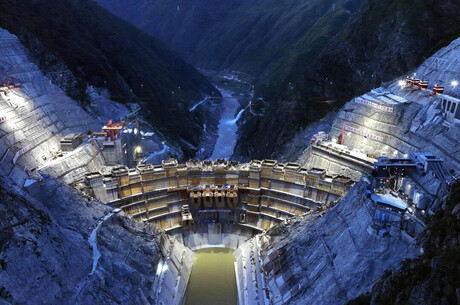
According to industry sources on August 27, 2026, a massive flash flood struck northern Nepal’s Rasuwa district, severely affecting the Upper Trishuli-1 hydropower project. Korea South-East Power Co. (KOEN), a state-run utility subsidiary, and Doosan Enerbility, the engineering, procurement, and construction (EPC) contractor, have been spearheading the $647 million project. The disaster caused communication to be lost with several Korean personnel, triggering emergency responses from both the South Korean government and corporate entities.
The Upper Trishuli-1 project is a major run-of-river facility designed with a 216-megawatt capacity. Before the flash flood struck, construction had progressed to roughly 84 percent completion. Initial damage assessments from the site indicate that over 90 percent of the upper dam structure and upper water-blocking facilities were heavily damaged, while approximately 90 percent of the workers' base camp was swept away or buried under debris. Fortunately, the underground powerhouse structure was reportedly spared from total burial.
In response to the crisis, South Korea's Ministry of Foreign Affairs convened an emergency task force meeting chaired by Foreign Minister Cho Hyun. President Lee Jae-Myung issued an urgent directive prioritizing the safety and rescue of all citizens. A joint government rapid-response team, consisting of officials from the Foreign Ministry, the National Police Agency, and the National Fire Agency, was immediately dispatched to Nepal to coordinate search and rescue operations on the ground.
Corporate leadership also took swift action. Doosan Enerbility established a 40-member emergency response headquarters at its headquarters in Seongnam, South Korea, and dispatched an on-site response team led by Vice Chairman and CEO Jung Yeon-in. Furthermore, the Doosan Group announced an emergency humanitarian aid package of $5 million to support rescue operations and recovery efforts in Nepal's flood-stricken Rasuwa region. Similarly, Korea South-East Power formed a dedicated emergency headquarters under acting President Cho Young-hyuk, dispatching executive management and staff to the scene to assist families of the missing and coordinate closely with local military helicopters for aerial searches.
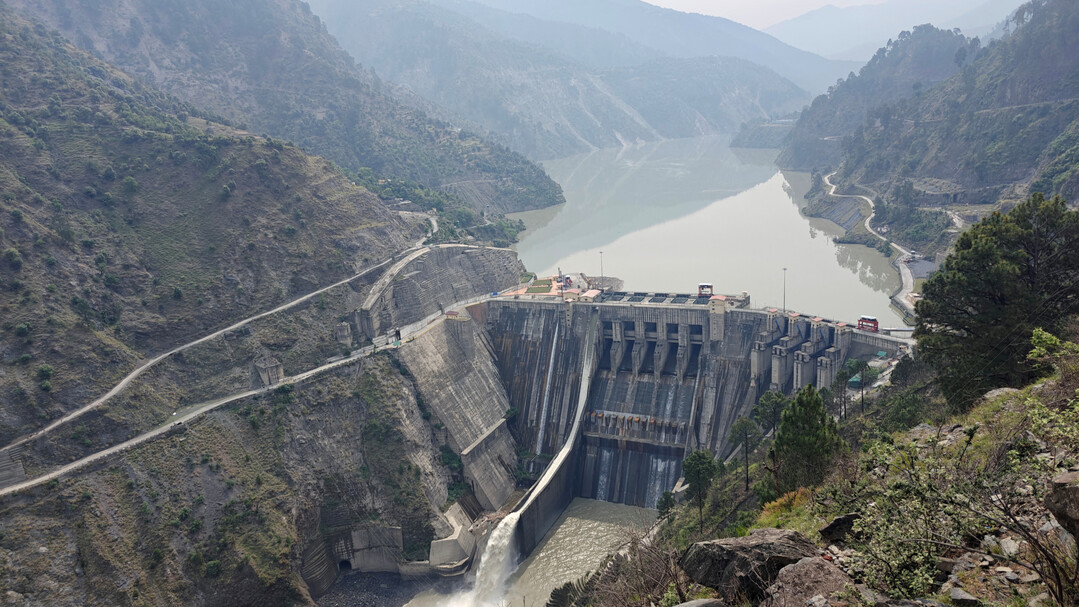
South Korean firms have deepened their investments across South Asia due to the region's exceptional natural advantages. The Himalayan terrain provides massive elevation drops and continuous water flow from melting snow and glaciers, making it uniquely suited for clean energy generation. Beyond the Trishuli project in Nepal, KOEN has heavily invested in Pakistan, completing the 102-megawatt Gulpur hydropower plant on the Poonch River in 2022 through a consortium with DL E&C and Lotte Engineering & Construction, securing a 30-year operational license with seven resident staff on site. Furthermore, KOEN has pursued two major initiatives in Pakistan’s northwestern Khyber Pakhtunkhwa province—the Asrit-Kadam (229 MW) and Kalam-Asrit (238 MW) projects—demonstrating a deep commitment to regional renewable expansion.
However, compounding climate change and extreme weather anomalies have drastically increased the frequency of severe natural disasters across South Asia. Regional disaster management authorities reported over a hundred fatalities in Pakistan due to monsoon downpours and floods, with neighboring India recording heavy casualties as well. In the Himalayas specifically, glacial lake outburst floods (GLOFs) and avalanche-triggered surges have transformed from once-in-a-decade anomalies into recurrent, highly unpredictable threats.
Disaster management experts emphasize that as corporate footprint expansion deepens, companies and host nations must overhaul their safety architectures. Professor Choi Myung-ki from the Daehan Industrial Safety Association notes that climate-induced glacier melting has dramatically accelerated hazard frequencies, warning that delays in evacuation protocols inevitably turn natural hazards into human tragedies.
Experts advocate for an integrated, five-stage framework encompassing prediction, prevention, monitoring, early warning, and immediate evacuation. Crucially, a basin-wide watershed management strategy must take precedence over localized defenses. This entails mapping multi-hazard zones across upper-reach glacial lakes, steep ravines, and lower residential settlements, implementing continuous downstream monitoring sensors, and executing rigorous, long-term climate risk assessments to protect infrastructure and human lives in rugged mountain corridors.
[Copyright (c) Global Economic Times. All Rights Reserved.]