

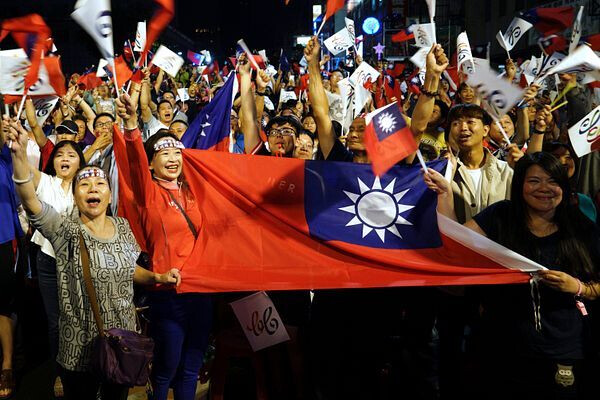
TAIPEI — Taiwan’s ruling Democratic Progressive Party (DPP) is gaining unexpected momentum in Taipei just days before the island’s November 28 local elections, threatening to end nearly three decades of opposition dominance in the capital.
The nationwide "Nine-in-One" vote—which selects mayors, county chiefs, and local councilors—is widely viewed as a midterm referendum on President Lai Ching-te, who has faced legislative gridlock against an opposition-controlled parliament. The race also marks the first major political test for Kuomintang (KMT) Chairwoman Cheng Li-wun, a vocal advocate for closer ties with Beijing, while setting the stage for the 2028 presidential election.
A Challenge to a 28-Year Dynasty
For the past 28 years, since former President Chen Shui-bian left office, the DPP has been unable to reclaim the Taipei mayor's seat. The city is currently governed by KMT incumbent Chiang Wan-an, a descendant of former leader Chiang Kai-shek.
While early polling suggested voter frustration with the central government would favor the KMT, DPP candidate Shen Pao-yang (Puma Shen) has dramatically shifted the race. Nicknamed the "Yangliu" (Ocean Current) phenomenon, Shen’s campaign initially drew energy from voters wary of Beijing's influence before broadening its appeal through policy-driven messaging, grassroots outreach, and savvy social media engagement.
Political observers note that Shen’s surge could ripple into neighboring New Taipei City, home to four million residents and another traditional KMT bastion. In response, the opposition is funneling heavy campaign resources into Taipei to halt the DPP’s advance.
Cross-Strait Tensions and Interference Claims
Beijing is monitoring the Taipei race closely, particularly because Shen was sanctioned by Chinese authorities in 2024 as a "diehard Taiwan independence separatist." Analysts warn that a DPP victory in the capital could further strain cross-strait relations.
Meanwhile, concerns over foreign meddling have escalated in the final stretch of the campaign. Citing assessments from Taiwan’s national security apparatus and the Mainland Affairs Council, DPP lawmakers accused the Chinese Communist Party of attempting to sway the vote via illicit political funding and organized mobilization efforts.
These claims echo recent findings from U.S.-based researchers at the Institute for the Study of War and the American Enterprise Institute. Their joint analysis indicates that Beijing has been subsidizing travel costs for Taiwanese businesspeople living in China to return home and cast ballots, alongside deploying AI-generated disinformation and skewed polling to deepen political polarization on the island.
[Copyright (c) Global Economic Times. All Rights Reserved.]