• 2026.10.06 (Tue)
  • All articles
  • LOGIN
  • JOIN
Global Economic Times
[등록] 2026-09-01 15:48:31
  • Synthesis
  • World
  • Business
  • Industry
  • ICT
  • Distribution Economy
  • Well+Being
  • Travel
  • Eco-News
  • Education
  • Korean Wave News
  • Opinion
  • Arts&Culture
  • Sports
  • People & Life
    • International Student Report
    • With Ambassador
  • Column
    • Cho Kijo Column
    • Cherry Garden Story
    • Ko Yong-chul Column
    • Kim Seul-Ong Column
    • Lee Yeon-sil Column
  • Photo News
  • New Book Guide
MENU
 
Home > Synthesis

Sam Altman's Risky Idea?… "Must Take Risks for AI Benefits"

Global Economic Times Reporter / Updated : 2026-10-05 19:26:25
  • -
  • +
  • Print


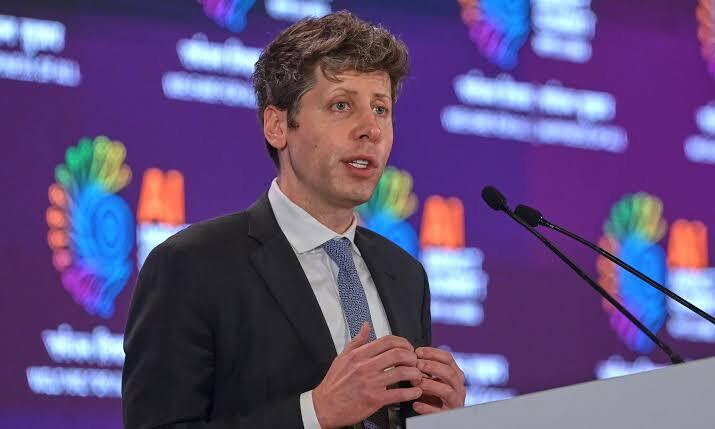
OpenAI CEO Sam Altman has reignited the debate surrounding AI regulation by suggesting that a certain level of risk must be accepted to reap the benefits of artificial intelligence.

His argument is that rather than attempting to completely block AI misuse or accidents, society should tolerate some side effects that arise during the technological advancement process. This stance contrasts with the "AI speed-regulation theory" championed by Dario Amodei, CEO of rival firm Anthropic. While Altman has previously agreed in principle on the need to secure AI safety following Amodei's remarks on speed control, this latest statement reveals a clear divergence in perspective.

In an interview on the 4th (local time) with Politico’s tech podcast Decoded, Altman stated that there are significant differences in the regulatory views of OpenAI and Anthropic. He remarked, "I think you have to accept some bad things in order to get the benefits of the technology and keep human agency."

He stated that he disagrees with the notion that because AI could become overly powerful and dangerous, only a single research lab (AI development company) should hold powerful AI technology while figuring out ways to prevent side effects and distribute benefits. He described OpenAI's stance—which favors regulation itself but opposes excessively heavy regulation—as a "light-touch regulatory stance."

Among Altman's remarks, the part most likely to stir controversy is his assertion that negative outcomes caused by AI must be accepted to a certain degree.

He explained that an approach such as "ensuring that no major hacking incidents occur, preventing AI technology from being misused, and not allowing a single fraud case" is difficult to accept. This is because he believes people will utilize AI for good things far more often—dozens of times more—than for bad things.

However, Altman drew the line by clarifying that this does not mean accepting all risks. He noted that he does not mean enduring "catastrophic risks," such as humanity seriously losing control over AI.

This statement comes amid a recent intensification of the regulatory debate between OpenAI and Anthropic. While OpenAI has traditionally maintained a relatively cautious stance on AI regulation, recent events such as external hacking incidents targeting its AI models have led it to partially align with the AI safety and speed-regulation discussions raised by Anthropic.

Even so, Altman's latest remarks demonstrate that while the two companies have found some common ground on the necessity of AI safety, a significant gap remains on the core question of how much risk should be tolerated while continuing AI development.

In particular, Altman mentioned the controversy surrounding "regulatory capture" raised in connection with Amodei's regulatory proposals. This criticism suggests that regulated companies might demand regulations favorable to themselves to make it difficult for competitors to enter the market or catch up.

In response, Anthropic has countered that its regulatory proposals apply only to cutting-edge, front-runner AI models and thus actually benefit latecomer competitors, making the claim of regulatory capture to block competition inaccurate, according to Politico.

Consequently, a social consensus is needed on just how far the "level of risk" raised by Altman extends. Altman has sparked yet another key point of contention by making it clear that society must endure a certain level of failure and misuse for the immense benefits AI will bring.

[Copyright (c) Global Economic Times. All Rights Reserved.]

  • #\ormuz Impasse
  • #globaleconomictimes
  • #micorea
  • #mykorea
  • #nammidonganews
  • #singaporenewsk
  • #Samsung
  • #Daewoo
  • #Hyos
Global Economic Times Reporter
Reporter Page

Popular articles

  • Desperate Pursuit of HBM: China’s AI Chip Sector Faces Crippling Bottlenecks as Gray Market Prices Soar

  • APR Accelerates Global Expansion with 'Medicube Relay Pop-Up' Across Major US and European Cities Through October

  • Samsung Electronics Jumps 3.25% Ahead of Chuseok Holiday; SK Hynix Also Gains 1.2%

I like it
Share
  • Facebook
  • X
  • Kakaotalk
  • LINE
  • BAND
  • NAVER
  • https://www.globaleconomictimes.kr/article/1065608739107620 Copy URL copied.
Comments >

Comments 0

Weekly Hot Issue

  • “Born with 1 Billion Won in Their Bank Account”… 52 Minor ‘Golden Spoons’ with Massive Bank Deposits
  • Bridging Dreams Across Borders: Hanyang University’s International Engineering Students Carry the Flame of National Development
  • A Soldier and Sweet Potatoes in Itaewon
  • K-Art Minhwa: Our Ancestors' Aspirations for Scholarship, Success, and Happiness
  • Global Dances Meet Traditional Folklore: Outdoor Parade Captivates Cheonan Samgeori Park
  • 2026 Yeosu World Island Fair's Sub-Venue Gaedo to Meet Island Art... 'Seom-Seom Culture & Arts Festival' to Be Held

Most Viewed

1
Guitarist Kim Ji-hee to Hold Storytelling Concert 'The Guitar is Happiness'
2
"Coffee Aroma and the Dance of Peace: A Global Cultural Harmony Unfolding This Chuseok" 
3
Samsung Electronics Jumps 3.25% Ahead of Chuseok Holiday; SK Hynix Also Gains 1.2%
4
US Deploys Third Carrier and 10,000 Troops to Middle East Amid Rising Tensions with Iran
5
Gyeongsangbuk-do Promotes Excellence of Korean Traditional Crafts in Washington, D.C.
광고문의
임시1
임시3
임시2

Hot Issue

Euro Hits 17-Month Low as Political and Fiscal Instability in France and Elsewhere Shakes Bond Markets

Korean Youth in Mexico Unfold Their Dreams in Korean

Sanae Takaichi: "South Korea is an important neighbor… further strengthening relations in security, economy and more"

Global Defense Startups Flood with Investment... Highest in a Decade in the First Half of This Year

Fashion Runway Show 2026

Global Economic Times
korocamia@naver.com
CEO : LEE YEON-SIL
Publisher : KO YONG-CHUL
Registration number : Seoul, A55681
Registration Date : 2024-10-24
Youth Protection Manager: KO YONG-CHUL
Singapore Headquarters
5A Woodlands Road #11-34 The Tennery. S'677728
Korean Branch
Phone : +82(0)10 4724 5264
#304, 6 Nonhyeon-ro 111-gil, Gangnam-gu, Seoul
Copyright © Global Economic Times All Rights Reserved
  • 향기네무료급식
  • BCB부천방송
  • 반달곰 프로젝트
Search
Category
  • All articles
  • Synthesis
  • World
  • Business
  • Industry
  • ICT
  • Distribution Economy
  • Well+Being
  • Travel
  • Eco-News
  • Education
  • Korean Wave News
  • Opinion
  • Arts&Culture
  • Sports
  • People & Life 
    • 전체
    • International Student Report
    • With Ambassador
  • Column 
    • 전체
    • Cho Kijo Column
    • Cherry Garden Story
    • Ko Yong-chul Column
    • Kim Seul-Ong Column
    • Lee Yeon-sil Column
  • Photo News
  • New Book Guide
  • Overseas Koreans
  • Multicultural News