![[등록] 2026-09-01 15:48:31](/support/_updata/banner2/tl181982910_6749.png)


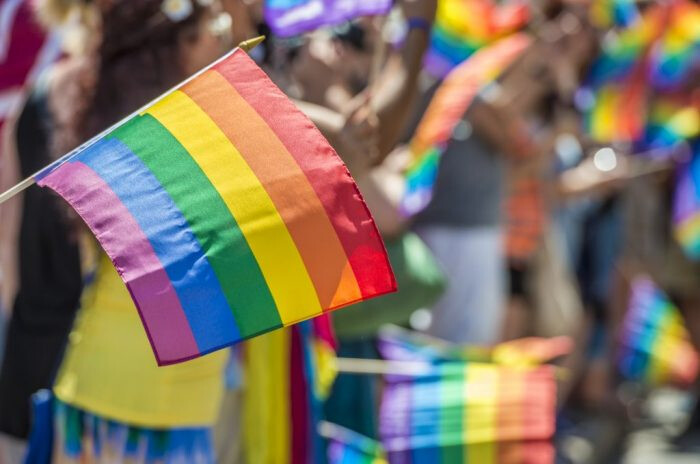
Salt Lake City — Utah has become the first state in the U.S. to prohibit the display of LGBTQ+ pride flags at schools and all government buildings after Governor Spencer Cox allowed a bill enacting the ban to take effect without his signature.
In a late Thursday night statement, Cox said he still harbored "serious concerns" about the policy but decided against vetoing it, anticipating that the Republican-supermajority legislature would likely override his veto.
Starting May 7, Utah's state or local government buildings will face a $500 daily fine if they fly any flag other than the U.S. flag, the Utah state flag, military flags, and a limited list approved by lawmakers. Certain candidate or party-affiliated political flags, such as the emblematic "Make America Great Again" flags, will not be permitted.
The new law could deepen the rift between the state government and its largest city, Salt Lake City. Government buildings in the liberal-leaning city have typically flown flags representing the LGBTQ+ community each June to commemorate Pride Month. Local government leaders have protested the flag ban by illuminating the Salt Lake City-County Building in rainbow colors nightly since the legislature sent the bill to Cox.
Andrew Wittenberg, a spokesperson for Salt Lake City Mayor Erin Mendenhall, stated that city attorneys are reviewing the law, and information on any action the city might take after the law goes into effect is not yet available.
Republican state Rep. Trevor Lee and state Sen. Dan McCay, the bill's sponsors, argue that the legislation aims to promote "political neutrality" among teachers and other government employees. Opponents, however, decry the law as an attempt to erase LGBTQ+ visibility and strip autonomy from cities and towns with differing political leanings from the Republican-controlled statehouse.
In a letter to legislative leaders, Cox stated that while he agreed with the bill’s "underlying intent" to keep classrooms politically neutral spaces, he believed the restrictions on local governments were overbroad. He also pointed out that the legislation focuses solely on flags, failing to address other forms of political expression like posters or lights.
"To our LGBTQ community, I know how difficult this has been," Cox stated. "Politics can be a brutal and bitter battleground, and I know that we have differences. I love you, I cherish you, and I am grateful that you are a part of our state. I know that those words may sound hollow to many, but they are heartfelt."
Cox's decision came just hours after the Sundance Film Festival announced its departure from Park City, Utah, its home for four decades, to Boulder, Colorado. The flag bill had added late tension, with some residents fearing it would prompt the premier U.S. independent film festival to leave the state. However, festival officials stated that the state government's policies were not the ultimate factor in their decision to move to the liberal-leaning Colorado city. They did note, however, that "spirit and equity values" were among their important criteria as they scouted new locations, describing Boulder as a "welcoming environment."
Utah’s flag law includes broader restrictions than a similar measure passed in Iowa last week, which only applies to schools. However, Republican lawmakers in Iowa are also pushing a separate bill to ban certain flags from government buildings.
Florida lawmakers have also advanced proposals to prohibit pride flags and other flags expressing political viewpoints in schools and public buildings after similar bills failed in the past two legislative sessions. Some federal entities, such as the Department of Veterans Affairs, also limit the flags that can be displayed at their facilities.
Other flags permitted under Utah law include Olympic and Paralympic flags, official university flags, tribal flags, and historical versions of other approved flags that may be used for educational purposes.
Flag Debates Elsewhere in the U.S.: Discussions surrounding flag displays at schools and government buildings have intensified across the United States in recent years. The flying of LGBTQ+ pride flags and flags with political messages, such as "Black Lives Matter," has been particularly contentious. Some argue that these flags symbolize inclusivity and diversity, while others express concerns that public institutions might appear to endorse specific political stances.
Legal Challenges: Utah's new law is likely to face legal challenges on First Amendment grounds, which guarantee freedom of speech. In similar cases, courts have ruled that governments can impose reasonable restrictions on expression in public spaces, provided there is no clear intent to suppress a particular viewpoint. However, critics argue that Utah's law specifically targets the LGBTQ+ community, setting the stage for potential legal battles.
Political Fallout: The decision is expected to have significant political ramifications for LGBTQ+ rights movements both within Utah and across the United States. It could embolden conservative states to pursue similar legislation, potentially becoming a key issue in upcoming elections. Conversely, progressive areas are likely to see increased advocacy for LGBTQ+ rights in response to Utah's decision.
Sundance Film Festival's Departure: The Sundance Film Festival's move to Colorado can be interpreted as an example of how a state's political climate can impact its cultural and artistic landscape. While festival organizers officially denied political reasons for the move, their emphasis on a "welcoming environment" as a criterion for their new location suggests that Utah's recent political actions were not entirely irrelevant, raising concerns about potential negative impacts on Utah's image and economy.
[Copyright (c) Global Economic Times. All Rights Reserved.]