![[등록] 2026-09-01 15:48:31](/support/_updata/banner2/tl181982910_6749.png)


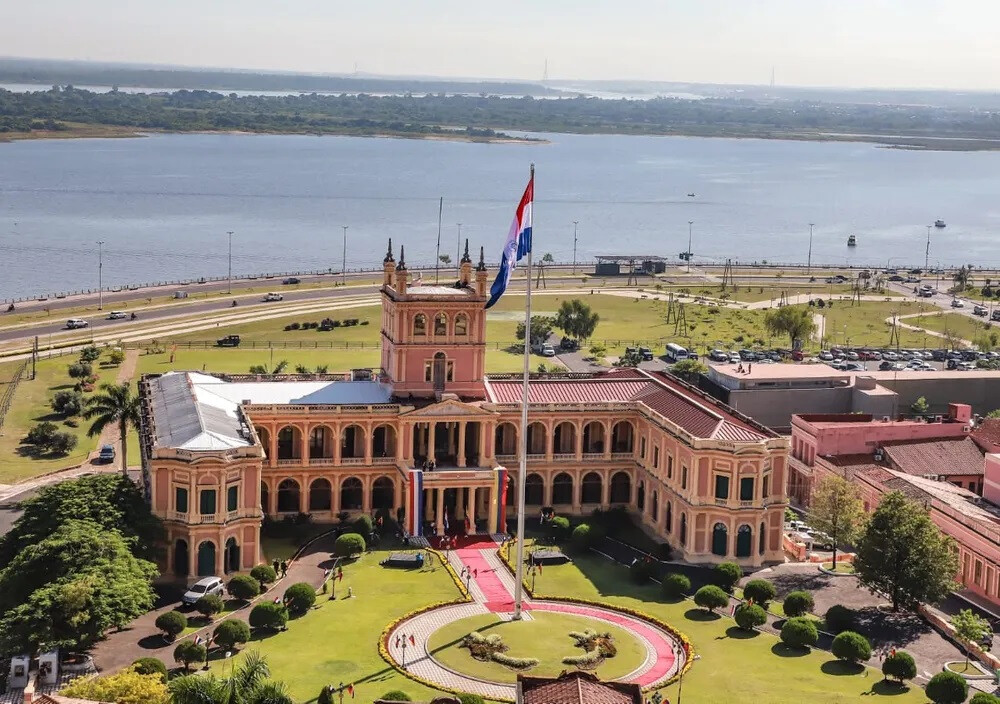
As the elections approach, the ruling Colorado Party within the Paraguayan Congress is pushing for a drastic reform of the electoral law. They have recently succeeded in relaxing controls on campaign finance. The opposition views this move as a strategy to retain the votes of staunch supporters in the elections, considering it a dangerous regression that could lead to uncontrollable and indiscriminate inflow of illegal funds into politics, thus an attack on democracy.
Considering that existing regulations on political finance already allowed for the potential influx of funds from illicit activities, the Senate's recent action is deemed irresponsible. In a special session, the Senate passed two electoral law reform proposals led by the Colorado-Cartista faction, which can only be interpreted as an infringement on democracy.
The first amendment allows citizens registered after party primaries to vote in general elections. The second amendment introduces several changes to the political finance law, the most controversial of which exempts candidates for party office from the obligation to submit campaign income and expenditure reports.
They have streamlined the procedure for reporting campaign income and expenditures as stipulated by the political finance law. In fact, this bill exempts candidates for party office from the obligation to declare campaign income and expenditures and economic interests on the grounds that they "do not manage state resources." Ironically, the ruling party and the Liberal Party alliance, which is aligned with the Colorado-Cartista faction, criticized the opposition's absence, calling them "undemocratic."
Prior to the 2023 general election primaries, the Secretariat for the Prevention of Money Laundering (SEPRELAD) collaborated with the Supreme Court of Electoral Justice (TSJE) to detect the flow of funds presumed to be illicit during the campaign process. To this end, anti-money laundering regulations for political parties, alliances, and conventions were established to track the movement of funds during elections. These regulations obligated sponsors and donors to identify the amount, source, or supporting documents for funds provided to campaigns.
Paraguay must not lower its standards for controlling the influx of illicit funds into politics. These amendments represent a serious setback. This is because politicians, instead of improving laws that regulate financing, including traceability, are weakening them.
Years ago, the Center for Economic Analysis and Dissemination of Paraguay (Cadep) warned that politicians and authorities could be involved in drug trafficking, leading to national fragmentation. In such a scenario, criminal organizations could transform into a parallel power to official power, posing a serious risk.
For all these reasons, it is absolutely essential to meticulously control the funds politicians use in their party campaigns and to be able to identify the traceability and origin of those resources.
Similarly, authorities must not abandon the demand to promote electoral participation, increase accessibility to voting, and provide free public transportation on election day so that voters are not "dragged" by organized gangs or local party members, as is sadly witnessed in every election currently.
This congressional decision, allowing the use of funds with unclear origins in campaigns, is concerning. Politicians must seek ways to improve controls to prevent funds used in elections, starting from party primaries, from flowing in from organized crime and drug politics. This is because it poses a risk to our sovereignty and democracy.
[Copyright (c) Global Economic Times. All Rights Reserved.]