![[등록] 2026-09-01 15:48:31](/support/_updata/banner2/tl181982910_6749.png)


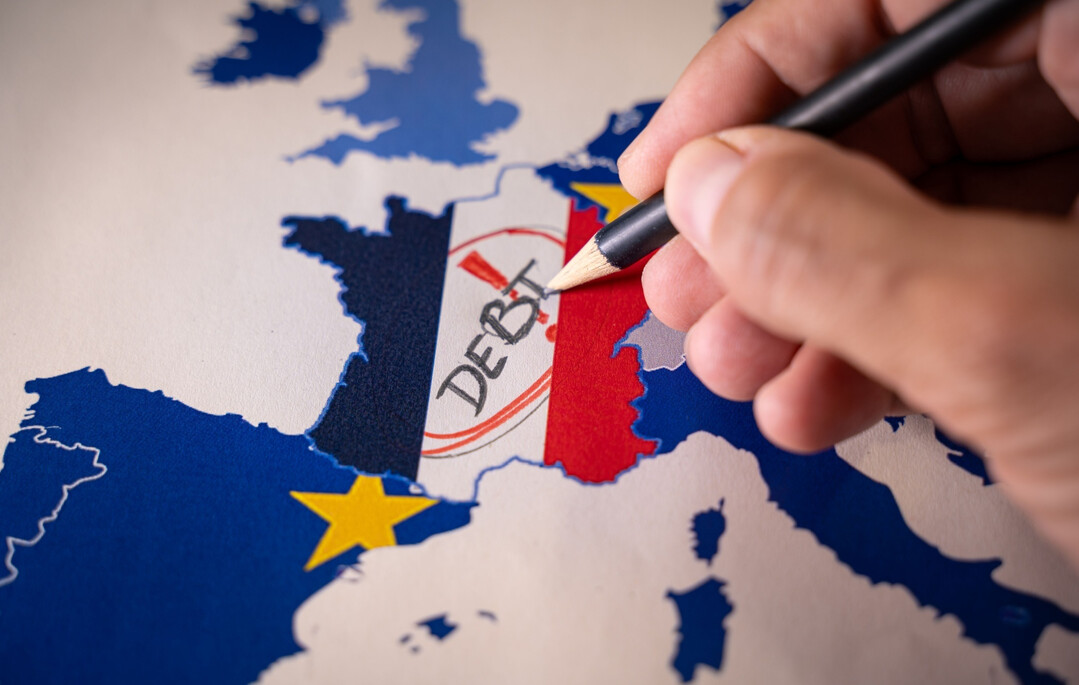
(C) The Daily Economy
PARIS – Once considered the undisputed powerhouse of the European continent, France is facing a sobering economic reality. According to the latest data from Eurostat released in January 2026, France's Gross Domestic Product (GDP) per capita has fallen below the European Union average for the third consecutive year, signaling a persistent decline in the nation's relative standard of living.
The Numbers: A Steady Slide
The Eurostat figures, which utilize Purchasing Power Standards (PPS) to account for price level differences between countries, reveal that France's GDP per capita stood at just 98% of the EU average in 2024.
The decline is particularly striking when compared to its neighbors and historical peers:
Germany: Currently sits at 116%, widening the gap with France to 18 percentage points—a far cry from 1975 when the two nations were at parity.
Italy & Malta: Both have overtaken France, recording 101% and 110% respectively.
The Convergence Gap: Poland, which trailed France by 60 percentage points in 2000, has surged to 78%, narrowing the gap to just 20 points.
Root Causes: Policy Failures and "The Labor Problem"
Economists point to a combination of misguided fiscal policies and chronic structural issues as the primary drivers of this "Great Deceleration."
1. Failed Supply-Side Experiments Mathieu Plane, deputy director of the French Economic Observatory (OFCE), highlights the period between 2013 and 2017 under President François Hollande. During this time, France implemented aggressive supply-side policies and tax credits aimed at boosting corporate competitiveness. However, these costly measures failed to trigger the expected growth rebound, causing France’s standing to drop from 109% to 103% of the EU average.
2. The Under-Utilization of Labor Éric Dor, a professor at the IESEG School of Management, identifies a "perpetual labor shortage" as a fundamental weakness. As of 2024, less than half of the French population is actively employed. France suffers from some of the lowest employment rates for youth and seniors in Europe, compounded by fewer annual working hours per employee compared to its neighbors.
3. Productivity Stagnation While France maintains a high level of hourly productivity (ranking 7th in Europe), the growth of that productivity has stalled. Analysts from Natixis Wealth Management suggest that COVID-era policies, which incentivized companies to retain staff at all costs, may have inadvertently prevented the labor market "reshuffling" that helped other nations modernize and streamline their economies.
The Road Ahead: Fiscal Strain in 2026
Adding to the GDP woes, France is currently grappling with a massive budget deficit. Prime Minister Michel Barnier’s government has recently proposed a "recovery through austerity" approach, seeking €60 billion in spending cuts and tax hikes to bring the deficit down toward the EU’s 3% limit.
However, experts warn that these measures could further dampen consumer spending, which has traditionally been the engine of the French economy. With per capita GDP already underwater, the government faces a razor-thin tightrope walk: restoring fiscal sanity without further eroding the purchasing power of its citizens.
"The decline is not just a statistical anomaly; it is a reflection of a structural mismatch between France's social model and its productive capacity," says Professor Dor.
[Copyright (c) Global Economic Times. All Rights Reserved.]