![[등록] 2026-09-01 15:48:31](/support/_updata/banner2/tl181982910_6749.png)


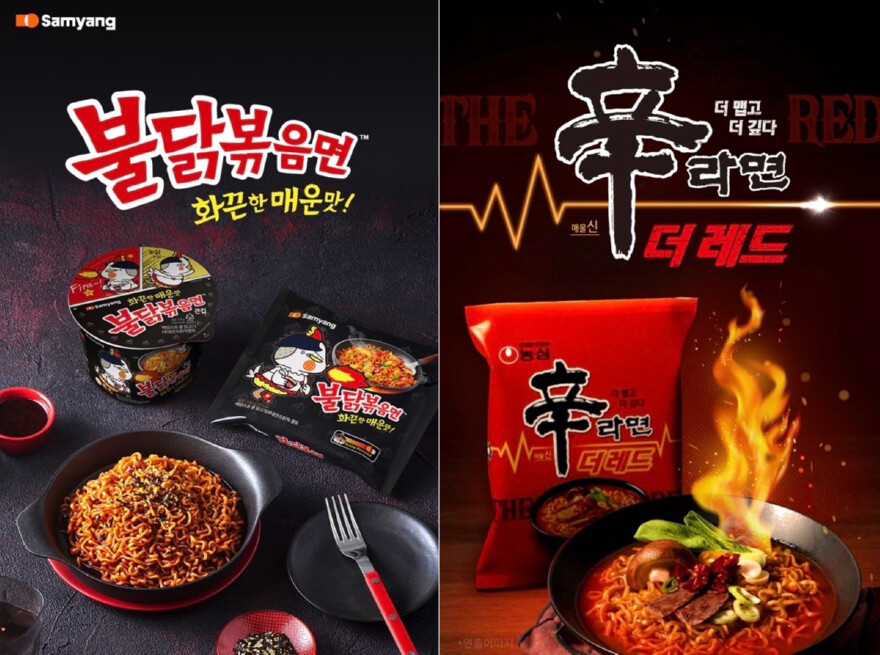
SEOUL — The global landscape of the food industry is witnessing a seismic shift as South Korean food enterprises solidify their dominance. According to a recent industry analysis conducted on the top 10 domestic food companies, eight "Global Mega Brands"—defined as individual brands surpassing 500 billion KRW (approx. $375 million USD) in annual sales—have emerged, signaling a new era for K-Food.
The Rise of the 'Trillion-Won' Titans
At the apex of this growth are the brands that have transcended the 1 trillion KRW mark. CJ CheilJedang’s "bibigo" remains the undisputed heavyweight. By integrating various Korean food categories under a single brand identity, bibigo generated a staggering 5.92 trillion KRW in overseas sales last year alone. For the first time, CJ’s international food revenue has surpassed its domestic earnings, with its signature Mandu (dumplings) estimated to account for over 2 trillion KRW of that total.
Following closely are the "Spicy Powerhouses":
Samyang Foods’ Buldak Bokkeum Myeon: A viral sensation turned global staple, the Buldak brand recorded 1.6 trillion KRW in sales last year, a 37% year-on-year increase. This propelled Samyang Foods to surpass 2 trillion KRW in total company revenue for the first time since its founding.
Nongshim’s Shin Ramyun: The perennial favorite maintained its crown with 1.34 trillion KRW in sales (2024 data), continuing its mission to export "spicy happiness" and Korean cultural values to over 100 countries.
The 500 Billion Won Vanguard
The "500 Billion Won Club" acts as the frontline for K-Food’s secondary expansion. This elite group includes:
Orion Choco Pie: A legendary snack that has become a "national treat" in markets like China, Vietnam, and Russia, earning 674 billion KRW.
CJ CheilJedang’s Hetbahn & Spam: Dominating the ready-to-eat rice and processed meat sectors with 789.7 billion KRW and 510.8 billion KRW respectively.
Dongwon Tuna & Daesang’s Jongga Kimchi: Both brands crossed the 500 billion KRW threshold, proving that traditional staples have massive global commercial viability.
The Next Generation: The 100 Billion Won Contenders
The report also highlights a robust pipeline of "Mega Brands" (sales between 100 billion and 500 billion KRW) poised for future jumps. Orion leads this segment with nine products—including O!Karto, Swing Chip, and My Gummi—collectively accounting for 63% of the company's total revenue.
Lotte Wellfood has pinned its hopes on Pepero, which reached 243 billion KRW last year. The company has announced an ambitious "Vision 2035," aiming to cultivate Pepero into a 1 trillion KRW global brand within the next decade. Other notable mentions include Ottogi’s Jin Ramyun and Pulmuone’s Tofu, the latter of which saw 370 billion KRW in domestic sales alone.
Why K-Food is Winning
Industry experts attribute this success to a "pincer movement" strategy: stagnant domestic consumption forcing companies to look outward, coupled with the "K-Culture" halo effect.
"The key to success has been thorough localization combined with the premium image of Korean food," noted an industry insider. "By turning traditional items like Kimchi and unique snacks into global household names, Korean firms are no longer just exporting products; they are exporting a lifestyle."
As competition intensifies, the race to create the next "Global Mega Brand" is expected to drive further innovation in food tech and global marketing, firmly planting the South Korean flag in the global pantry.
[Copyright (c) Global Economic Times. All Rights Reserved.]