• 2026.02.17 (Tue)
  • All articles
  • LOGIN
  • JOIN
Global Economic Times
fashionrunwayshow2026
  • Synthesis
  • World
  • Business
  • Industry
  • ICT
  • Distribution Economy
  • Well+Being
  • Travel
  • Eco-News
  • Education
  • Korean Wave News
  • Opinion
  • Arts&Culture
  • Sports
  • People & Life
  • Column
    • Cho Kijo Column
    • Lee Yeon-sil Column
    • Ko Yong-chul Column
    • Cherry Garden Story
  • Photo News
  • New Book Guide
MENU
 
Home > Industry

The "Betrayal" of US Beef: Record-High Prices Hit South Korean Dinner Tables

Yim Kwangsoo Correspondent / Updated : 2026-02-16 20:26:12
  • -
  • +
  • Print

(C) The Hill


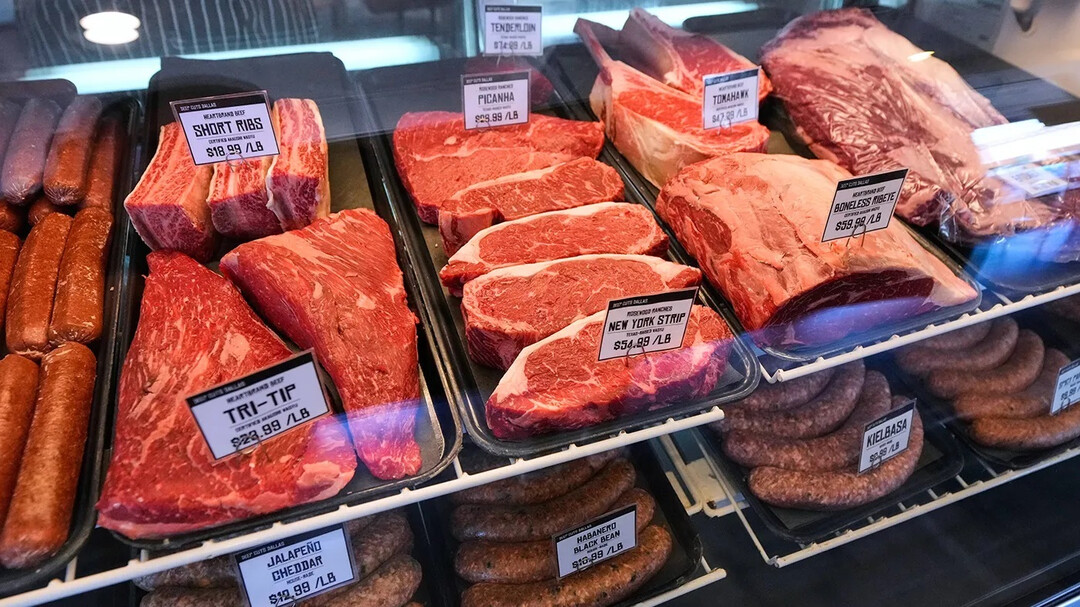
SEOUL — For years, South Korean consumers turned to American beef as a cost-effective alternative to the prohibitively expensive domestic Hanwoo. However, that "budget-friendly" reputation is evaporating. US beef prices are hovering near all-time highs as the American cattle inventory plummets to levels not seen in 75 years, sparking fears of a sustained spike in South Korean food inflation.

A 75-Year Low in Supply
According to recent data from Hankyung ACEL and the Chicago Mercantile Exchange (CME), live cattle prices have surged past $2.40 per pound, a significant jump from under $2.00 just a year ago. This upward trajectory has been persistent for over five years; in mid-2021, prices fluctuated between $1.00 and $1.20.

The root cause of this price surge is a severe supply crunch. A devastating drought in 2022 decimated pastures across the United States, forcing ranchers to reduce herd sizes. According to the U.S. Department of Agriculture (USDA), the total cattle inventory as of January 1, 2026, stood at 86.2 million head—the lowest since 1951.

Failed Interventions and Market Volatility
The crisis has caught the attention of the highest levels of government. Last October, U.S. President Donald Trump criticized the "excessive" cost of beef, leading to a temporary price dip after the administration expanded beef imports from Argentina. However, the relief was short-lived. By December, prices resumed their climb, returning to record levels.

The outlook remains grim. Calf production—a key indicator of future supply—is currently at its lowest point since 1941. While the U.S. government has attempted to intervene by opening federal grazing lands and supporting ranchers, these measures have yet to yield tangible results.

"We are in a structural deficit," noted an industry insider. "Ranchers are holding back cows to rebuild their herds rather than sending them to slaughter, which further tightens the immediate supply. This cycle suggests high prices will persist well into next year."

The Impact on the Korean Market
The shockwaves from the U.S. market are hitting South Korea directly. Data from the Korea Institute for Animal Products Quality Evaluation (KAPE) shows that the average price of frozen American beef ribs rose from 3,912 KRW per 100g in 2023 to 4,466 KRW last year—a 14.1% increase.

Surprisingly, even the complete elimination of import tariffs on US beef (previously 1.2% to 4.8%) earlier this year has failed to lower consumer prices, as the rising base cost and high exchange rates have neutralized any tax benefits.

Diversification as a Survival Strategy
With U.S. beef accounting for 47.1% of South Korea’s imported meat market (approximately 220,427 tons out of 468,122 tons total), local retailers are in a state of emergency. Major supermarkets are frantically diversifying their supply chains, looking toward:

Australia and Brazil
Ireland and Canada

However, diversification offers limited protection. As the U.S. faces its own domestic shortage, American restaurant chains are outbidding international buyers for Australian beef, driving up global prices across the board.

"Between the global supply shortage and the weak Korean Won, our ability to lower prices is extremely limited," a local mart representative stated. For Korean households, the era of "cheap American beef" may be over for the foreseeable future.

[Copyright (c) Global Economic Times. All Rights Reserved.]

  • #Globaleconomictimes
  • #Korea
  • #Seoul
  • #Samsung
  • #LG
  • #Bitcoin
  • #Meta
  • #Business
  • #Economic
  • #The Woori Bank
  • #Elon Musk
  • #C
Yim Kwangsoo Correspondent

Popular articles

  • Sony to Cede Control of TV Business to China’s TCL in Major Restructuring

  • Incheon International Airport Sets All-Time Record with 74 Million Passengers in 2025

  • 14,000 Chinese Tourists Pivot to Seoul as Sino-Japanese Tensions Flare

I like it
Share
  • Facebook
  • X
  • Kakaotalk
  • LINE
  • BAND
  • NAVER
  • https://www.globaleconomictimes.kr/article/1065612295445573 Copy URL copied.
Comments >

Comments 0

Weekly Hot Issue

  • The Rise of ‘Skimpflation’: Why Your Luxury Hotel Stay No Longer Includes Daily Cleaning
  • Tzuyang Reveals Massive Expenses: $33,000 Annual Delivery Bill and "Luxury Car" Monthly Income
  • K-Shipbuilding Faces $24 Billion Opportunity as U.S. Unveils Massive Naval Budget
  • "Sudden Performance Drop and Irritability?" Male Menopause Targets Men as Early as Their 40s
  • Power Struggle Looming in Pyongyang: The Rising Star vs. The Iron Lady
  • "Even Ailing 90-Year-Olds Can Sign Up": The Explosive Rise of Ultra-Aged Insurance

Most Viewed

1
"Climate Intelligence" to Shape National Competitiveness: 6223 Future Forum Concludes 9th Symposium
2
Seoul to Host Landmark 'Modest Fashion Festival 2026': A Fusion of K-Style and Global Halal Trends
3
Daejeon City Visits Sapporo, Japan for 15th Anniversary of Sister City Relationship… Strengthening Economic and Cultural Cooperation
4
South Korean Conglomerates Pledge 270 Trillion Won for Regional Investment to Boost Jobs and Growth
5
AI Boom Ignites Memory Super Cycle: DRAM and NAND Prices Set to Skyrocket
광고문의
임시1
임시3
임시2

Hot Issue

K-Shipbuilding Faces $24 Billion Opportunity as U.S. Unveils Massive Naval Budget

The Rolex "Flipping" Era Ends: Luxury Watch Market Shifts Toward Elegance and Utility

The Great Digital Divide: Average YouTuber Earnings Hit ₩71 Million as Top 1% Soar to ₩1.3 Billion

The Secret Behind the 'Modern Kim Seon-dal': How Coway Became Malaysia’s National Brand

Let’s recycle the old blankets in Jeju Island’s closet instead of incinerating them.

Global Economic Times
korocamia@naver.com
CEO : LEE YEON-SIL
Publisher : KO YONG-CHUL
Registration number : Seoul, A55681
Registration Date : 2024-10-24
Youth Protection Manager: KO YONG-CHUL
Singapore Headquarters
5A Woodlands Road #11-34 The Tennery. S'677728
Korean Branch
Phone : +82(0)10 4724 5264
#304, 6 Nonhyeon-ro 111-gil, Gangnam-gu, Seoul
Copyright © Global Economic Times All Rights Reserved
  • 에이펙2025
  • APEC2025가이드북TV
  • 독도는우리땅
Search
Category
  • All articles
  • Synthesis
  • World
  • Business
  • Industry
  • ICT
  • Distribution Economy
  • Well+Being
  • Travel
  • Eco-News
  • Education
  • Korean Wave News
  • Opinion
  • Arts&Culture
  • Sports
  • People & Life
  • Column 
    • 전체
    • Cho Kijo Column
    • Lee Yeon-sil Column
    • Ko Yong-chul Column
    • Cherry Garden Story
  • Photo News
  • New Book Guide
  • Multicultural News
  • Jobs & Workers