![[등록] 2026-09-01 15:48:31](/support/_updata/banner2/tl181982910_6749.png)


(C) Fleet Wire
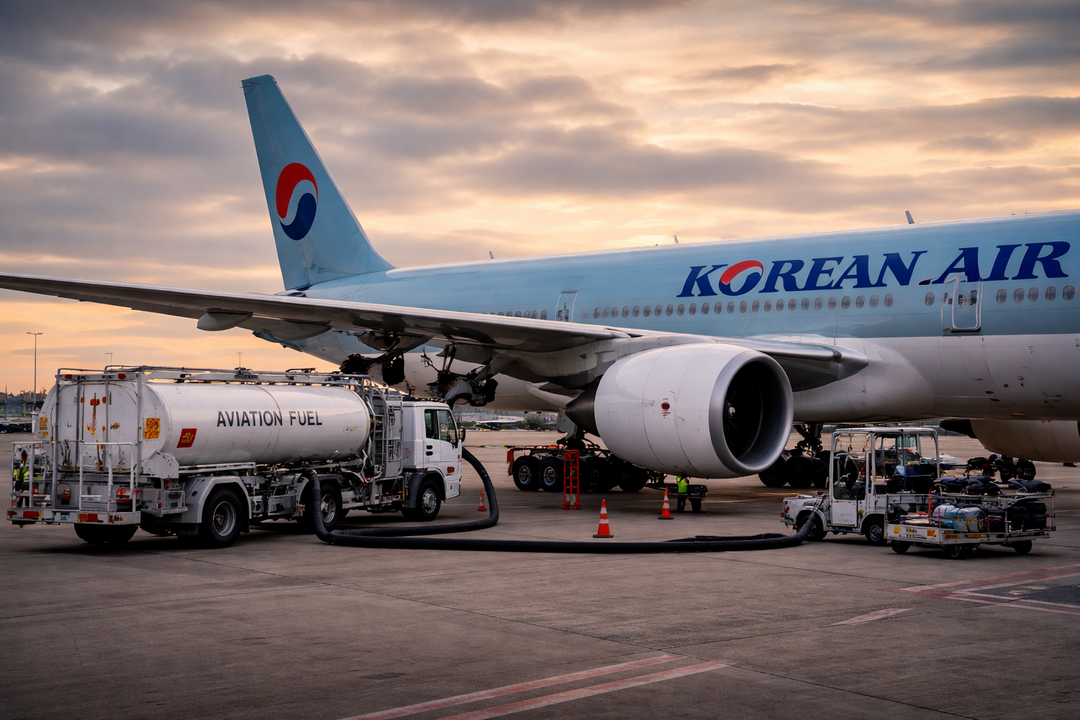
SEOUL — As the conflict in the Middle East sends shockwaves through global energy markets, a localized "jet fuel crisis" is beginning to take hold. With international prices skyrocketing and major exporters tightening their belts, South Korea’s refining industry is being thrust into the spotlight as a critical linchpin in the global aviation supply chain.
The Perfect Storm: Rising Costs and Supply Shocks
The geopolitical instability involving Iran and Israel has directly hit the aviation sector. According to industry data, the price of jet fuel traded in Singapore surpassed $238 per barrel in early April 2026. This represents a staggering 160% surge compared to the February average, prior to the escalation of the conflict.
The crisis is not merely financial; it is physical. Supply shortages are rippling across the Asia-Pacific region as countries like China and Thailand move to restrict petroleum exports to secure domestic reserves. Vietnam has been among the hardest hit, recently joining Japan and the Philippines in limiting refueling services for foreign carriers at their national airports. The impact is already being felt by travelers, with VietJet Air and Vietnam Airlines announcing the suspension of several South Korea-Vietnam routes for the April-May period.
Concerns are also mounting in Oceania and Europe. Australia, which relies heavily on Asian imports, faces imminent supply instability this month, while New Zealand and Italy are reportedly monitoring potential disruptions.
South Korea: The "World’s Gas Station" for Aviation
Amidst this volatility, South Korea has emerged as a vital stabilizer. Last year, the nation’s "Big Four" refiners exported approximately 86 million barrels of jet fuel, a figure that ranks among the highest in the world.
The strength of the "K-Refining" sector lies in its sophisticated infrastructure. South Korea boasts the world’s fifth-largest refining capacity, built on a value chain optimized for processing heavy crude into middle distillates like jet fuel. This technical prowess is bolstered by high-efficiency "upgrading" facilities, a robust maritime logistics network, and a reputation for meeting stringent international quality standards.
"Jet fuel is a uniquely complex product," noted an industry analyst. "It requires a seamless synchronization of airport fueling systems, inventory management, and specialized vessel transport. Because it is tied to tourism, global logistics, and national security, supply stability is the ultimate currency."
The Burden of Global Responsibility
The current crisis underscores a sobering reality: any disruption to South Korea’s production or export capabilities could paralyze global aviation and logistics. While domestic refiners believe the immediate risk to South Korea’s own supply is limited, the shadow of a prolonged war looms large. A long-term conflict involving the U.S., Israel, and Iran could deplete global crude inventories, eventually squeezing even the most resilient refiners.
Furthermore, the surge in fuel costs is hitting consumers' pockets. South Korea's fuel surcharges for international flights are projected to hit Level 33—the highest possible tier—in May. This is a dramatic jump from the current Level 18 applied in April, as surcharges are calculated based on Singapore jet fuel averages from the preceding month.
A Call for Strategic Support
Industry leaders argue that South Korea’s newfound status as a global energy hub requires more than just private-sector effort.
"The value of Korean jet fuel has never been higher as the world faces a shortage," a representative from a major refinery stated. "To maintain this competitive edge and ensure global supply security, we need proactive efforts in diversifying crude oil sourcing and sustained policy support from the government."
As the world watches the Middle East with bated breath, the hangars and runways of the globe are increasingly looking toward South Korea to keep the engines of international commerce turning.
[Copyright (c) Global Economic Times. All Rights Reserved.]