![[등록] 2026-09-01 15:48:31](/support/_updata/banner2/tl181982910_6749.png)


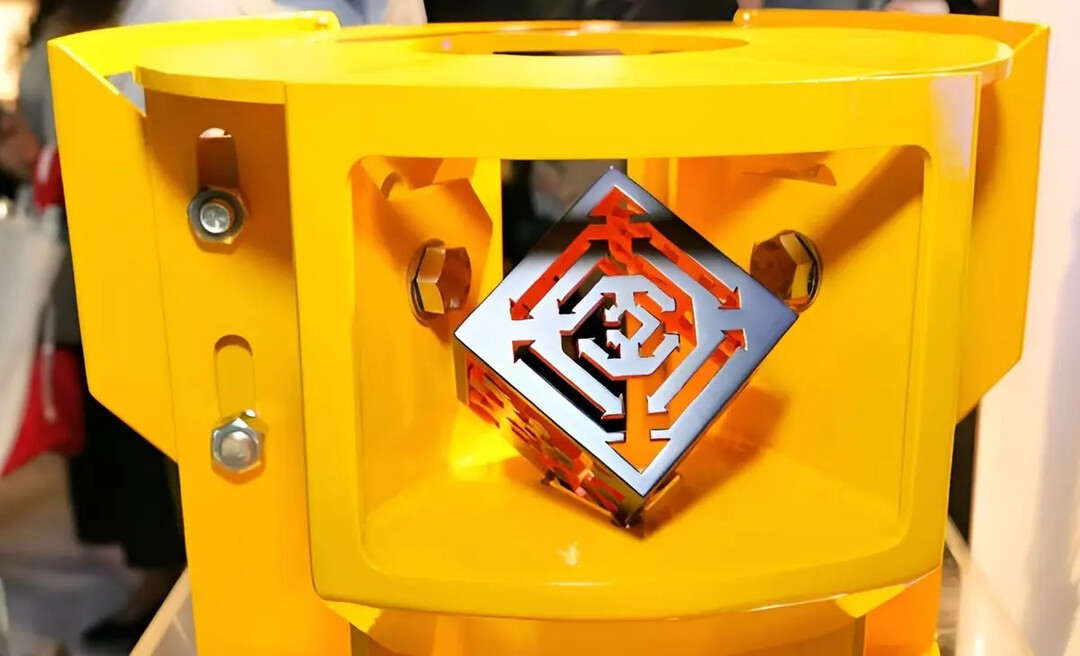
Singapore has made history by installing the world's first art gallery at a depth of 7,000 meters (22,965 feet) below sea level.
The underwater installation consists of three stainless steel cubes created by artist and architect Lakshmi Mohanbabu, who previously sent a work to the International Space Station (ISS) in 2022.
In December, these works were installed near the Mariana Trench in Japan, in collaboration with the Japan Agency for Marine-Earth Science and Technology (JAMSTEC).
This installation is more than just a symbolic gesture; it is part of a collaborative project to enhance the early warning system for underwater earthquakes.
Convergence of Science, Art, and Engineering
One of the three cubes was created using a novel hybrid manufacturing technique developed by researchers at Nanyang Technological University, Singapore (NTU Singapore).
The installation coincided with Singapore's SG60 celebrations and was commemorated at a ceremony at Gallery ART NOW, attended by NTU Board of Trustees Chair and National Arts Council Chair Goh Swee Chen.
Each cube is 10 centimeters (3.94 inches) wide, made of corrosion-resistant stainless steel, and features five symbols from Mohanbabu's "universal symbolic language."
The five designs—Nautilus, Primary, Secondary, Windmill, and Dromenon—represent common elements of human experience such as movement, direction, and time.
These symbols are displayed on five of the six faces of each hollow cube, with each face having a unique top design. For example, the cube made with NTU's 3D printing method displays Dromenon on its top, while others display Primary and Nautilus.
Deep-Sea Art Gallery
This project is a tribute to all those affected by natural disasters. According to Mohanbabu, art has a unique ability to connect humanity beyond physical and metaphorical depths.
"Through the Deep Sea Interaction Project, we aim to bring about meaningful change by bringing people together through shared journeys and purposes, emphasizing our interconnected existence," said Mohanbabu.
"The early Interaction Cubes that orbited Earth in space will also be sent to the moon as part of a permanent art installation. With these two art installations, Singapore becomes the first country to have works installed on the moon and in the deep sea."
"This milestone is also a testament to Singapore's pioneering spirit and perseverance as we celebrate SG60 this year."
Scientific Discovery and Cultural Expression
The cubes were originally integrated into a long-term borehole monitoring system (LTBMS) developed to track seismic activity around tectonic plate boundaries.
To accommodate the artwork, NuStar Technologies and JAMSTEC modified the LTBMS by adding custom cavities and holders.
A deep-sea camera system was also deployed to capture images and videos of the installation at record depths.
The cubes were officially installed on December 12, 2024, becoming part of Japan's Dense Oceanfloor Network System for Earthquakes and Tsunamis (DONET), an early warning system.
"Together with Lakshmi and our partners at JAMSTEC, we have shown that the deep sea can be a platform for scientific discovery and cultural expression," said Goi Kim Kok, Managing Director of NuStar Technologies.
"Next year also marks the 60th anniversary of diplomatic relations between Singapore and Japan."
Strong Structure for Extreme Environments
NTU Singapore played a key role in creating one of the cubes using a technique called LAPIS (Laser-Aided Patterning and Integrated Substrate).
This method combines 3D printing and laser cutting to stack 80 ultra-thin layers of stainless steel, creating walls only 4mm thick.
The result is a structure that is more than 70% stronger than traditional steel and can withstand the immense pressure and corrosiveness of the deep sea.
Lai Changquan, a professor at NTU's Singapore Centre for 3D Printing, developed LAPIS with his team.
"This project demonstrates the potential of interdisciplinary research to push the boundaries of what is possible. Creating an artwork that can withstand the immense pressure of the deep sea is a testament to the versatility and durability of our technology," said Changquan.
Following the success of this project, Lai and his students launched a startup with support from NTU's Innovation and Entrepreneurship initiative. Their goal is to expand the use of this technology in the aerospace, marine, and energy sectors.
Art Across Land, Sea, and Space
This is the third project Mohanbabu has collaborated on with NTU SC3DP. Previous collaborations included the creation and 3D printing of prototypes of her miniature interaction works.
In 2022, two of her cubes were sent into space as part of the Moon Gallery project and are scheduled to be installed on the moon in 2025.
Now, with the Deep Sea Interaction Project installed in both outer space and the seabed, it reflects Singapore's spirit of innovation and unity.
Art Gallery Connecting Cultures
Mohanbabu sees this project as a symbol of what is possible when creativity and science meet. She hopes it inspires others to push boundaries, whether reaching for the stars or the bottom of the ocean.
The three cube colors—red and white, sea and orange, and purple and aquamarine—represent the mysteries of Earth, change, and the universe.
The red and white cubes commemorate the relationship between Singapore and Japan, inspired by the shared flag symbols of the sun, stars, and moon.
More than just a statement, this project is a practical model of how design, science, and purpose can come together to spark global connections and save lives through earthquake monitoring missions.
[Copyright (c) Global Economic Times. All Rights Reserved.]