![[등록] 2026-09-01 15:48:31](/support/_updata/banner2/tl181982910_6749.png)


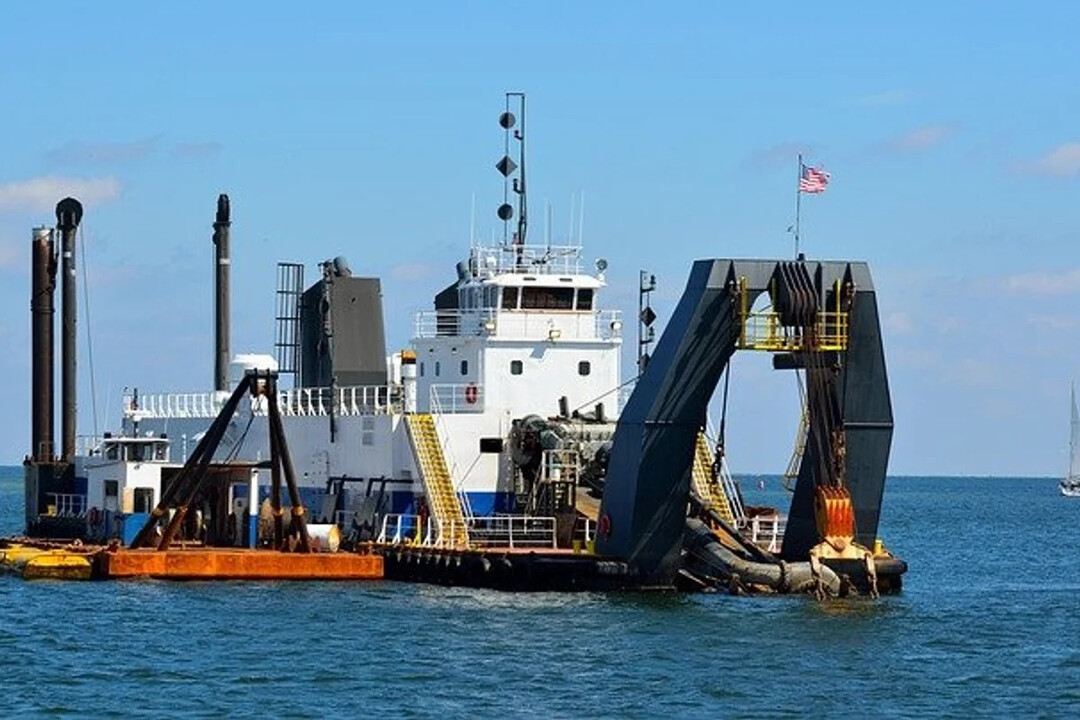
GRAND HAVEN, MI — Massive freighters carrying limestone, slag, and crushed stone essential for Michigan road construction are a daily spectacle as they navigate through the Grand Haven breakwaters. These vessels require sufficiently deep harbor channels to safely sail up the Grand River to the Verplank Dock in Ferrysburg. There, the unloaded aggregates form towering piles, ready to supply road construction sites across Michigan.
However, dredging of the Grand Haven inner harbor faces potential cancellation this fall due to opposition from the federal government, which is resisting new contamination testing standards demanded by the state. The state government has raised concerns that sediment dredged from over a dozen Michigan ports could contaminate drinking water sources depending on where it is ultimately deposited.
On March 26, the U.S. Army Corps of Engineers denied an internal funding request for PFAS (per- and polyfluoroalkyl substances) testing of Grand Haven harbor sediment, a toxic chemical that the state has actively tested for across Michigan for about a decade.
The Army Corps argues that PFAS testing in Grand Haven and other areas could significantly increase dredging costs if the sediment is found to be highly toxic and requires disposal.
In response, U.S. Rep. Bill Huizenga of Michigan’s 2nd Congressional District strongly criticized Gov. Gretchen Whitmer on April 1, labeling it a “port-killing order” and accusing the Michigan Department of Environment, Great Lakes, and Energy (EGLE) of hindering cargo movement with unclear testing standards.
Companies reliant on the Grand Haven port worry that the dredging delay will reduce the amount of material ships can carry at once, increasing freight costs and potentially leading to higher road construction expenses. There are growing concerns that the buildup of sediment could impede vessel traffic, as dredging was originally expected last fall.
The Army Corps plans to re-push for dredging of the Grand Haven harbor next year. Ron Matthews, CEO of Verplank Family Holdings, criticized, “While the governor has been very proactive on roads, it doesn’t seem like the EGLE department under Gov. Whitmer even recognizes that their actions have put a major crimp in the governor’s plans.”
Concerns Over Soaring Dredging Costs at Menominee Harbor
While Gov. Whitmer was in Washington D.C. on April 9 for meetings at the White House with President Donald Trump, EGLE and the Army Corps held discussions regarding the contamination testing dispute.
Nick Zager, operations manager for the Army Corps’ Detroit District, described the meeting as “productive” and stated that the district plans to re-request funding for the Grand Haven testing.
Sediment testing is not a new procedure for the Army Corps, but PFAS has not been part of the routine list of contaminants tested in harbor sediment. Zager explained that the Corps initially misunderstood how EGLE intended to measure PFAS.
Following Wednesday’s meeting, he said, “The standards were there, but they needed to be applied within the framework of dredging operations, not water quality standards. We all thought they had to develop new standards, but that wasn’t the case.”
The state government has been working since last fall to provide guidance to the Army Corps on how to conduct PFAS testing. According to EGLE, 17 of the 69 waterways in Michigan managed by the Army Corps are close enough to or have surface water contamination levels near more than 300 PFAS contamination sites identified by the state, warranting testing.
The sites slated for testing include the Clinton River, the Detroit River, and the harbors of Alpena, Port Huron, St. Clair, Grand Haven, Holland, Manistee, Menominee, Monroe, Saginaw, South Haven, and St. Joseph.
Sediment from Michigan’s outer harbors is mostly sand, which Army Corps contractors use for beach nourishment. The state’s concern focuses on inner harbors where finer silt sediment, to which PFAS molecules tend to cling, accumulates due to tributary flows.
While the federal government is responsible for maintaining harbors for navigation, Michigan owns the bottomlands of the Great Lakes harbors and has the authority under Section 401 of the Clean Water Act to require dredging projects to meet water quality standards through a certification process.
“We don’t want to create contaminated sites with the dredged material that would then require future cleanup,” emphasized Jillian Gane, EGLE’s chief of staff.
According to Gane, EGLE gained the authority to require PFAS sediment testing in 2020, but it was only in the last few years that the agency began requesting the Army Corps to test harbor bottoms.
In early 2024, at the request of Wisconsin and Michigan, the Army Corps tested sediment in Menominee Harbor as part of a feasibility study for deepening the harbor. Initial cost estimates for dredging Menominee Harbor caused significant alarm, skyrocketing the total project cost from $38 million to over $187 million due to what Zager described as a “worst-case scenario” estimate.
The largest cost driver was potential sediment disposal – the expense of transporting and disposing of 500,000 cubic yards of contaminated sediment inland, a massive additional cost compared to dumping it offshore in Lake Michigan.
Fortunately, Zager stated that testing revealed only about 4% of the Menominee Harbor sediment was likely contaminated, far less than the 20% the Army Corps had anticipated. He added that it might be possible to avoid dredging the contaminated areas altogether.
“That will bring the cost back down,” Zager said. “It’s not as big of a threat to navigation as we originally thought.”
Severe Harbor Contamination Scenarios
So far, Grand Haven is the only Michigan port with a dredging delay, thanks to schedule adjustments to allow EGLE and the Army Corps time to finalize testing standards. Other ports slated for testing do not have dredging planned until 2026.
However, Zager cautioned that the possibility remains that PFAS levels in Grand Haven or other Michigan harbors could be so high that the cost of dredging or remediation would be prohibitive, potentially threatening the future of those ports.
“If we look at these harbors and there are a lot of PFAS hot spots, that could ultimately mean that it’s no longer economically feasible to dredge all or a significant portion of that harbor,” Zager explained.
Rep. Huizenga, who criticized the state before the meeting with EGLE, did not respond to additional inquiries from MLive. In a March 28 letter to Gov. Whitmer, Huizenga stated he was told the testing requirements arose after PFAS chemicals were added to the U.S. Environmental Protection Agency’s (EPA) list of regulated hazardous substances.
Michael Moran, port director for the St. Joseph harbor, which sees about 50 freighter visits annually, remains optimistic that dredging will proceed as scheduled in 2026. “We want to balance environmental responsibility with commercial shipping. We’re hoping the dredging can continue,” he said.
At Verplank in Grand Haven, Matthews remains concerned about unpredictable constraints, such as the Army Corps’ lengthy bidding and contracting schedules and restrictions on dredging during fish spawning season. He hopes the PFAS testing procedures will be smoothly resolved before disruptions occur in key connecting waterways.
“If the Detroit River gets too shallow, it stops iron ore from going from Duluth to Cleveland, and the steel industry is impacted,” Matthews added. “That’s when people really start to pay attention.”
[Copyright (c) Global Economic Times. All Rights Reserved.]