![[등록] 2026-09-01 15:48:31](/support/_updata/banner2/tl181982910_6749.png)


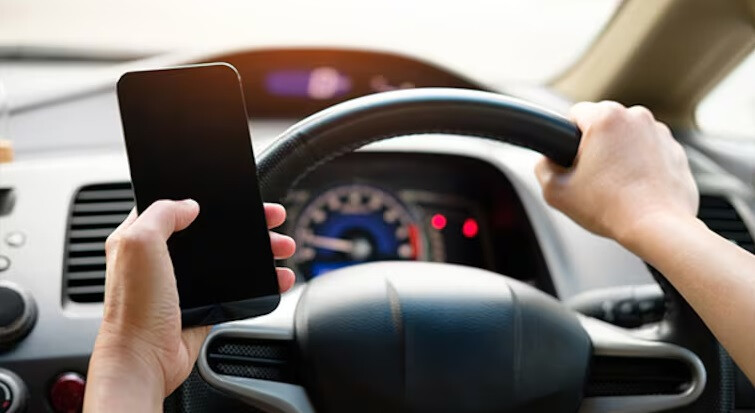
The Paraguayan Ministry of Public Works and Communications (MOPC) reminds citizens that the use of mobile phones, devices that cause distraction while driving, is expressly prohibited by National Traffic and Road Safety Law No. 5016/14.
Mobile phones, used for various purposes such as checking messages, referring to map apps, and making calls, have recently become a major distraction significantly impacting traffic flow. Traffic safety largely depends on the driver's complete attention, and adherence to traffic laws is essential to prevent accidents and protect the lives of all road users.
Chief Inspector Andrés Benítez, Acting Director of Traffic Safety Education of the Road Patrol under the MOPC, explained that "the continuous use of headphones and/or manual communication systems (voice, text, data) while driving a vehicle is considered a serious violation according to Article 66, Section 5 of current regulations." Violators will be subject to a fine of 753,389 Guaraníes, equivalent to seven daily minimum wages.
While using hands-free devices for calls within the vehicle is a legally permitted option, it is still not recommended as it can also cause distractions that reduce the driver's concentration.
Therefore, the authorities urge drivers to refrain from using mobile phones, hands-free devices, and other factors that impair responsiveness, and to exercise maximum caution while driving. If a call or text message needs to be made, it is best to stop the vehicle in a safe place.
Inspector Benítez also emphasized that the regulation includes all actions that lead to negligence regarding the road environment. He clarified, "It must be clear that this includes not only drinking tereré or mate but even drinking carbonated beverages, as the driver must always pay attention to traffic conditions and should not be distracted by anything inside the vehicle." Even momentary carelessness can lead to accidents with serious consequences in areas with heavy traffic.
Internet search results indicate that the dangers of using mobile phones while driving are seriously recognized worldwide, and various countries are implementing diverse laws and campaigns to prevent it. Studies show that using a mobile phone while driving slows down a driver's reaction time and impairs cognitive abilities to a level similar to driving with a blood alcohol concentration of 0.08%. This significantly increases the risk of traffic accidents.
In many countries, including Paraguay, the use of mobile phones while driving is prohibited by law, and violations are subject to penalties such as fines and demerit points. Some countries impose stricter sanctions, such as license suspension or revocation, for repeated offenses. Furthermore, if an accident occurs due to the use of a mobile phone while driving, legal responsibility may be more severely applied.
Recently, not only calls and text messages but also the use of various mobile phone functions while driving, such as using navigation apps, managing music playlists, and checking social media, have been pointed out as problems. In particular, with the proliferation of smartphones, the risk of drivers constantly being distracted by their phones while driving has further increased.
Accordingly, governments and traffic safety-related organizations in various countries are making various efforts to continuously inform drivers about the dangers of using mobile phones while driving and to strengthen related regulations. For example, public service advertisements visually demonstrate the dangers of using mobile phones while driving, and safety driving campaigns are being conducted using celebrities. In addition, technical solutions are being explored, such as developing apps that restrict the use of certain mobile phone functions while driving or incorporating related functions into vehicles themselves.
Paraguay's latest warning can be seen as part of these international efforts, and a mature civic consciousness is required from drivers to refrain from using mobile phones while driving, not only for their own safety but also for the safety of other road users. It is important to remember that momentary carelessness can lead to irreversible consequences, and constant vigilance regarding safe driving should always be maintained.
[Copyright (c) Global Economic Times. All Rights Reserved.]