![[등록] 2026-09-01 15:48:31](/support/_updata/banner2/tl181982910_6749.png)


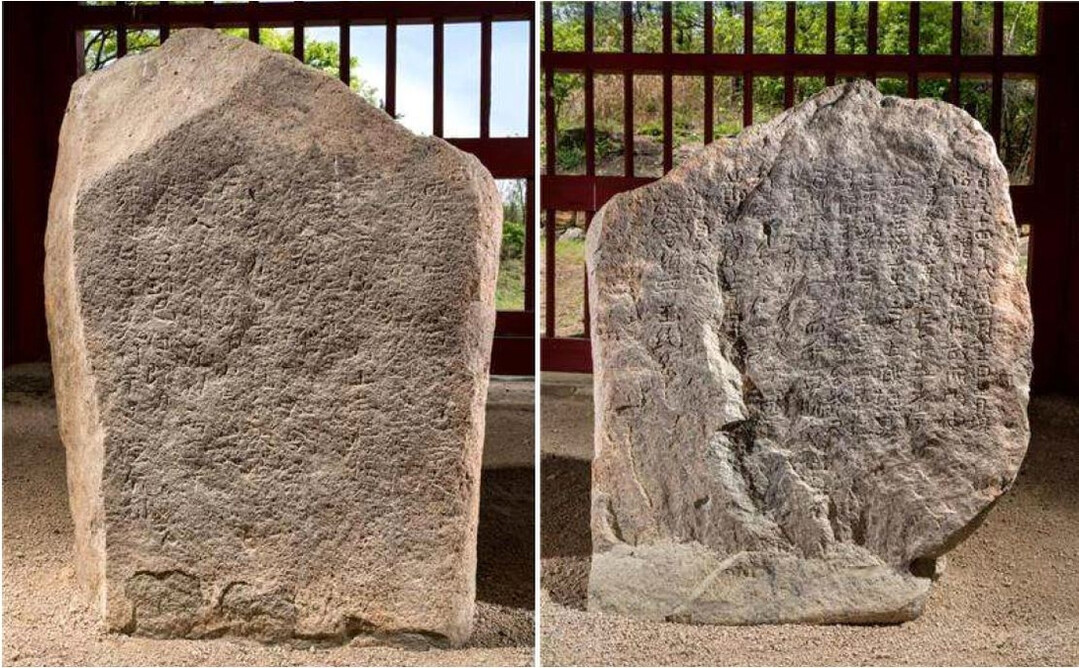
Yeongcheon, Gyeongbuk Province – The "Yeongcheon Cheongjebi," a pair of ancient Silla Dynasty steles that chronicle the construction and repair of a vital flood-control dike, was officially designated a National Treasure by the Korea Heritage Service on June 20. This significant upgrade, occurring 56 years after its initial designation as a Treasure in 1969, highlights its profound historical and academic value. The monument now stands as Yeongcheon City's second National Treasure, a source of immense regional pride.
The "Yeongcheon Cheongjebi" comprises two distinct steles erected beside "Cheongmot," a reservoir in Donam-dong, Yeongcheon-si, Gyeongsangbuk-do, which has remarkably remained in active use since its Silla-era inception. Uniquely, these inscriptions are carved directly onto natural stone slabs, eschewing conventional bases or capstones. The two steles are individually known as the "Cheongjechukjo/Suribi" (Dike Construction and Repair Stele) and the "Cheongjejungnipbi" (Dike Re-erection Stele).
The "Cheongjechukjo/Suribi" is a double-sided monument, with the front face, known as the "Chukjobi" (Construction Stele), detailing the momentous undertaking of building a large dike on February 8, 536 CE (the 23rd year of King Beopheung's reign). This inscription meticulously records the project's scale, the number of personnel involved, and the names of the responsible supervisors and administrators. The reverse side, the "Suribi" (Repair Stele), documents a later repair effort undertaken on April 13, 798 CE (the 14th year of King Wonseong's reign). It provides an invaluable account of the dike's damage, the progress of its restoration, the scope of the repairs, the duration of the construction, and the identities of the officials and laborers mobilized for the task. The remarkably well-preserved condition of these inscriptions allows for most of their content to be deciphered, offering direct insights into the period.
Adjacent to this primary stele stands the "Cheongjejungnipbi." This companion monument chronicles a significant event from the Joseon Dynasty: the re-erection of the buried "Cheongjechukjo/Suribi" in 1688 by local Confucian scholars. This act ensured the continued preservation and accessibility of the invaluable historical records.
The Korea Heritage Service underscored the profound significance of the "Cheongjechukjo/Suribi," stating that it serves as a crucial historical source for studying the political, social, and economic conditions of Silla. It provides direct evidence of the state-led civil engineering projects undertaken to overcome natural disasters, particularly during the 6th century and the late 8th to 9th centuries, periods frequently plagued by floods and droughts. The steles offer a unique glimpse into Silla's sophisticated civil engineering techniques and its systematic approach to disaster response. Furthermore, the presence of inscriptions from different historical periods on a single stele, coupled with its undisturbed preservation at its original site, further elevates its academic and historical distinction.
In anticipation of its enhanced status, Yeongcheon City has taken proactive measures to safeguard the "Cheongjebi," constructing a protective pavilion and implementing regular maintenance and preservation programs. Choi Gi-moon, the Mayor of Yeongcheon City, expressed profound pride in the "Yeongcheon Cheongjebi" as a local cultural heritage that has endured for centuries. He emphasized that the National Treasure designation would significantly elevate the region's cultural standing and pledged continued efforts to discover and protect other valuable cultural assets within Yeongcheon. Building on this monumental achievement, Yeongcheon City also announced plans to collaborate with relevant organizations, including Gyeongbuk Province and the Korea Heritage Service, with the ambitious goal of pursuing its inscription as a UNESCO World Heritage site in the future.
[Copyright (c) Global Economic Times. All Rights Reserved.]