• 2026.11.11 (Wed)
  • All articles
  • LOGIN
  • JOIN
Global Economic Times
[등록] 2026-09-01 15:48:31
  • Synthesis
  • World
  • Business
  • Industry
  • ICT
  • Distribution Economy
  • Well+Being
    • Pet Life
    • Halal Horizon
  • Travel
  • Eco-News
  • Education
  • Korean Wave News
  • Opinion
  • Arts&Culture
  • Sports
  • People & Life
    • International Student Report
    • With Ambassador
  • Column
    • Cho Kijo Column
    • Cherry Garden Story
    • Ko Yong-chul Column
    • Kim Bong-seon's Photo Column
    • Kim Seul-Ong Column
    • Lee Yeon-sil Column
  • Photo News
  • New Book Guide
MENU
 
Home > Synthesis

South Korea’s Graduate Schools Face Empty Classrooms as Demand for Tech Talent Reaches Critical Mass

Nathan Ko Special Correspondent / Updated : 2026-11-11 05:46:11
  • -
  • +
  • Print


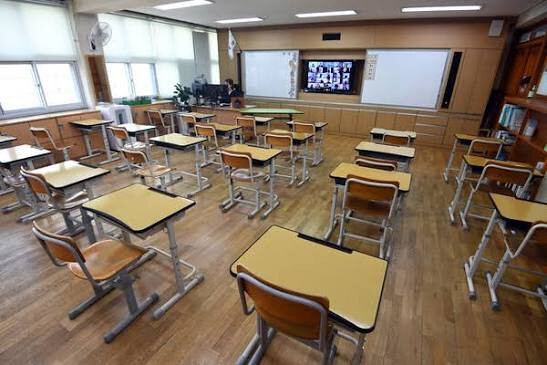
SEOUL — South Korea’s higher education landscape is facing a profound paradox. While the nation accelerates its push to dominate strategic sectors like semiconductors and artificial intelligence, its graduate schools are quietly emptying out.

Recent data submitted by lawmakers paints a stark picture of declining enrollment. At Pusan National University, a key institution designated under regional development initiatives, roughly 41.5% of graduate recruitment units reported zero new student enrollments. Seoul National University, the country’s top-tier institution, has similarly struggled, with an average of 14.5% to 15.1% of its graduate programs failing to attract a single student over recent years.

Across the country, the crisis extends far beyond a few select universities. Reports indicate that 86% of general graduate schools nationwide failed to fill their quotas, affecting both humanities and science departments alike.

A Brain Drain and Institutional Neglect

Education experts point to a multi-faceted crisis. On one hand, undergraduate students increasingly bypass graduate school to enter the job market immediately. On the other hand, faculty departures are compounding the problem; data shows that nine major regional national universities lost 323 professors between 2021 and mid-2025.

Compounding these institutional challenges is a chronic underfunding of higher education. According to recent OECD indicators, South Korea’s public expenditure per tertiary student stands at $16,479—merely 72% of the OECD average. In contrast, spending on secondary education students sits well above the OECD average at 145%. Critics argue that reforming local education finance grants to bolster higher education investment is long overdue. Furthermore, a recent survey by the Korean Council for University Education revealed that not a single responding university could independently finance the AI-driven transformation (AX) investments required for the future.

The Race for Semiconductor and AI Specialists

With massive industrial projects on the horizon—including planned semiconductor clusters in Yongin and the Honam region—experts estimate that over 85,000 advanced professionals will be needed. Building cutting-edge fabrication plants is only half the battle; cultivating top-tier talent is a pressing race against time.

To bridge this gap, regional universities and local governments are stepping up. Chonnam National University, for instance, plans to launch an advanced semiconductor engineering department by March 2028, aiming to enroll 200 students, including 50 in corporate-sponsored contract tracks.

Expanding Military Service Exemptions for Researchers

Policy experts and lawmakers are also calling for bold systemic reforms to keep brilliant minds in the research ecosystem. During recent parliamentary audits, discussions intensified around expanding the professional research personnel system—an alternative military service scheme that allows science and engineering graduate degree holders to work in corporate research labs rather than serving active military duty.

Lawmakers have advocated for making the upcoming specialized researcher program for large AI firms a permanent policy rather than a temporary three-year pilot, while extending it to cover 12 national strategic technologies, including semiconductors, displays, secondary batteries, and advanced mobility.

As South Korea strives to secure its position as a global high-tech powerhouse, bridging the gap between industrial demand and academic vitality will require unprecedented cooperation among the government, local authorities, and private enterprises.

[Copyright (c) Global Economic Times. All Rights Reserved.]

  • #Cherry Garden
  • #HalalFood
  • #Halal
  • #Petlife
  • #Halalhorizone
  • #Hormuz Impasse
  • #globaleconomictimes
  • #micorea
  • #mykor
Nathan Ko Special Correspondent

Popular articles

  • South Korea’s Diplomatic Balancing Act: Can Seoul Pursue Closer Ties with Russia While Supplying Weapons to Europe?

  • "Couldn't Find a Vein"... US Execution 'Fails' After 10 Needle Pricks on Inmate's Arms

  • Tokyo Olympics Women’s Marathon Gold Medalist Provisionally Suspended Following Doping Violation

I like it
Share
  • Facebook
  • X
  • Kakaotalk
  • LINE
  • BAND
  • NAVER
  • https://www.globaleconomictimes.kr/article/1065559471812923 Copy URL copied.
Comments >

Comments 0

Weekly Hot Issue

  • G마켓 Expands Beyond Search: E-Commerce Giant Taps Creators for SNS Shopping
  • JTBC Initiates Formal Sale Process to Find a Strategic Buyer
  • Miky Lee Honored with Asian Hall of Fame’s Centennial Medal for Pioneering Global K-Culture
  • The Harsh Reality of K-Pop: Why Small Agency Idols Struggle to Survive Beyond Three Years
  • Regional Tourism in South Korea Struggles as Infrastructure Lags Behind Inbound Airport Growth
  • K-Pop Giants Unite: Joint Venture Formed to Organize Mega-Festival 'Phenomenon'

Most Viewed

1
US Army Conducts Rare Temporary Burial Drills to Prepare for Worst-Case Large-Scale War Scenarios
2
World Citizens are Flying Directly to Busan... The Era of 4 Million Foreigners is Just Around the Corner
3
Eating 100g of Baechu Kimchi Daily Linked to Lower High-Cholesterol Risks
4
Meeting Christmas Early!… Busan Dessert Sales Event "Daldal The Market" Held
5
South Korea and Ethiopia Sign Trilateral MOU to Introduce Liquid-Based Cytology (LBC) Technology for Cervical Cancer Diagnosis
체리가든 스토리
nutri huevos
로타리
동포저널

Hot Issue

LG Electronics and Skyscanner Partner to Bring Smart Travel Planning to Living Rooms

Regional Tourism in South Korea Struggles as Infrastructure Lags Behind Inbound Airport Growth

Miky Lee Honored with Asian Hall of Fame’s Centennial Medal for Pioneering Global K-Culture

Fashion Runway Show 2026

Let’s recycle the old blankets in Jeju Island’s closet instead of incinerating them.

Global Economic Times
korocamia@naver.com
CEO : LEE YEON-SIL
Publisher : KO YONG-CHUL
Registration number : Seoul, A55681
Registration Date : 2024-10-24
Youth Protection Manager: KO YONG-CHUL
Singapore Headquarters
5A Woodlands Road #11-34 The Tennery. S'677728
Korean Branch
Phone : +82(0)10 4724 5264
#304, 6 Nonhyeon-ro 111-gil, Gangnam-gu, Seoul
Copyright © Global Economic Times All Rights Reserved
  • News K
  • 반달곰 프로젝트
  • 광고문의
Search
Category
  • All articles
  • Synthesis
  • World
  • Business
  • Industry
  • ICT
  • Distribution Economy
  • Well+Being 
    • 전체
    • Pet Life
    • Halal Horizon
  • Travel
  • Eco-News
  • Education
  • Korean Wave News
  • Opinion
  • Arts&Culture
  • Sports
  • People & Life 
    • 전체
    • International Student Report
    • With Ambassador
  • Column 
    • 전체
    • Cho Kijo Column
    • Cherry Garden Story
    • Ko Yong-chul Column
    • Kim Bong-seon's Photo Column
    • Kim Seul-Ong Column
    • Lee Yeon-sil Column
  • Photo News
  • New Book Guide
  • Overseas Koreans
  • Multicultural News