• 2026.06.27 (Sat)
  • All articles
  • LOGIN
  • JOIN
Global Economic Times
fashionrunwayshow2026
  • Synthesis
  • World
  • Business
  • Industry
  • ICT
  • Distribution Economy
  • Well+Being
  • Travel
  • Eco-News
  • Education
  • Korean Wave News
  • Opinion
  • Arts&Culture
  • Sports
  • People & Life
    • International Student Report
    • With Ambassador
  • Column
    • Cho Kijo Column
    • Cherry Garden Story
    • Ko Yong-chul Column
    • Kim Seul-Ong Column
    • Lee Yeon-sil Column
  • Photo News
  • New Book Guide
MENU
 
Home > Business

The Kimchi Crisis: Climate Change and the Battle for South Korea's Culinary Soul

KO YONG-CHUL Reporter / Updated : 2025-12-25 04:52:27
  • -
  • +
  • Print

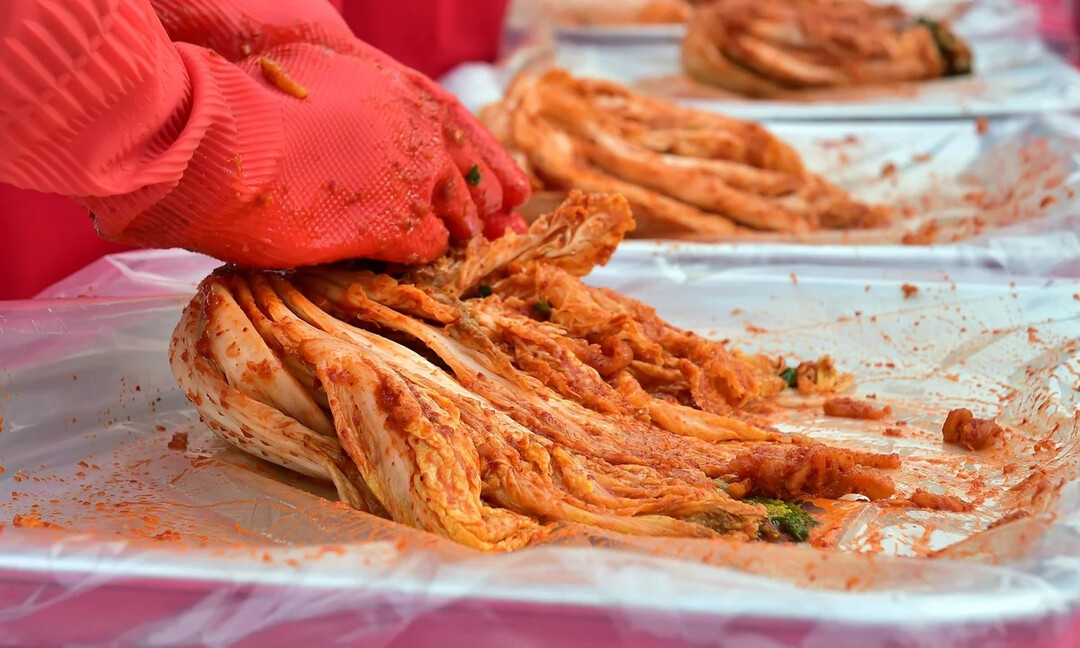
(C) The Guardian


SEOUL — South Korea, the birthplace of kimchi, is facing a profound industrial and cultural crisis. As extreme weather patterns disrupt the supply of domestic napa cabbage, a surge of low-priced Chinese imports is fundamentally altering the nation's food landscape. This shift has prompted experts and international observers to warn that the country's most iconic side dish is standing at a critical crossroads.

The "Heatflation" Threat
The primary driver behind this instability is the accelerating climate crisis. Napa cabbage, which thrives in the cool temperatures of the highlands (ideally between 18°C and 21°C), has become increasingly vulnerable to "heatflation." In 2025, prolonged heatwaves and erratic heavy rains caused cabbage prices to soar past 7,000 KRW ($5.40) per head—a spike of over 50% within a single month.

The area dedicated to highland cabbage cultivation has nearly halved over the last two decades. Rising temperatures have not only reduced yields but also introduced new pests, such as the beet armyworm, which further degrade crop quality. These supply shocks often result in wholesale prices doubling or tripling in short intervals, making domestic production an increasingly risky endeavor for farmers and local manufacturers alike.

 
The Chinese Offensive
The vacuum left by domestic supply instability is being rapidly filled by China. According to recent trade data, South Korea's kimchi imports—almost entirely from China—surpassed $159 million in the first ten months of 2025, leading to a widening trade deficit.

The most significant factor is price. Chinese kimchi currently retails for approximately 1,700 KRW ($1.15) per kilogram, while Korean-made versions average 3,600 KRW ($2.45)—more than double the price. For many local restaurants struggling with high inflation, the choice is economic rather than cultural.

"South Korean kimchi relies on its unique taste and superior quality as its final line of defense," The Guardian reported. "However, the industry ecosystem is at a critical turning point as the Chinese offensive, armed with overwhelming price competitiveness, intensifies."

Government and Industry Response
In response to the "Kimchi Crisis," the South Korean government has implemented emergency measures. In late 2025, the Ministry of Agriculture, Food and Rural Affairs injected a record 5 billion KRW to provide consumers with discounts of up to 40% on essential ingredients during the traditional Kimjang (kimchi-making) season. Furthermore, the government is investing in massive climate-controlled storage facilities and developing heat-resistant "Kimchi Cabbage" varieties to ensure long-term supply stability.

Despite these efforts, the structural challenge remains. With over 75% of domestic kimchi producers operating as small-scale businesses with fewer than four employees, the industry lacks the economies of scale needed to compete with large-scale Chinese factories. As the "last line of defense"—quality and heritage—is tested by the reality of climate change and global trade, the future of South Korea's national dish remains uncertain.

[Copyright (c) Global Economic Times. All Rights Reserved.]

  • #Globaleconomictimes
  • #Korea
  • #Seoul
  • #Samsung
  • #LG
  • #Bitcoin
  • #Meta
  • #Business
  • #Economic
  • #The Woori Bank
  • #Elon Musk
KO YONG-CHUL Reporter
Reporter Page

Popular articles

  • Our Embassy met on Friday, May 29, with the Kkottongnae brothers, who run a nursing home in the city of Caacupé, to learn about their main activities and future plans.

  • Ambassador Hyuk-Sang Sohn participated on May 26 in the signing ceremony of the Discussion Memorandum

  • Personal Interest Engraved on the Dollar: Witnessing the Regression of American Democracy

I like it
Share
  • Facebook
  • X
  • Kakaotalk
  • LINE
  • BAND
  • NAVER
  • https://www.globaleconomictimes.kr/article/1065556255300500 Copy URL copied.
Comments >

Comments 0

Weekly Hot Issue

  • BYD Unveils First Plug-in Hybrid ‘Sealion 6’ in Korea, Targeting Eco-Friendly Market at 37.5 Million Won 
  • Kia’s Strategic Pivot: Accelerating Electrification Through SDV, PBV, and EREV Innovation
  • Devastating Twin Earthquakes Strike Venezuela: Death Toll Rises Amid Humanitarian Crisis
  • Hyundai Motor Prioritizes "Customer Experience" Over Pricing: Aiming for Lifelong Loyalty with the New Avante
  • South Korea's Path to Round of 32 Grows Perilous Following Australia-Paraguay Draw
  • The True Face of Our Politics After Stripping Away the Mask of Fairness

Most Viewed

1
[In-depth Report] The Islamic ‘Halal Barrier’ Just Around the Corner… The Silent Screams of K-Beauty SMEs
2
Asking about the Future of ‘Hangeul City Ulsan’… Special Lecture by Novelist Kim Jin-myung to be Held
3
Embassy of Pakistan in Seoul Hosts Commemorative Event for the 150th Birth Anniversary of Muhammad Ali Jinnah
4
KOSPI Hits Historic 9,300 Milestone as Market Cap Surpasses 8,000 Trillion Won
5
'K-Medicine' Sweep Drives Foreign Medical Spending in Korea to Record High of 250 Billion Won
광고문의
임시1
임시3
임시2

Hot Issue

Devastating Twin Earthquakes Strike Venezuela: Death Toll Rises Amid Humanitarian Crisis

Political Debates Spark Over Semiconductor "Windfall" Redistribution

Google Play Hosts 'ChangGoo Alumni Day' to Accelerate Global Expansion for 760 Korean Startups

Government Slashes Petroleum Price Caps by 150 Won per Liter amid Easing Middle East Tensions

Fashion Runway Show 2026

Global Economic Times
korocamia@naver.com
CEO : LEE YEON-SIL
Publisher : KO YONG-CHUL
Registration number : Seoul, A55681
Registration Date : 2024-10-24
Youth Protection Manager: KO YONG-CHUL
Singapore Headquarters
5A Woodlands Road #11-34 The Tennery. S'677728
Korean Branch
Phone : +82(0)10 4724 5264
#304, 6 Nonhyeon-ro 111-gil, Gangnam-gu, Seoul
Copyright © Global Economic Times All Rights Reserved
  • 향기네무료급식
  • BCB부천방송
  • 반달곰 프로젝트
Search
Category
  • All articles
  • Synthesis
  • World
  • Business
  • Industry
  • ICT
  • Distribution Economy
  • Well+Being
  • Travel
  • Eco-News
  • Education
  • Korean Wave News
  • Opinion
  • Arts&Culture
  • Sports
  • People & Life 
    • 전체
    • International Student Report
    • With Ambassador
  • Column 
    • 전체
    • Cho Kijo Column
    • Cherry Garden Story
    • Ko Yong-chul Column
    • Kim Seul-Ong Column
    • Lee Yeon-sil Column
  • Photo News
  • New Book Guide
  • Multicultural News
  • Jobs & Workers