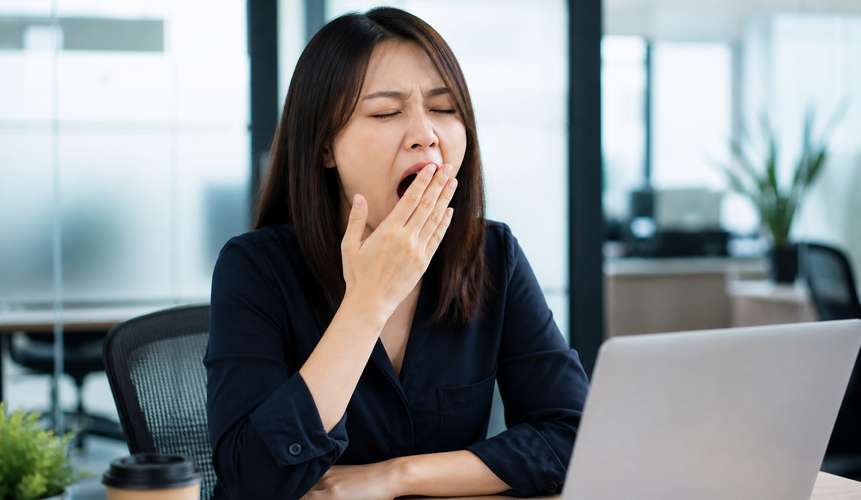
SEOUL — Many people write off persistent daytime fatigue and waning productivity as mere byproducts of a hectic lifestyle or routine stress. However, health specialists caution that if excessive sleepiness lingers despite adequate hours in bed, the underlying culprit may be obstructive sleep apnea (OSA).
Obstructive sleep apnea is a medical condition where the upper airway repeatedly collapses during sleep, causing breathing to pause or shallow out. This interrupts deep, restorative sleep and triggers frequent micro-awakenings throughout the night, leaving individuals heavily fatigued and sleepy during daylight hours.
The consequences of untreated sleep apnea extend far beyond simple daytime tiredness. In the short term, it can impair attention, concentration, memory, and learning capabilities, while elevating anxiety, depression, and workplace errors. It also dramatically increases the risk of motor vehicle accidents and industrial mishaps. Over the long haul, chronic OSA is strongly linked to severe cardiovascular and metabolic complications, including hypertension, atrial fibrillation, stroke, and diabetes.
The Role of CPAP Therapy
Continuous positive airway pressure (CPAP) therapy remains the gold-standard treatment for the condition. CPAP devices deliver a steady stream of pressurized air through a mask during sleep, keeping the airway open and ensuring normal, uninterrupted breathing.
A landmark study published in 2019 demonstrated that administering CPAP therapy to patients with severe obstructive sleep apnea not only reduced daytime somnolence but also significantly boosted job performance. Specifically, patients experienced statistically meaningful enhancements across various domains, including schedule management, work productivity, cognitive processing speed, and interpersonal communication, alongside dramatic drops in daytime sleepiness and anxiety levels.
Early Diagnosis and Structured Home Care Are Key
Medical professionals emphasize that sleep apnea is much more than loud snoring; it is a serious disorder that undermines concentration, professional output, and overall quality of life.
Experts advise anyone experiencing loud snoring, witnessed breathing pauses during sleep, severe daytime drowsiness despite a full night's rest, or a tendency to doze off while driving or working to seek formal evaluation. The primary diagnostic tool is a nocturnal polysomnography (sleep study).
Thanks to national health insurance coverage for qualified patients diagnosed with sleep apnea, the financial barrier to CPAP therapy has lowered substantially, making treatment much more accessible.
Because the success of CPAP therapy heavily relies on daily compliance—consistently using the device at home every night—professional in-home management services have become vital. Specialized respiratory care providers, such as YuYu Teijin, offer comprehensive home-care solutions including device rentals, personalized initial pressure titration, regular home visits, prompt consumable replacements, and 24/7 dedicated customer support. Such close oversight helps patients successfully acclimate during the critical early stages and vastly improves long-term treatment adherence.
Ultimately, addressing daytime exhaustion as a potential medical sign rather than routine tiredness—and pursuing early diagnosis paired with structured professional management—offers the surest path toward reclaiming restful sleep and a vibrant, productive daily life.
[Copyright (c) Global Economic Times. All Rights Reserved.]