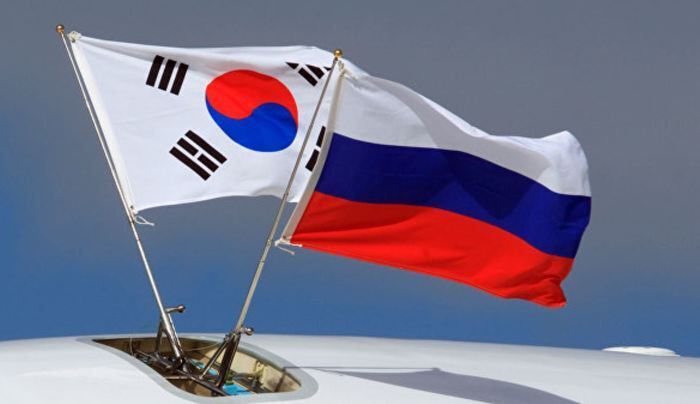
London — As South Korea attempts to mend ties with Russia while simultaneously expanding its defense exports to Europe, foreign policy experts are questioning the realism of this two-pronged strategy. According to a recent report by the British daily The Independent, Seoul’s diplomatic tightrope walk faces mounting hurdles, particularly amid growing friction with Ukraine over North Korean prisoners of war and complex security dynamics within NATO.
In an article titled "Unusual Tensions Between Ukraine and NATO Allies Over the North Korean Issue," The Independent examined South Korea’s dual-track approach to Russia and North Korea, alongside its aggressive push into the European defense market. The report incorporated updated insights from international analysts, reflecting the South Korean government's recent decision to further reduce its embassy staff in Kyiv.
Can Seoul Have It Both Ways?
According to Zhao Tong, a senior fellow at the Carnegie Endowment for International Peace, South Korea is attempting to cooperate closely with Western allies—including the US and Europe—while simultaneously seeking detente with China, Russia, and North Korea.
Zhao noted that President Lee Jae-myung’s persistent outreach to North Korea, despite Pyongyang's repeated rejections, reflects a broader foreign policy vision aimed at improving relations even with states holding starkly different political systems and strategic interests.
A cornerstone of this strategy is South Korea's aggressive expansion into the European defense market. During the NATO summit in Ankara last July, President Lee actively campaigned for deeper defense cooperation. At the NATO Defense Industry Forum, Seoul proposed broadening collaboration beyond traditional arms sales to encompass joint research, development, production, and operation. Aiming to capitalize on surging European defense spending following Russia’s invasion of Ukraine, South Korea has sought to supply advanced weaponry and establish local production partnerships.
However, Seoul is concurrently exploring ways to restore relations with Moscow.
Weighing in on this strategy, Leif-Eric Easley, a professor of international studies at Ewha Womans University, told The Independent that the assumption that South Korea can simultaneously improve ties with Russia and sell weapons to Europe is fundamentally flawed. He suggested that trying to achieve both objectives at once is an unrealistic diplomatic gamble.
Easley explained that South Korea’s progressive camp places a high priority on inter-Korean relations and tends to look to Russia to help restart dialogue with Pyongyang. "Progressives in South Korea believe that one of the roads to Pyongyang goes through Moscow," Easley noted. Furthermore, uncertainties surrounding U.S. policy and Ukraine support under the Donald Trump administration have also made Seoul hesitant to scale up its direct aid to Kyiv.
The Cost of the POW Dispute and Security Trade-Offs
Relations between Seoul and Kyiv have sharply deteriorated over the repatriation of North Korean prisoners of war, a dispute that has also spilled over into controversies regarding South Korean petroleum product supplies to Russia.
While Easley acknowledged that Seoul has legitimate reasons for keeping sensitive intelligence confidential to protect North Korean POWs and their families, he warned that it is unrealistic to expect the intelligence agencies of Russia, China, and North Korea to remain in the dark, or for politicians to keep the repatriation a secret indefinitely.
Crucially, Easley emphasized the security imperative for South Korea to maintain robust ties with Ukraine. Kyiv possesses vital intelligence on North Korea-Russia military cooperation accumulated through direct combat engagements alongside Russian forces, as well as extensive operational experience with large-scale drone warfare against the Russian military. Such battlefield insights and intelligence, he stressed, are invaluable to South Korea’s own national security.
[Copyright (c) Global Economic Times. All Rights Reserved.]