![[등록] 2026-09-01 15:48:31](/support/_updata/banner2/tl181982910_6749.png)


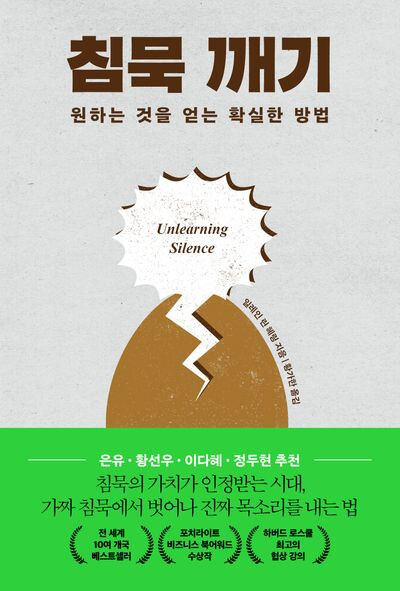
In a society that often extols the virtues of modesty and quietude, a compelling new discourse emerges from Elaine Lin Hering's seminal work, "Breaking the Silence" (or "Unlearning Silence" as it is alternatively known). This profound exploration, originally penned in English and now translated into Korean by Hwang Ga-han, challenges deeply ingrained beliefs, arguing forcefully that silence, far from being a shield, can be a detrimental force for both individuals and the collective.
For generations, individuals have been conditioned to believe that reticence ensures safety and that restraint signifies maturity. Phrases such as, "If I speak up, I'll only spoil the mood," or "Staying quiet guarantees a passable outcome," resonate across cultures, embedding the notion that a subdued presence is often the most prudent path. However, Hering, a distinguished negotiation expert based in the United States, dismantles this conventional wisdom, positing that this perceived virtue frequently acts as a poison, stifling individual potential and undermining societal progress.
The author meticulously illustrates how prevalent assumptions—that silence safeguards personal interests and fosters organizational cohesion—are fundamentally flawed. Instead, she argues, prolonged silence can yield profoundly negative consequences for both the individual psyche and the broader societal fabric. This impact is particularly acute for women, socially vulnerable populations, and minority groups, who frequently endure heightened pressure to remain silent. These individuals often face the arduous task of self-censorship before articulation and must brace for potential repercussions should they choose to voice their perspectives. Hering, drawing from her own experiences as an Asian American navigating various professional environments, recounts the recurring dismissal of her opinions, leading her to conclude that silence is not merely a personal inclination but a pervasive societal construct.
"The world is a noisy place. Silence is violence. You have not been doing anything absurd. You are not overreacting or overly sensitive. It's not your fault," Hering asserts, offering a powerful validation to those who have felt marginalized or overlooked. Her work shifts the onus from the individual to the systemic, advocating for a paradigm where unlearning silence becomes paramount.
The core of Hering's argument revolves around the concept of "unlearning silence," a process she contends is vital for unleashing individual talent, facilitating genuine expression, and enabling individuals to embody more complete versions of themselves. This transformative journey also empowers individuals to support others in similar endeavors. Hering provides a comprehensive framework, guiding readers to identify and dismantle unconscious patterns that perpetuate silence. She offers practical strategies and a concrete roadmap, drawn from real-life examples, to navigate the complexities of this challenging yet indispensable work.
Beyond personal liberation, Hering elucidates the corrosive effects of silence on collective decision-making and innovation. When voices are suppressed, organizations risk conformity, mimicry, and groupthink—phenomena that stifle progress and prevent timely course correction. Leaders, even those with good intentions, can inadvertently perpetuate this culture of silence by failing to create psychologically safe environments where diverse opinions are not only welcomed but actively sought. The absence of varied perspectives, Hering contends, leaves leaders operating within a distorted reality, bereft of crucial information necessary for informed, sound decisions.
A significant thread woven throughout "Unlearning Silence" is the transformative power of vulnerability. Hering challenges the widespread misconception that vulnerability denotes weakness, instead championing it as a profound source of strength. True authenticity and meaningful connection, she argues, are forged through the willingness to be open and exposed.
While some might perceive the call for systemic change or the formation of solidarity as abstract solutions for minorities seeking to amplify their voices, Hering’s approach lends considerable persuasive power. By grounding her arguments in personal narratives and practical insights, she effectively demystifies the pervasive influence of silence. Though primarily focused on American societal dynamics, the book offers profound resonance for a global readership, particularly in cultures such as Korea, where humility is often revered as a cardinal virtue. "Unlearning Silence" serves as an essential guide for anyone who has felt unheard, for leaders committed to fostering inclusive environments, and for all who seek to be seen, known, heard, and valued. It is a clarion call to dismantle the invisible barriers that silence erects, urging individuals and societies alike to embrace the transformative power of voice
[Copyright (c) Global Economic Times. All Rights Reserved.]