• 2026.11.11 (Wed)
  • All articles
  • LOGIN
  • JOIN
Global Economic Times
[등록] 2026-09-01 15:48:31
  • Synthesis
  • World
  • Business
  • Industry
  • ICT
  • Distribution Economy
  • Well+Being
    • Pet Life
    • Halal Horizon
  • Travel
  • Eco-News
  • Education
  • Korean Wave News
  • Opinion
  • Arts&Culture
  • Sports
  • People & Life
    • International Student Report
    • With Ambassador
  • Column
    • Cho Kijo Column
    • Cherry Garden Story
    • Ko Yong-chul Column
    • Kim Bong-seon's Photo Column
    • Kim Seul-Ong Column
    • Lee Yeon-sil Column
  • Photo News
  • New Book Guide
MENU
 
Home > Synthesis

Unraveling the Mystery Behind the "Musty Smell" of Instant Rice: What Recent Science Reveals

Hwang Sujin Reporter / Updated : 2026-09-16 05:37:02
  • -
  • +
  • Print


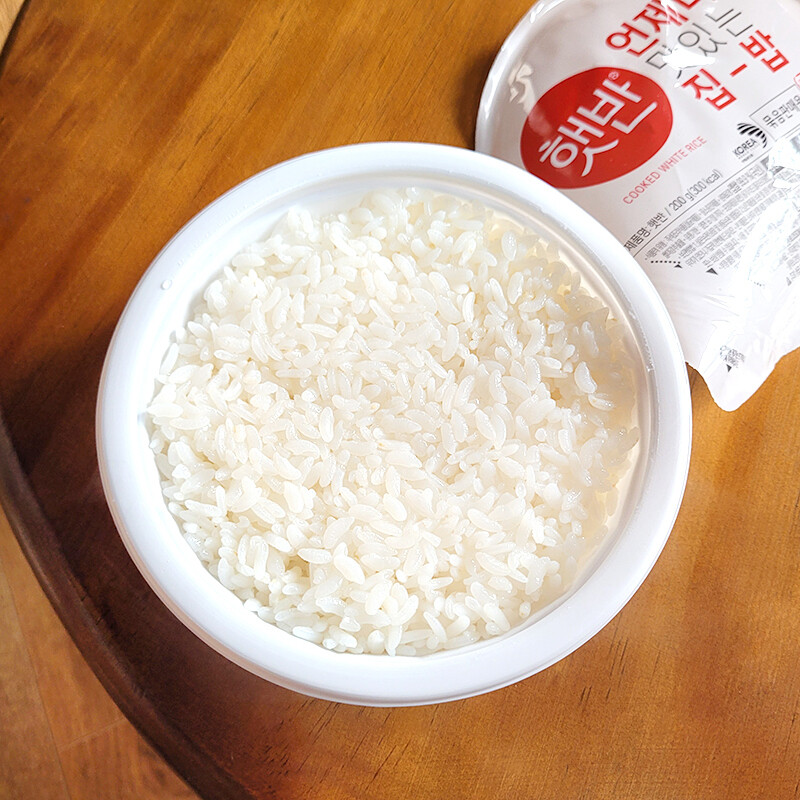
When popping a package of instant rice into the microwave, many consumers have noticed a peculiar, musty, or stale aroma upon opening the lid. Unlike the scent of burning plastic or the savory, comforting fragrance of freshly cooked rice, this distinct odor carries a faint grassy, raw vegetable, or oily undertone that can sometimes feel unappealing. But what is the true identity of this mysterious smell, and why does it occur?

Debunking Common Misconceptions: Is It Really the Acid Regulators?

In online communities, a common culprit often blamed for this phenomenon is the "acid regulator" used in food manufacturing. However, food scientists point out that attributing the entire musty aroma solely to acid regulators is an oversimplification. Recent aromatic profile analyses reveal that the chemical reality behind instant rice flavors is far more complex and multifaceted than a single additive.

Inside the 2025 Landmark Study

Shedding light on this culinary curiosity, a groundbreaking study published in the international journal Food Science and Nutrition provides concrete answers. A collaborative research team led by Professor Ahn Sun-chung from Shinhan University’s Department of Bio-Food and Foodservice Industry and Professor Kwon Tae-eun from Seoil University’s Department of Biochemical Engineering conducted a comprehensive comparison.

The researchers evaluated four commercial aseptic packaged instant rice products against freshly cooked, home-made rice. After heating the instant rice in a 700W microwave for two minutes, the team analyzed not only the physical characteristics like color and texture but also the volatile organic compounds responsible for the aroma.

Key Volatile Compounds Identified

The scientific findings confirmed that the chemical composition of instant rice aromas differs significantly from home-cooked rice. Specifically, several volatile compounds were found in much higher concentrations in commercial instant rice:

Hexanal: Detected at levels approximately 7 times higher than in home-cooked rice, contributing distinct grass, vegetable, and raw-green notes.
2-Pentylfuran: Found at about 3 times higher concentrations, associated with green, plant-like olfactory profiles.
2-Nonenal: Registered at roughly 2.7 times higher levels, linked to cucumber-like green and fatty scents.
2,4-Decadienal & 1-Octen-3-ol: Notably absent in home-cooked rice samples, yet consistently detected in the evaluated instant rice products.
Because compounds like 2-nonenal and 2,4-decadienal possess extremely low odor thresholds, even minute quantities can powerfully influence the overall sensory perception, creating that characteristic stale or oily nuance.

Broader Context and Future Implications in Food Science

Why do these compounds form during commercial production? During the high-temperature sterilization and aseptic packaging processes required to preserve instant rice without chemical preservatives, minor lipid oxidations and starch alterations naturally occur. While these industrial processes ensure long-term food safety and convenience, they inevitably alter the volatile organic profile compared to traditional stovetop cooking.

Understanding these specific chemical markers paves the way for food manufacturers to refine processing techniques, minimizing unwanted odors while preserving the superior quality of modern instant meals.

[Copyright (c) Global Economic Times. All Rights Reserved.]

  • #\ormuz Impasse
  • #globaleconomictimes
  • #micorea
  • #mykorea
  • #nammidonganews
  • #singaporenewsk
  • #Samsung
  • #Daewoo
  • #Hyos
Hwang Sujin Reporter

Popular articles

  • CGV Unveils October Tech Special Hall Lineup… From Films to K-Pop Live Concerts

  • From Kim Whanki to Pokémon Cards... Seoul Auction Opens the Floodgates

  • November Shopping Festival Sparks Retail War in South Korea: Where to Find the Best Deals

I like it
Share
  • Facebook
  • X
  • Kakaotalk
  • LINE
  • BAND
  • NAVER
  • https://www.globaleconomictimes.kr/article/1065558913588593 Copy URL copied.
Comments >

Comments 0

Weekly Hot Issue

  • AI-Powered App Superior to Video Guides in Frozen Shoulder Recovery, Study Finds
  • Controversy Surrounds South Korea’s Overhaul of Regional ER Criteria, Accused of Favoring Top-Tier Hospitals
  • South Korea Weighs Overhauling Pediatric ICU Support Amid Plummeting Birth Rates
  • South Korean Doctors' Average Annual Business Income Tops 400 Million Won in Latest Tax Data
  • South Korea Maintains Stance on Strict Medical License Rules as Three-Year Milestone Approaches
  • Rokit Healthcare Accelerates 65.4 Billion KRW AI Organ Regeneration Initiative Aiming for Global Leadership by 2027

Most Viewed

1
US Army Conducts Rare Temporary Burial Drills to Prepare for Worst-Case Large-Scale War Scenarios
2
World Citizens are Flying Directly to Busan... The Era of 4 Million Foreigners is Just Around the Corner
3
Eating 100g of Baechu Kimchi Daily Linked to Lower High-Cholesterol Risks
4
Meeting Christmas Early!… Busan Dessert Sales Event "Daldal The Market" Held
5
From Kim Whanki to Pokémon Cards... Seoul Auction Opens the Floodgates
체리가든 스토리
nutri huevos
로타리
동포저널

Hot Issue

Jensen Huang Faces Shareholder Class Action and Leadership Scrutiny Amid Espionage Allegations Involving Former Associate

Disgraced South Korean Scientist Hwang Woo-suk Becomes UAE Citizen

Is South Korea Heading Toward France's Path? Aging Population and Fiscal Pressures Looming Ahead

Fashion Runway Show 2026

Let’s recycle the old blankets in Jeju Island’s closet instead of incinerating them.

Global Economic Times
korocamia@naver.com
CEO : LEE YEON-SIL
Publisher : KO YONG-CHUL
Registration number : Seoul, A55681
Registration Date : 2024-10-24
Youth Protection Manager: KO YONG-CHUL
Singapore Headquarters
5A Woodlands Road #11-34 The Tennery. S'677728
Korean Branch
Phone : +82(0)10 4724 5264
#304, 6 Nonhyeon-ro 111-gil, Gangnam-gu, Seoul
Copyright © Global Economic Times All Rights Reserved
  • News K
  • 반달곰 프로젝트
  • 광고문의
Search
Category
  • All articles
  • Synthesis
  • World
  • Business
  • Industry
  • ICT
  • Distribution Economy
  • Well+Being 
    • 전체
    • Pet Life
    • Halal Horizon
  • Travel
  • Eco-News
  • Education
  • Korean Wave News
  • Opinion
  • Arts&Culture
  • Sports
  • People & Life 
    • 전체
    • International Student Report
    • With Ambassador
  • Column 
    • 전체
    • Cho Kijo Column
    • Cherry Garden Story
    • Ko Yong-chul Column
    • Kim Bong-seon's Photo Column
    • Kim Seul-Ong Column
    • Lee Yeon-sil Column
  • Photo News
  • New Book Guide
  • Overseas Koreans
  • Multicultural News