![[등록] 2026-09-01 15:48:31](/support/_updata/banner2/tl181982910_6749.png)


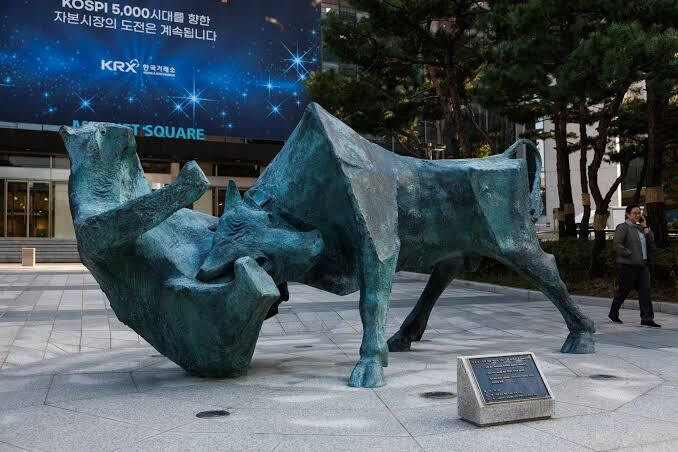
The Korean stock market is currently facing a structural crisis, driven by the explosive growth of single-stock leveraged exchange-traded funds (ETFs) tracking Samsung Electronics and SK Hynix. Barely a month after their launch, these high-risk financial products have morphed from experimental investment tools into a "volatility bomb," fundamentally altering the market's supply-demand landscape and threatening the stability of the entire ecosystem.
The Mechanism of Chaos: A "Volatility Trap"
According to the Korea Exchange (KRX) and KOSCOM, the total trading volume of the 16 single-stock leveraged and inverse ETFs reached 16.4 trillion won as of June 26, accounting for over 35% of the total ETF market’s daily turnover. On June 25, when the semiconductor giants surged, this figure skyrocketed to 40.9%. Despite rigorous entry barriers—including mandatory investor education and a 10-million-won minimum deposit requirement—these products have already attracted over 610,000 registered participants, fueling a speculative frenzy.
The core of the problem lies in the "short gamma" effect. To maintain a 2x leverage ratio, fund managers and liquidity providers (LPs) must mechanically buy underlying assets when prices rise and sell them when prices fall. This structural necessity creates a pro-cyclical feedback loop: it amplifies upward momentum in a bull market and deepens sell-offs during downturns. The impact has been severe: the market has witnessed 11 sidecar triggers and three circuit breakers within just seven trading days. On June 25, the KOSPI 200 Volatility Index (VKOSPI)—a key measure of market fear—hit an all-time high of 95.09.
From Policy Intent to Policy Regret
Financial authorities, who initially introduced these products to stem the outflow of capital toward overseas-listed derivatives, are now expressing deep remorse. Lee Chan-jin, Governor of the Financial Supervisory Service (FSS), recently admitted to a failure in policy judgment, stating he "regrets not blocking the launch." The original intent to provide domestic alternatives for speculative retail capital has backfired, as the excessive turnover and resulting volatility have primarily benefited securities firms through fee collection while leaving retail investors exposed to unprecedented systemic risk.
The "Black Hole" Effect and Contagion
The market's concern is twofold. First, the intense concentration of liquidity into a handful of "mega-cap" tech stocks is creating a "Black Hole" effect. As funds gravitate toward these leveraged ETFs to chase short-term gains, the broader market, particularly KOSDAQ-listed small and medium-sized enterprises (SMEs), is suffering from a liquidity drought. Investors, desperate to secure capital for leveraged bets on semiconductors, are offloading other assets indiscriminately, leading to a "sell-off contagion" that is freezing the rest of the KOSDAQ ecosystem.
A Call for Structural Reform
The current situation is a stark reminder that financial innovation, when detached from market stability, can become a source of systemic fragility. The Korea Exchange, the Financial Services Commission (FSC), and the FSS are now rushing to implement emergency safety measures. Proposals under consideration include raising the minimum deposit threshold, tightening trading restrictions, and even temporarily halting the issuance of new leveraged products.
However, stricter regulations alone will not suffice. The incident highlights an urgent need for a fundamental shift in how the domestic market manages complex derivative products. As the Board of Audit and Inspection (BAI) begins a probe into the decision-making process behind these products, the Korean financial authorities must prioritize market integrity over the convenience of institutional fee generation.
For the Korean stock market to move past this "rollercoaster" phase, it must break the cycle of speculative concentration. Investors should be cautioned that these products are not suitable for long-term holdings and that the "leveraged" returns they promise come at the price of heightened systemic risk. The "tail" of derivative speculation has, for too long, wagged the "dog" of the real economy. Restoring stability will require not only immediate emergency brakes but a long-term commitment to a more transparent, diversified, and sustainable investment landscape.
[Copyright (c) Global Economic Times. All Rights Reserved.]