![[등록] 2026-09-01 15:48:31](/support/_updata/banner2/tl181982910_6749.png)


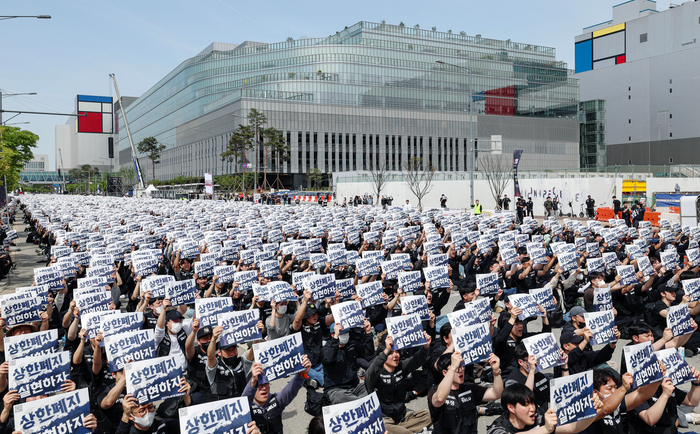
In a significant development for labor relations within the Samsung conglomerate, the labor union of Samsung Biologics has officially decided to withdraw from the "Samsung Group Supra-Corporate Union." This decision, confirmed by a landslide vote among its members, marks a strategic pivot toward an independent, company-specific labor structure, reflecting growing divergence in interests between various Samsung affiliates.
The Path to Independence: A Strategic Vote
The Samsung Biologics labor union, known as the "Samsung Biologics Sangsaeng (Mutual Growth) Branch," conducted a vote from June 24 to June 28, 2026, regarding a change in organizational structure and the amendment of its bylaws.
The results were decisive:
Voter Participation: Out of 4,005 eligible members, 2,479 participated in the vote.
Overwhelming Support: 2,392 members (96.5%) voted in favor of withdrawing from the supra-corporate union.
Official Status: According to union officials, the formal administrative procedures for the withdrawal are expected to conclude within the coming days.
Drivers of the Departure
The decision to "go it alone" is largely seen as a strategic response to the limited practical benefits of remaining within the supra-corporate umbrella. Several factors contributed to this shift:
Direct Representation: The union stated that a transition to an independent enterprise-level union is necessary to reflect the specific needs and demands of its members more directly and rapidly.
Divergence from Samsung Electronics: Analysts point to the recent agreement between the Samsung Electronics union—the core of the supra-corporate group—and its management regarding "differentiated performance bonuses by business division" as a turning point. Many members of other affiliate unions felt dissatisfied with this direction, leading to a wave of exits from the supra-corporate structure.
Ongoing Labor Disputes: Samsung Biologics is currently in the midst of intense negotiations regarding wage hikes, profit-sharing formulas, and the reorganization of personnel systems. The union has been engaged in a "compliance struggle," which includes refusing overtime work, to pressure management.
Current Labor-Management Standoff
The union has been embroiled in difficult negotiations since December of last year. Following a series of collective actions, including a partial strike involving 60 members in April and a full-scale strike involving approximately 2,800 members in May, the union shifted to its current form of compliance-based industrial action. This ongoing struggle has reportedly caused disruptions in some production processes.
A union representative stated, "We have only recently resumed negotiations, and we are currently in a phase of 'exploratory maneuvering' with the company". The two sides are scheduled to meet again on July 1–2 to continue discussions.
Implications for the Supra-Corporate Union
The Samsung Group Supra-Corporate Union, formed in February 2024, once represented a unified front for approximately 73,000 workers across Samsung Electronics, Display, Fire & Marine Insurance, and Biologics. However, the withdrawal of a founding member like Samsung Biologics, following the earlier departure of the Samsung Electro-Mechanics union, signals a period of instability for the organization.
As Samsung Biologics seeks to negotiate on its own terms, industry experts are watching closely to see whether this "fragmentation" of the supra-corporate union will lead to more flexible labor-management agreements or if it will weaken the overall collective bargaining power of Samsung workers. For now, the focus remains on whether Samsung Biologics can secure the specific demands of its workforce through this newfound independence.
[Copyright (c) Global Economic Times. All Rights Reserved.]