![[등록] 2026-09-01 15:48:31](/support/_updata/banner2/tl181982910_6749.png)


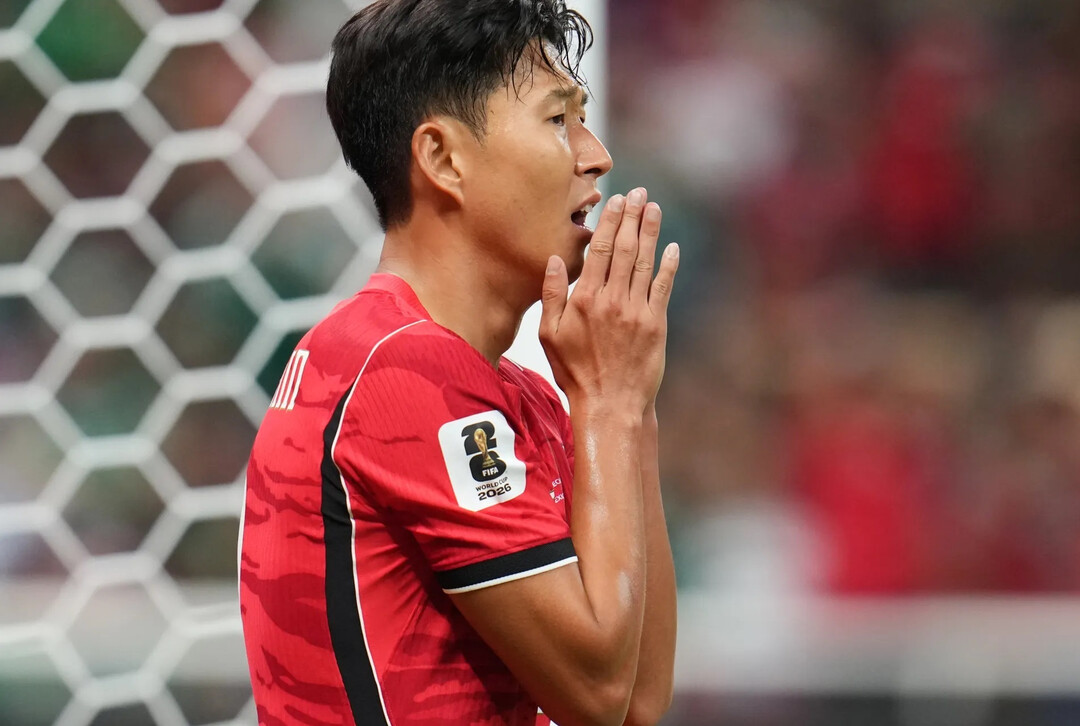
The fourth World Cup campaign of Son Heung-min, widely regarded as the finest attacker in Asian football history, has come to a hollow conclusion. While this does not mark his official retirement from international duty, the somber reality that he has entered the twilight of his storied career makes the failure all the more poignant.
The South Korean national football team, led by head coach Hong Myung-bo, has been eliminated in the group stage of the 2026 FIFA North/Central America World Cup. Despite the expansion of the tournament from 32 to 48 teams—a change that theoretically increased the probability of advancing to the knockout stages—the team finished a dismal 34th overall.
The campaign began with a glimmer of hope as South Korea defeated the Czech Republic 2-1 in their Group A opener. However, the momentum vanished rapidly. The team suffered a 0-1 loss to the host nation, Mexico, in the second match and succumbed to a shocking 0-1 defeat against South Africa, a side initially considered an underdog, in the final group encounter. Finishing third in the group with only three points, South Korea failed to qualify as one of the top eight third-placed teams, leading to their premature exit.
This failure carries extra weight as it occurred during the fourth World Cup appearance of Son Heung-min, the captain who has carried the team on his shoulders for over a decade. Son made his debut as the youngest member of the squad in the 2014 Brazil World Cup. Having experienced the heartbreak of group-stage elimination in both 2014 and the 2018 Russia World Cup, he finally tasted the joy of reaching the Round of 16 four years ago in Qatar. This time, however, the agony of an early exit has returned.
The management under coach Hong Myung-bo has drawn intense criticism throughout the tournament. Hong made controversial decisions regarding Son, utilizing him as a lone striker in the first two matches against the Czech Republic and Mexico. Despite Son’s tireless efforts to dismantle opposition defenses, he struggled to find the net. Hong further alienated critics by substituting Son early in the second half in both matches and making the drastic, unsuccessful decision to bench him in the final match against South Africa, only introducing him as a second-half 'joker.'
With this tournament, Son remains tied with Park Ji-sung and Ahn Jung-hwan as the all-time leading Korean goalscorers in World Cup history with three goals. He missed his chance to claim the top spot outright, failing to record a single attacking point during this campaign.
Since Son’s emergence, South Korea was widely considered to have entered a 'Golden Generation.' With elite players like Kim Min-jae, Lee Kang-in, and Hwang In-beom anchoring positions across the pitch in top European leagues, the talent pool has been at an all-time high. Yet, excluding the 2022 Qatar success, the team has been plagued by internal instability and administrative failures. Coach Hong, who has now accompanied Son to two different World Cup tournaments, has oversaw group-stage eliminations on both occasions.
The verdict is clear: South Korean football has completely failed to capitalize on the 'Son Heung-min premium.' By the next World Cup, Son will be 37 years old. While there was speculation that this might be his 'Last Dance,' Son has shown resolve, stating, "I have never concluded that this is my last World Cup." However, as he enters the final chapter of his playing days, the fact that his prime years yielded such disappointing results remains a source of deep regret for fans.
Having been blessed with a world-class attacker of Son’s caliber, failing to progress past the group stage in three out of four attempts is an indictment of the current football administration. South Korean football now turns away from the global stage, burdened by painful questions and the bitter realization that systemic incompetence has squandered a once-in-a-generation talent.
[Copyright (c) Global Economic Times. All Rights Reserved.]