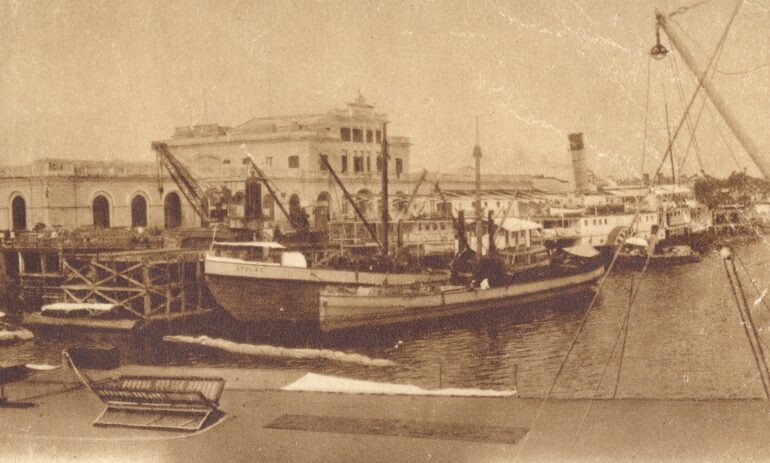
Asunción, the capital of Paraguay, has developed along the Paraguay River since the city was founded in 1537. At its heart has always been the Port of Asunción. For centuries, this port served as a hub for regional commerce, transporting people and goods and acting as a driving force for national economic growth. Today, while commercial functions have been relocated to other modernized port facilities, the historic port building still stands to testify to its past heritage. Recently, as this space has been transformed into a venue for culture and arts, efforts to preserve the city’s historical identity and bring citizens back to the waterfront are bearing fruit.
A Waterfront Strategic Stronghold Born with the Capital
Spanish explorer Juan de Salazar y Espinosa laid the foundation for Asunción on August 15, 1537, when he established a settlement near the Paraguay River. The origin of the port is the area known today as "Playa Montevideo." During the colonial era, the Paraguay River was the sole lifeline connecting uncharted territories. Before roads and railways were developed, the river was the fastest and safest channel for transporting people and goods. The Port of Asunción also played a pivotal role as a base for expeditions to pioneer other colonial cities, firmly establishing its core status within the Spanish territory.
Expansion of Commercial Infrastructure and Modernization
Over time, the port, which had been a simple riverbank, gradually acquired systematic logistics facilities. In the 1890s, breakwaters, wooden piers, and warehouses were built to handle the increasing cargo volume. Subsequently, in 1907, the historic port building opened, marking a milestone in the expansion of the capital’s commercial facilities. This building served as a bridge connecting the domestic economy and regional trade networks by bringing in imports and exporting Paraguay’s specialty products.
In 1927, the Paraguayan government signed a contract with an American port transfer company in Asunción to construct a modern port in the bay area. Later, the government took over direct operating rights in 1940, and in December 1957, it embarked on a large-scale expansion project, which was completed on August 15, 1961. Expanded to two stories, the building acquired a modern exterior and enhanced administrative efficiency. In 1965, with the establishment of the National Ports Administration (ANP), a systematic management system at the national level was established.
Relocation of the Logistics Hub and Rediscovery of Historical Value
As the logistics environment changed rapidly and facilities capable of handling modern ships and large-scale cargo were required, cargo operations were relocated to other areas such Villeta. As a result, the commercial vitality around the old port gradually subsided. However, the loss of cargo-handling functions did not diminish the historical value possessed by the port. This space remained Asunción's architectural heritage and a physical record containing the trajectory of Paraguay's growth from the colonial era into a modern commercial nation.
Resurrection as a Cultural Space through Urban Regeneration
Since 2019, the Paraguayan Ministry of Public Works and Communications and cultural authorities have embarked on a large-scale urban regeneration project to connect the surrounding area with the city center while preserving the historical heritage of the port building. After a long restoration process, the National Secretariat of Culture officially opened this historic port building as a complex cultural space for citizens on December 15, 2023.
This regeneration project became a significant turning point in breathing vitality into Asunción's old downtown and reviving Paraguay’s collective memory. The port, which once served as the nation's main artery with cargo and passenger ships bustling back and forth, has now gained new vitality as a venue for exhibitions, art, and civic communication. The transformation of the Port of Asunción serves as a beacon illuminating the future of Paraguay's capital as a symbolic space connecting the past and the present.
[Copyright (c) Global Economic Times. All Rights Reserved.]