• 2025.12.07 (Sun)
  • All articles
  • LOGIN
  • JOIN
Global Economic Times
APEC2025KOREA가이드북
  • Synthesis
  • World
  • Business
  • Industry
  • ICT
  • Distribution Economy
  • Well+Being
  • Travel
  • Eco-News
  • Education
  • Korean Wave News
  • Opinion
  • Arts&Culture
  • Sports
  • People & Life
  • Column
    • Cho Kijo Column
    • Lee Yeon-sil Column
    • Ko Yong-chul Column
    • Cherry Garden Story
  • Photo News
  • New Book Guide
MENU
 
Home > Korean Wave News

South Korea Expands National Traditional Food Certification to Include Bibimbap and Galbitang

Global Economic Times Reporter / Updated : 2025-12-05 06:20:55
  • -
  • +
  • Print

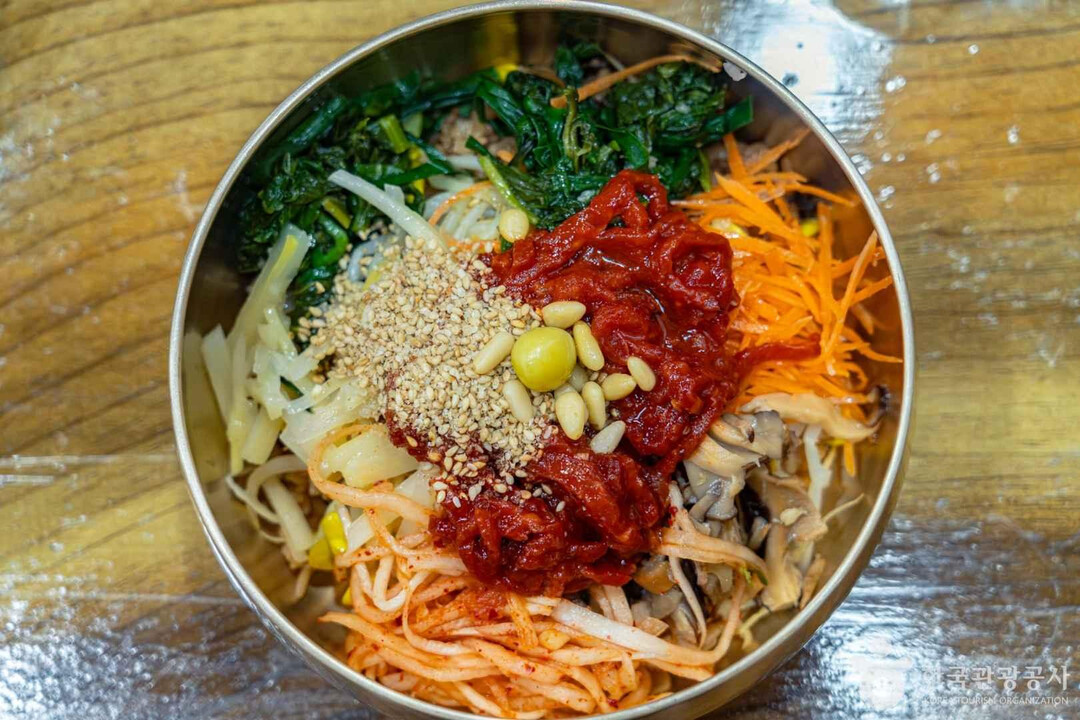
(C) Visit Korea


SEOUL – The South Korean Ministry of Agriculture, Food and Rural Affairs (MAFRA) announced today the expansion of its prestigious Traditional Food Quality Certification program, adding four new items to the list of nationally recognized traditional foods. The new additions are Galbitang (short rib soup), Bibimbap (mixed rice with vegetables and meat), Mumallaengi-muchim (seasoned dried radish strips), and Swindari (a traditional fermented beverage from Jeju Island).

This move brings the total number of items eligible for the certification to 80, covering a broad spectrum of Korean culinary heritage, including staple categories like Jangnyu (fermented sauces) and Kimchi (fermented vegetables).

What is the Traditional Food Quality Certification?

The Traditional Food Quality Certification is a government-backed system designed to preserve and promote high-quality Korean traditional foods. To earn this mark, a product must strictly adhere to several criteria:

Domestic Ingredients: The primary ingredients must be 100% domestically sourced (Korean-grown).
Traditional Methods: The food must be manufactured and processed using traditional methods.
Authentic Flavor: The final product must possess the distinct, inherent taste, aroma, and color characteristic of its traditional form.
This certification serves as a guarantee of authenticity, quality, and origin, helping to differentiate authentic Korean products in both domestic and international markets.

The Importance of Certification in the Market

The certification is not merely a mark of honor; it also opens significant commercial avenues for certified producers. A key benefit is the ability to supply products to the national school meal system.

According to a survey conducted by MAFRA, the school meal system is the largest distribution channel for certified traditional food producers, accounting for 20.2% of their primary supply destinations. This is followed by large-scale retailers at 14.2%. The high percentage underscores the government's commitment to ensuring that younger generations are exposed to high-quality, domestically-sourced traditional foods.

Currently, 414 businesses across South Korea have successfully acquired the quality certification, demonstrating a robust and active sector dedicated to maintaining traditional food standards.

Spotlight on the New Items

The inclusion of Bibimbap and Galbitang, two highly popular and representative dishes of Korean cuisine, acknowledges their importance as staple prepared foods that are often consumed outside the home. By setting strict quality standards for these items, the government aims to elevate the quality of pre-packaged or mass-produced versions.

The addition of Swindari is particularly notable. Swindari is a traditional fermented drink unique to Jeju Island, historically made from leftover rice. While currently produced by only a small number of local businesses, MAFRA recognized the urgent necessity of protecting and inheriting this distinct regional heritage food, viewing its preservation as vital to the nation's culinary diversity.

The government believes that by expanding the list to include more prepared meals and unique regional specialties, the certification program will increase consumer confidence and stimulate both production and consumption of authentic traditional foods. The full list of certified traditional food items and their respective standard specifications are available on the National Agricultural Products Quality Management Service (NAQS) website.

[Copyright (c) Global Economic Times. All Rights Reserved.]

  • #Globaleconomictimes
  • #Korea
  • #Seoul
  • #Samsung
  • #LG
  • #Hanhwa
  • #Meta
  • #Business
  • #Economic
  • #The South Korean Ministry o
Global Economic Times Reporter
Reporter Page

Popular articles

  • Kim Jin-myung’s Novel on King Sejong to Feature Citizens' Voices

  • Hydrofluoric Acid Detected at POSCO Pohang Steelworks Chemical Leak Site, Four Casualties 

  • EU Halts Multi-Entry Visas for Russians Amid Escalating Security Concerns

I like it
Share
  • Facebook
  • X
  • Kakaotalk
  • LINE
  • BAND
  • NAVER
  • https://www.globaleconomictimes.kr/article/1065561533595728 Copy URL copied.
Comments >

Comments 0

Weekly Hot Issue

  • JAPAN’S RISING PREDICAMENT: RECORD BEAR ATTACKS STRIKE FEAR ACROSS NATION
  • Trump NSS Declares Europe Faces 'Civilizational Erasure,' Vows to Aid Anti-Immigration Right-Wing Parties
  • Meta's Strategic U-Turn: The AI Race Re-Elevates Real-Time News
  • Gapyeong's Petit France and Italian Village Illuminate Winter with 'Starlight Festival'
  • Grand Opening: Gwangju Museum's Ceramics Culture Center Offers Comprehensive Look at Ceramic History
  • Choi Bun-do, Chairman of PTV Group, Assumes Presidency of the Korean Chamber of Commerce and Industry in South Central Vietnam

Most Viewed

1
Korean War Ally, Reborn as an 'Economic Alliance' Across 70 Years: Chuncheon's 'Path of Reciprocity,' a Strategic
2
A Garden Where the City's Rhythm Stops: Dongdaemun's 'Cherry Garden', Cooking Consideration and Diversity
3
The Sudden Halt of Ayumi Hamasaki's Shanghai Concert: Unpacking the Rising Sino-Japanese Tensions
4
Farewell to a Legend: South Korea Mourns the Passing of Esteemed Actor Lee Soon-jae
5
China’s Anti-Starlink Strategy: Simulation Suggests 2,000 Drones Needed for Taiwan Disruption
광고문의
임시1
임시3
임시2

Hot Issue

EU Unveils €90 Billion Ukraine Aid Plan Backed by Frozen Russian Assets

Seoul's 'Insane Rent' Warning: Why $30,000 Monthly Rent is a Looming Threat Residential Crisis Deepens as Tourist Housing Conversion Hits Supply

Seo Min-kyu Wins Gold at Junior Grand Prix Final... First Korean Since Kim Yuna 20 Years Ago

2026 Overseas Koreans Agency Budget Confirmed at 112.7 Billion Won... 5.3% Increase Year-on-Year

Let’s recycle the old blankets in Jeju Island’s closet instead of incinerating them.

Global Economic Times
korocamia@naver.com
CEO : LEE YEON-SIL
Publisher : KO YONG-CHUL
Registration number : Seoul, A55681
Registration Date : 2024-10-24
Youth Protection Manager: KO YONG-CHUL
Singapore Headquarters
5A Woodlands Road #11-34 The Tennery. S'677728
Korean Branch
Phone : +82(0)10 4724 5264
#304, 6 Nonhyeon-ro 111-gil, Gangnam-gu, Seoul
Copyright © Global Economic Times All Rights Reserved
  • 에이펙2025
  • APEC2025가이드북TV
  • 세종시
Search
Category
  • All articles
  • Synthesis
  • World
  • Business
  • Industry
  • ICT
  • Distribution Economy
  • Well+Being
  • Travel
  • Eco-News
  • Education
  • Korean Wave News
  • Opinion
  • Arts&Culture
  • Sports
  • People & Life
  • Column 
    • 전체
    • Cho Kijo Column
    • Lee Yeon-sil Column
    • Ko Yong-chul Column
    • Cherry Garden Story
  • Photo News
  • New Book Guide
  • Multicultural News
  • Jobs & Workers