• 2026.10.08 (Thu)
  • All articles
  • LOGIN
  • JOIN
Global Economic Times
[등록] 2026-09-01 15:48:31
  • Synthesis
  • World
  • Business
  • Industry
  • ICT
  • Distribution Economy
  • Well+Being
  • Travel
  • Eco-News
  • Education
  • Korean Wave News
  • Opinion
  • Arts&Culture
  • Sports
  • People & Life
    • International Student Report
    • With Ambassador
  • Column
    • Cho Kijo Column
    • Cherry Garden Story
    • Ko Yong-chul Column
    • Kim Seul-Ong Column
    • Lee Yeon-sil Column
  • Photo News
  • New Book Guide
MENU
 
Home > Education

South Korea's Student Population Plummets Over 26 Years, Deepening Regional Disparities

Kim Young Min Reporter / Updated : 2026-10-08 06:41:34
  • -
  • +
  • Print


SEOUL — Over the past 26 years, South Korea has witnessed a dramatic restructuring of its educational landscape, marked by a sharp decline in student numbers, shrinking school sizes, and a pronounced concentration of higher education in the capital area.

According to the 15th issue of "Reading Our Education through Data," published on the 5th by the Ministry of Education and the Korean Educational Development Institute (KEDI), the fundamental statistics of the nation's schools have shifted significantly between 2000 and 2026.

Sharp Drop in K-12 Student Numbers and Smaller Classes

At the elementary school level, the average number of students per school dropped by 53.0%, falling from 763.2 students in 2000 to 358.5 students this year. The average number of students per class plummeted from 35.8 to 18.6, while the number of students per teacher decreased by 59.6% from 28.7 to 11.6. Conversely, the number of teachers per school rose by 16.2% from 26.6 to 30.9.

Class sizes have transformed profoundly. Elementary classes with 20 or fewer students surged from 11.9% to 48.8%. In stark contrast, large classes of 36 or more students—which accounted for 68.9% of all classes in 2000—virtually vanished, making up just 0.04% (46 classes) this year.

Similar downward trends were observed across middle and high schools:

-Middle Schools: The average number of students per school decreased by 40.5% (from 681.3 to 405.6), and students per class dropped from 38.0 to 24.5. Classes with over 36 students dropped sharply from 71.6% to 0.3%.
-High Schools: The average number of students per school fell by 49.6% (from 1,058.5 to 533.5), and students per class declined from 42.7 to 23.1. Classes with 36+ students decreased from 87.4% to 0.6%.

Deeper Declines in Non-Capital Regions

While the total number of schools increased in both the Seoul metropolitan area and non-metropolitan regions, student populations fell everywhere—with non-metropolitan areas experiencing a much steeper decline.

-Elementary: Non-metropolitan student numbers dropped by 48.0% (from 2.12 million to 1.1 million), compared to a 41.2% decline in the capital area.
-Middle Schools: Non-metropolitan regions saw a 33.4% decrease, outpacing the capital area's 21.5% drop.
-High Schools: Non-metropolitan student numbers fell by 44.4%, higher than the 30.3% reduction in the capital region.

Higher Education: Junior Colleges Shrink, Capital Concentration Deepens

In higher education, the trajectories of junior colleges and four-year universities diverged.

Junior colleges contracted significantly. The number of junior colleges decreased from 158 to 126, and total enrolled students plummeted by 44.7% from 913,273 to 504,897. Non-metropolitan junior colleges were hit hardest, seeing a 55.5% drop in enrollment. As a result, the proportion of junior college students in the capital region rose by 12.7 percentage points to 47.4%.

Meanwhile, four-year universities saw marginal growth overall—with institutions increasing from 191 to 195 and enrollments rising slightly by 2.0% to 1,894,516. However, this growth was heavily skewed toward the capital. University enrollment in the Seoul metropolitan area grew by 18.7%, while non-metropolitan universities experienced a 7.7% decline. Consequently, the proportion of university students concentrated in the capital area climbed from 36.9% to 42.9%.

KEDI noted that while the shrinking school-age population has led to smaller school structures and the virtual disappearance of overcrowded classrooms in K-12 education, higher education is grappling with the severe contraction of junior colleges and a capital-centric polarization in four-year universities.

[Copyright (c) Global Economic Times. All Rights Reserved.]
  • #Hormuz Impasse
  • #globaleconomictimes
  • #micorea
  • #mykorea
  • #nammidonganews
  • #singaporenewsk
  • #Samsung
  • #Daewoo
  • #Hyos
Kim Young Min Reporter

Popular articles

  • Won Falls into the 1,330-Won Range Amid Strong Exporter Selling, Rebounds Slightly Following National Pension's FX Hedging Halt

  • Sejong’s 2026 Hangeul Run Joins Forces with 2027 Chungcheong Universiade

  • Won-Dollar Exchange Rate Rises to 1,345.9 Won Amid Oil Price Surge and US Rate Hike Concerns

I like it
Share
  • Facebook
  • X
  • Kakaotalk
  • LINE
  • BAND
  • NAVER
  • https://www.globaleconomictimes.kr/article/1065562773825788 Copy URL copied.
Comments >

Comments 0

Weekly Hot Issue

  • 'Yacha Rule' School Violence Surges: Cases Double in Two Years Amid Rising Middle School Concerns
  • Suwon City Support Center for Childcare to Host "Re:Toy - Toy Market"
  • "A Millennial Legacy Built with the People, Suwon Hwaseong" — Suwon Hwaseong Museum Hosts Special Exhibition
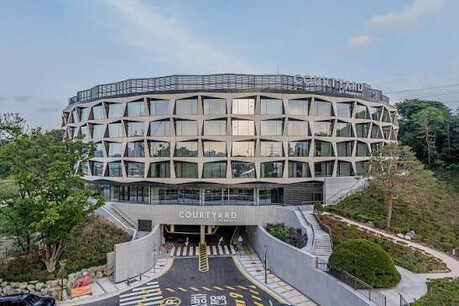
  • Gyeonggi Province Selects 74 Winners for the Gyeonggi Architectural Culture Awards, Including Courtyard Marriott Pyeongtaek
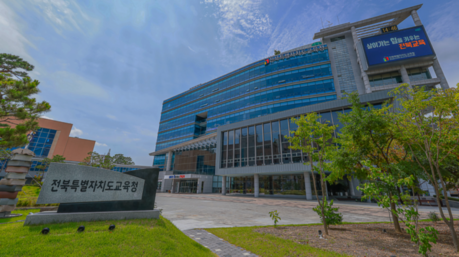
  • 78% of Jeonbuk Residents Support the Need for a Gifted High School
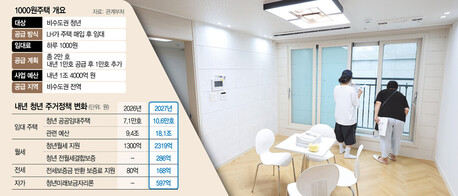
  • Rent for Just '1,000 Won a Day': Jeonbuk State Supplies '1,000-Won Housing' for Youths and Newlyweds

Most Viewed

1
Guitarist Kim Ji-hee to Hold Storytelling Concert 'The Guitar is Happiness'
2
US Deploys Third Carrier and 10,000 Troops to Middle East Amid Rising Tensions with Iran
3
Gyeongsangbuk-do Promotes Excellence of Korean Traditional Crafts in Washington, D.C.
4
Chungbuk Province Goes All-Out to Attract Young Visitors for the 2026 Osong Cosmetics Beauty Expo
5
Gyeongsangbuk-do Joins Hands with Maryland and IonQ to Accelerate Global Quantum Industry Cooperation
체리가든 스토리
nutri huevos
로타리
동포저널

Hot Issue

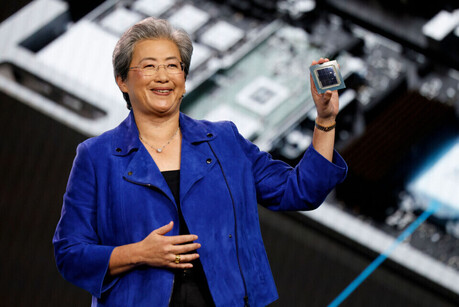
AMD CEO Lisa Su Meets with Samsung and SK Hynix Chiefs, Sparking HBM Partnership Hopes

Henri Kagan and Kenso Soai Awarded the Nobel Prize in Chemistry

Government Unveils 1,000 Trillion Won "K-GX" Initiative to Drive Decarbonization and Green Tech

Samsung Special Performance Bonuses to Be Paid in March-April Next Year Amid Ongoing Compensation and Bargaining Divides

Fashion Runway Show 2026

Global Economic Times
korocamia@naver.com
CEO : LEE YEON-SIL
Publisher : KO YONG-CHUL
Registration number : Seoul, A55681
Registration Date : 2024-10-24
Youth Protection Manager: KO YONG-CHUL
Singapore Headquarters
5A Woodlands Road #11-34 The Tennery. S'677728
Korean Branch
Phone : +82(0)10 4724 5264
#304, 6 Nonhyeon-ro 111-gil, Gangnam-gu, Seoul
Copyright © Global Economic Times All Rights Reserved
  • 향기네무료급식
  • BCB부천방송
  • 반달곰 프로젝트
Search
Category
  • All articles
  • Synthesis
  • World
  • Business
  • Industry
  • ICT
  • Distribution Economy
  • Well+Being
  • Travel
  • Eco-News
  • Education
  • Korean Wave News
  • Opinion
  • Arts&Culture
  • Sports
  • People & Life 
    • 전체
    • International Student Report
    • With Ambassador
  • Column 
    • 전체
    • Cho Kijo Column
    • Cherry Garden Story
    • Ko Yong-chul Column
    • Kim Seul-Ong Column
    • Lee Yeon-sil Column
  • Photo News
  • New Book Guide
  • Overseas Koreans
  • Multicultural News