As the war between Russia and Ukraine enters its fifth year, the U.S. Trump administration's increasingly overt "pro-Russia" stance is closely tied to President Donald Trump’s grand vision for a reshaped global order, foreign policy analysts suggested Sunday.
President Trump’s apparent shift away from America’s democratic ally, Ukraine, toward an aggressor nation like Russia has become increasingly palpable in recent weeks. This emerging strategy is steadily coming into focus through a combination of public statements and tangible administrative actions by the White House.
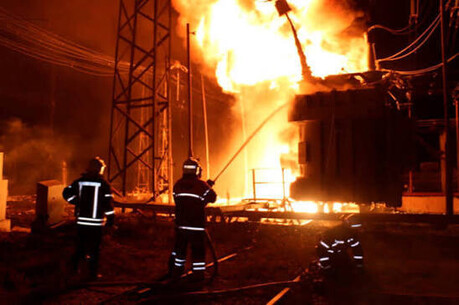
The Trump administration has effectively halted the supply of Patriot air defense systems—crucial for Ukraine's defense against missile strikes—while intelligence sharing on incoming Russian raids has severely dwindled. Furthermore, restrictions placed on Starlink access previously paralyzed critical Ukrainian drone operations.
Experts largely agree that these punitive measures are designed to pressure Ukraine into a ceasefire that cedes Russian-occupied territories. President Trump recently called for the resignation of Ukrainian President Volodymyr Zelenskyy, who has rejected such terms, declaring that "Ukraine is ready for a new president."
In remarks to reporters on Saturday, Trump stated, "We have given Ukraine a lot, and they have given us nothing." On social media, he further claimed that Zelenskyy is reluctant to end the war because of the influx of money and weapons he receives from Europe.
In sharp contrast, Trump’s approach toward Russia has grown remarkably accommodating. The administration brokered a deal paving the way for Russian diesel exports and subsequently lifted proposed high tariffs on countries importing it—energy sales being a primary lifeline for Russia’s war economy.
Adding to the diplomatic shift, Trump has invited Russian President Vladimir Putin to the upcoming G20 summit in the United States this December. When asked about prospects for a trilateral meeting with Putin and Chinese President Xi Jinping on the sidelines of the APEC summit in Shenzhen next month, Trump replied, "I would gladly do that."
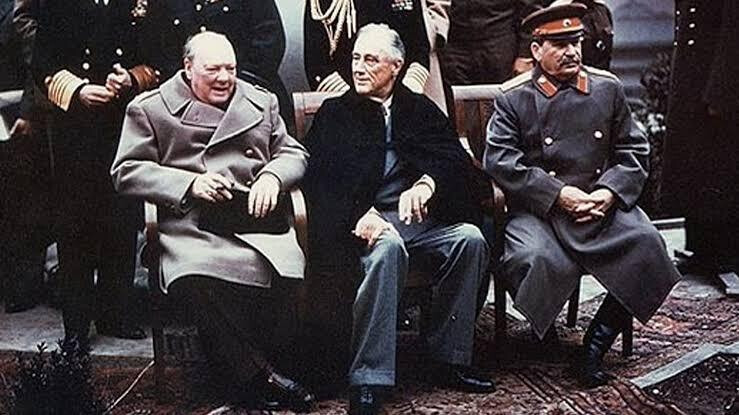
Despite mounting criticism from both Democrats and Republicans in Washington, alongside growing anxiety among European and global allies, what lies behind Trump’s friendly overtures toward Moscow? The New York Times recently invoked a historical precedent: the Yalta Conference of February 1945.
Held near the end of World War II, the Yalta Conference brought together the leaders of the U.S., the UK, and the Soviet Union to discuss the postwar fate of Germany, Eastern Europe, the Korean Peninsula, and the establishment of the United Nations. That summit laid the foundation for a superpower-dominated postwar global order.
If a trilateral summit among the U.S., China, and Russia materializes at the November APEC gathering, it would bring together the leaders of the world's top three nuclear-armed military powers—a striking parallel to Franklin D. Roosevelt, Winston Churchill, and Joseph Stalin at Yalta.
The New York Times projects that should the trilateral meeting take place, Putin will likely seek to expand the agenda beyond the war in Ukraine to encompass nuclear arms control, trade, and international security. For Russia, this would mean stepping out of its status as an "international pariah and war criminal" and stepping up into the role of a core superpower negotiating the global order alongside Washington and Beijing.
"I am going to China in November to discuss denuclearization, so they want to have a meeting based on my proposal," Trump told reporters on Saturday. Given that the U.S., China, and Russia are hardly likely to abandon their own nuclear arsenals, experts note this agenda leans closer to arms control than total denuclearization.
Much like the post-WWII era, when the fates of nations like Poland or Korea were decided entirely independently of their own will, any negotiation over Ukraine among the U.S., China, and Russia runs the risk of cutting out the actual victim: Ukraine itself.
Just as the Yalta Conference involved major powers respecting each other's spheres of influence, the New York Times warned that meetings between Trump, Xi, and Putin could foster a "regionalization of the world," cementing distinct domains of power.
Trump’s bid to reintegrate a diplomatically isolated Russia—shunned over its war in Ukraine—back into major global forums like the G20 and APEC bears a strong resemblance to former German Chancellor Angela Merkel's 2014 attempt to draw Russia into the Western fold via economic appeasement.
At the time, Chancellor Merkel signed the Nord Stream 2 pipeline construction deal with Russia, famously labeling Putin a "reliable supplier." The New York Times noted, "The role that Merkel once played is now being assumed by Trump."
"There is no precedent for the United States switching sides in the middle of a war like this," pointed out Richard Haass, President Emeritus of the Council on Foreign Relations (CFR). He observed that even during the establishment of U.S.-China diplomatic ties, the defense of Taiwan was explicitly guaranteed, and neither during the Vietnam War nor the Afghanistan War did the U.S. ever side with Communist Vietnam or trade with the Taliban.
Merkel's efforts to assimilate Russia into the West ultimately collapsed with the invasion of Ukraine, the New York Times observed, just as the Yalta Conference ultimately paved the way for the dawn of the Cold War.
[Copyright (c) Global Economic Times. All Rights Reserved.]