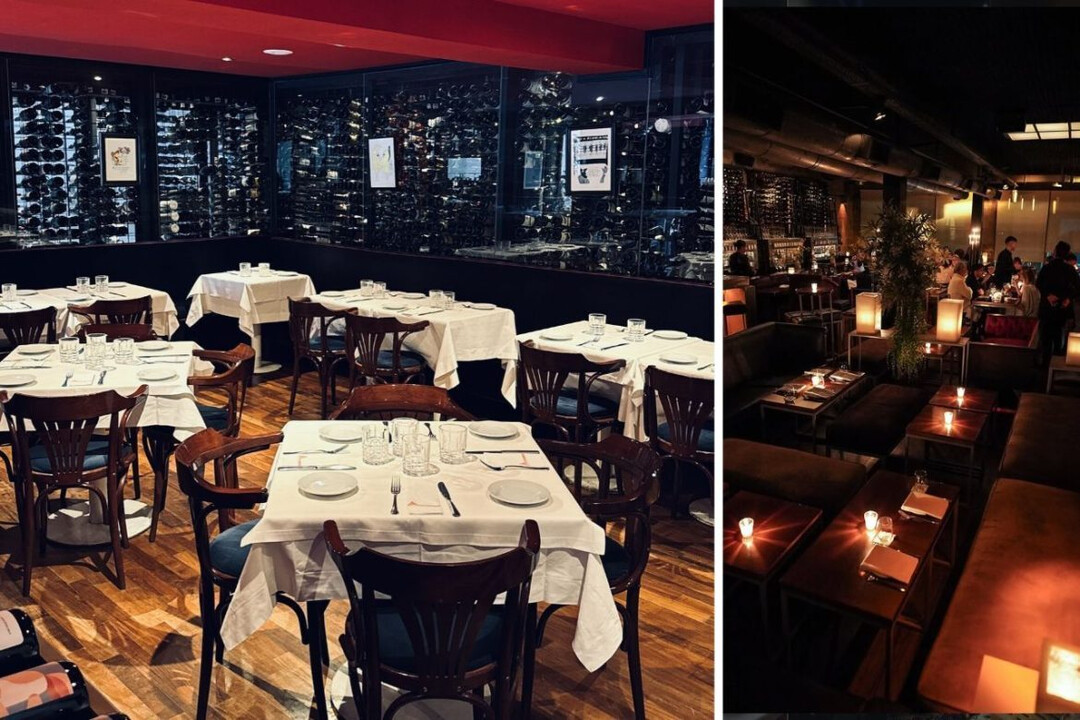
Recently, the restaurant industry in Buenos Aires, Argentina, has been passing through a harsh period of trials. BASA, a long-standing landmark in the Retiro district and a sister establishment of Gran Bar Danzón, has closed its doors, and Apu Nena, one of Chacarita's pioneering restaurants, has also ceased operations. The wine bar scene is no exception; famous wine bars like Diviiino in Palermo Soho, along with CAVA and Vini, have successively announced closures.
Surviving for a long time in such a fiercely competitive environment afflicted by Argentina's chronic economic difficulties is extremely difficult. Aside from macroeconomic crises, unpredictable daily hardships also follow. Recently, Lardito wine bar was penalized with a business suspension by city inspectors after a cleaning staff member mistakenly placed a plastic bag containing empty wine boxes into the wrong recycling bin. Despite it being a first-time offense, the order to shut down operations for the night was issued on the spot without any immediate warning or corrective measures. Self-employed business owners are suffering from a double whammy of unexpected administrative punishments and revenue hits.
Survival Strategies That Have Weathered the Years
Amidst this storm, veteran establishments have maintained their reputations by guarding their spots for decades. Gran Bar Danzón, Dashi, and Aldo's Brasserie have broken through crises in their own ways.
First, maintaining accessibility and consistent appeal. Celebrating its 29th year, Gran Bar Danzón is Buenos Aires’ first wine bar and restaurant. Founder Patricia Scheuer points to universality and accessibility—feeling natural no matter what era one visits—as Danzón's greatest strengths. All elements, including the atmosphere, food, cocktails, and wine, harmonize together, boasting the flexibility to embrace a diverse consumer base ranging from expensive formal dinners to a casual glass of beer.
Second, a flexible cost structure and rigorous cash flow management. Roberto Nishida, the head chef of Dashi who has led the kitchen for 21 years, has realized that crises are not rare exceptions but a constant reality. He points out that countless restaurants open purely out of passion only to close down due to deteriorating cash flow. Dashi's secret to survival lies in an extremely flexible cost structure, standardized recipes, direct negotiations with suppliers, and meticulous portion adjustments before raising prices.
Third, evolution that does not fear change. Sommelier and restaurateur Aldo Graziani unveiled the third-evolved version, Aldo’s Brasserie, to mark its 15th anniversary. This time, he joined hands with the Meliá hotel group to introduce hotel hospitality management methods at a new location. By maximizing space utilization—from breakfast service to operating event halls—he has effectively forged a new breakthrough.
The Light and Shadow of Economic Crisis and the Restaurant Ecosystem
Due to high inflation and exchange rate instability, Argentina’s self-employed environment is considered one of the harshest in the world. According to local media and economic analysts, countless restaurants decide to close every year, unable to withstand soaring ingredient costs and rent. In particular, the government's strict regulations and lack of administrative flexibility act as a heavy burden on small business owners.
Nevertheless, local food and beverage industry workers are cultivating self-reliance based on continuous menu engineering, rigorous inventory management, and deep bonds with customers. New establishments easily rely on initial flash-in-the-pan popularity, but endurance to maintain consistent quality and service over a long period is essential to become a true long-standing institution. The steps of those who have survived the winds and waves of time clearly show the direction the restaurant industry must take in an uncertain economic environment.
[Copyright (c) Global Economic Times. All Rights Reserved.]