• 2026.03.22 (Sun)
  • All articles
  • LOGIN
  • JOIN
Global Economic Times
fashionrunwayshow2026
  • Synthesis
  • World
  • Business
  • Industry
  • ICT
  • Distribution Economy
  • Well+Being
  • Travel
  • Eco-News
  • Education
  • Korean Wave News
  • Opinion
  • Arts&Culture
  • Sports
  • People & Life
    • International Student Report
    • With Ambassador
  • Column
    • Cho Kijo Column
    • Cherry Garden Story
    • Ko Yong-chul Column
    • Kim Seul-Ong Column
    • Lee Yeon-sil Column
  • Photo News
  • New Book Guide
MENU
 
Home > Distribution Economy

High Exchange Rate Shadows South Korean Food and Retail Industry: Convenience Stores Set to Raise PB Product Prices

Global Economic Times Reporter / Updated : 2025-12-24 07:03:03
  • -
  • +
  • Print


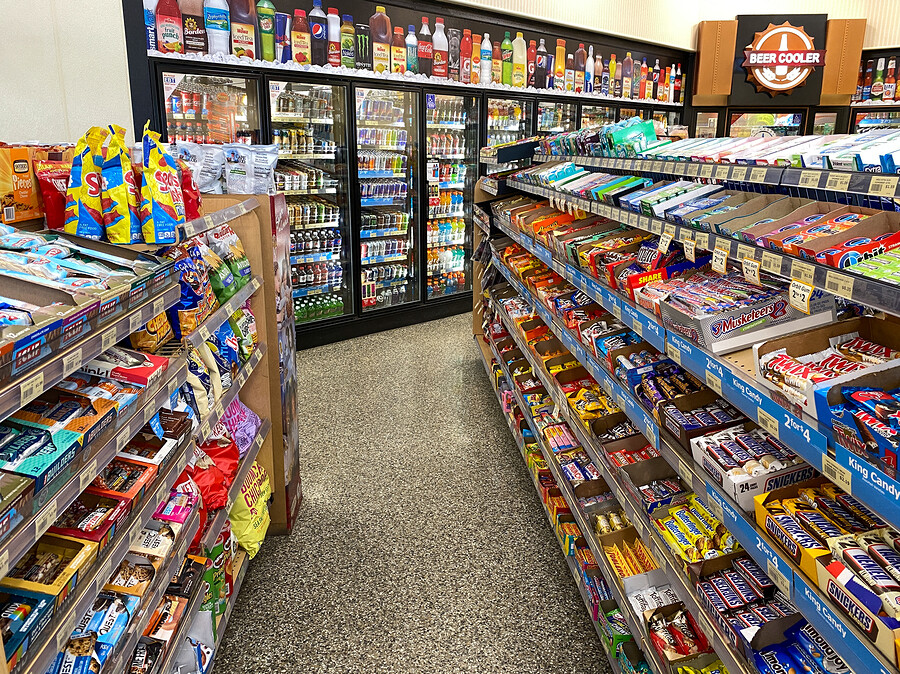
 (C) Insaide Small Businees


SEOUL — The South Korean economy is facing a grim outlook for consumer prices in 2026 as the prolonged strength of the U.S. dollar begins to seep into the bedrock of "cost-effective" consumption. Following a year of relentless exchange rate volatility, the retail and food industries are signaling a fresh wave of price hikes, starting with convenience store Private Brand (PB) products on New Year’s Day.

The 1,480 Won Barrier: A Squeeze on Margins
As the won-to-dollar exchange rate solidifies in the 1,480 range, the pressure on the food and retail sectors has reached a tipping point. These industries are structurally vulnerable to currency fluctuations; even a 10-won shift can significantly erode profitability. The burden extends beyond primary raw materials to include packaging and auxiliary components, which are frequently transacted in foreign currencies.

According to the Bank of Korea’s Economic Statistics System, the import price index surged by 2.6% last month, marking its sharpest increase in 19 months. For companies heavily reliant on domestic sales, the situation is increasingly dire. While export-oriented "K-Food" giants can partially offset import costs with foreign currency revenue, domestic-focused firms must absorb the rising costs of production, labor, and logistics.

Convenience Stores: The First to Move
Convenience stores, once considered a sanctuary for budget-conscious consumers, are now leading the price adjustments. Seven-Eleven has announced that effective January 1, 2026, prices for approximately 40 PB items—including snacks, beverages, and desserts—will rise by as much as 25%. GS25 is expected to follow suit with selective increases, while CU currently maintains a freeze on prices but remains under heavy observation.

This move follows a year where major food manufacturers, such as Nongshim and Ottogi, already raised their factory exit prices for ramen and snacks by an average of 7.2% to 7.5%. Despite the government’s efforts to suppress price hikes to alleviate the burden on the working class, industry experts argue that the combination of high exchange rates and rising operational costs has made further freezes unsustainable.

A Domino Effect in 2026?
The looming price hikes in the convenience store sector are widely seen as a harbinger of a broader inflationary trend in 2026. Industry insiders warn that forcing companies to suppress prices during a period of escalating costs may lead to "austerity management," which could have secondary negative effects on the economy.

"When cost pressures are suppressed artificially, companies are eventually forced to choose between drastic cost-cutting or inevitable price adjustments to survive," said a retail industry official. "Given the current economic indicators, we are likely to see a string of price increases across the food sector in the coming year."

As the "high exchange rate shadow" lingers, the South Korean public faces a challenging start to the new year, with the cost of daily essentials expected to climb further, testing the limits of consumer resilience in a period of prolonged economic stagnation.

[Copyright (c) Global Economic Times. All Rights Reserved.]

  • #Globaleconomictimes
  • #Korea
  • #Seoul
  • #Samsung
  • #LG
  • #Bitcoin
  • #Meta
  • #Business
  • #Economic
  • #The Woori Bank
  • #Elon Musk
Global Economic Times Reporter
Reporter Page

Popular articles

  • From Industrial Capital to Tourism Mecca... Ulsan Makes a Bold Move with ‘Experiential Content’ in 2026

  • A New Milestone for Ukraine’s Post-War Reconstruction: The Birth of ISVP

  • About mexican food 

I like it
Share
  • Facebook
  • X
  • Kakaotalk
  • LINE
  • BAND
  • NAVER
  • https://www.globaleconomictimes.kr/article/1065564068072814 Copy URL copied.
Comments >

Comments 0

Weekly Hot Issue

  • Appellate Court Begins Review of Kakao Founder’s Acquittal in SM Entertainment Stock Rigging Case
  • AI Supercycle Propels Global Semiconductor Market Toward $1 Trillion Milestone
  • Naver Suspends Election Comments to Combat Cyberbullying and Misinformation Ahead of June Polls
  • Lotte Town Myeongdong Lights Up with 'Welcome Light' to Greet Global K-Pop Fans
  • K-Beauty SMEs Join Forces with Distributors: A New Paradigm for Global Expansion through Strategic Consortiums
  • BMW ‘The New i3’ Next-Gen EV: 900km Range 

Most Viewed

1
An Open Letter to BTS On the Eve of a Historic Performance
2
From Industrial Capital to Tourism Mecca... Ulsan Makes a Bold Move with ‘Experiential Content’ in 2026
3
Ko Sang-goo, President of World Federation of Korean Associations, Elected as First Private Sector Chair of World Korean Community Leaders Convention
4
It is Time for BTS’s Fandom, ARMY, to Step Forward
5
Korean Stock Market Plunges: Circuit Breaker and Sidecar Triggered Amid Geopolitical Crisis
광고문의
임시1
임시3
임시2

Hot Issue

Netflix Declares BTS Comeback Live “ARIRANG” as the Year’s Biggest Global Event

AI Medical Ecosystem in Focus: KIMES 2026 Opens in Seoul as Global Healthcare Hub

Netanyahu Declares Decisive Blow to Iran’s Nuclear and Missile Programs, Signals Early End to War

Intel Announces 10% Price Hike on CPUs: PC Manufacturers Bracing for Massive Production Cost Spikes

Let’s recycle the old blankets in Jeju Island’s closet instead of incinerating them.

Global Economic Times
korocamia@naver.com
CEO : LEE YEON-SIL
Publisher : KO YONG-CHUL
Registration number : Seoul, A55681
Registration Date : 2024-10-24
Youth Protection Manager: KO YONG-CHUL
Singapore Headquarters
5A Woodlands Road #11-34 The Tennery. S'677728
Korean Branch
Phone : +82(0)10 4724 5264
#304, 6 Nonhyeon-ro 111-gil, Gangnam-gu, Seoul
Copyright © Global Economic Times All Rights Reserved
  • 에이펙2025
  • APEC2025가이드북TV
  • 독도는우리땅
Search
Category
  • All articles
  • Synthesis
  • World
  • Business
  • Industry
  • ICT
  • Distribution Economy
  • Well+Being
  • Travel
  • Eco-News
  • Education
  • Korean Wave News
  • Opinion
  • Arts&Culture
  • Sports
  • People & Life 
    • 전체
    • International Student Report
    • With Ambassador
  • Column 
    • 전체
    • Cho Kijo Column
    • Cherry Garden Story
    • Ko Yong-chul Column
    • Kim Seul-Ong Column
    • Lee Yeon-sil Column
  • Photo News
  • New Book Guide
  • Multicultural News
  • Jobs & Workers