• 2026.03.22 (Sun)
  • All articles
  • LOGIN
  • JOIN
Global Economic Times
fashionrunwayshow2026
  • Synthesis
  • World
  • Business
  • Industry
  • ICT
  • Distribution Economy
  • Well+Being
  • Travel
  • Eco-News
  • Education
  • Korean Wave News
  • Opinion
  • Arts&Culture
  • Sports
  • People & Life
    • International Student Report
    • With Ambassador
  • Column
    • Cho Kijo Column
    • Cherry Garden Story
    • Ko Yong-chul Column
    • Kim Seul-Ong Column
    • Lee Yeon-sil Column
  • Photo News
  • New Book Guide
MENU
 
Home > Column > Ko Yong-chul Column

The Siege of Merit: MIT Stands as a Bulwark Against Federal Encroachment

Global Economic Times Reporter / Updated : 2025-12-23 07:06:28
  • -
  • +
  • Print


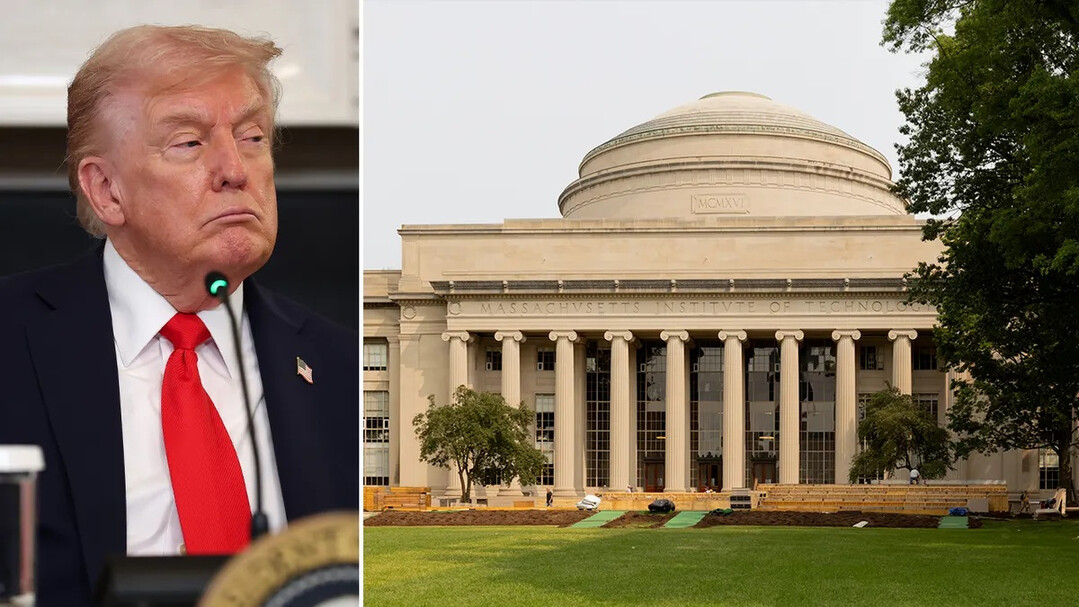
CAMBRIDGE, MA — The Massachusetts Institute of Technology (MIT) has long stood apart from the landscape of American higher education. Today, it finds itself at the center of a high-stakes ideological battle, serving as a rare example of meritocracy under fire from an increasingly interventionist federal administration.

Last October, MIT was among nine elite institutions that refused to sign the Trump administration’s “Accord for Academic Excellence in Higher Education.” President Sally Kornbluth was the first to decline, subsequently visiting Washington D.C. to argue that the administration’s hostility toward top-tier universities threatens the very meritocratic foundations of American prosperity.

The friction is paradoxical. The federal accord mandates standardized testing (SAT/ACT) to ensure fairness; yet, MIT had already unilaterally reinstated these requirements in 2022. While the administration rails against "elite entrenchment," MIT has never practiced legacy admissions. Furthermore, under Kornbluth’s leadership, the institute abolished the requirement for diversity, equity, and inclusion (DEI) statements in faculty hiring—a move often championed by conservatives.

Financially, MIT remains a model of accessibility. With a "need-blind" admissions policy and free tuition for families earning under $200,000, 88% of the Class of 2024 graduated debt-free. Despite this, the administration’s 8% tax on university endowments costs MIT $240 million annually—funds that could otherwise offset federal research cuts or bolster social mobility. Such taxation perversely undermines conservative values by weakening private-sector alternatives to state power.

The economic stakes are global. With 94% of its degrees in STEM fields, MIT’s "multiplier effect" is staggering: companies founded by its alumni generate $1.9 trillion in annual revenue—comparable to the GDP of Russia—and support 4.6 million jobs.

Historically, the bridge between MIT and Washington was one of strategic synergy. Eighty years ago, Vannevar Bush, an MIT dean, moved to the capital to lay the groundwork for modern national security, eventually igniting the Manhattan Project. Today, however, that relationship has soured into one of suspicion and regulatory overreach.

The administration’s latest mandate—prohibiting the "disregard of conservative ideas"—strikes many as a hollow irony. It remains unclear which conservative ideals the government seeks to protect: fiscal discipline, free trade, or the rule of law? By attempting to micromanage an institution as complex as MIT, the current administration displays a profound misunderstanding of the limits of state authority.

To watch modern politics trifle with an institution of such vital importance is akin to watching a toddler play with priceless Sèvres porcelain. MIT is not merely a school; it is a national asset whose autonomy is essential to the future of American innovation.

[Copyright (c) Global Economic Times. All Rights Reserved.]

  • #Globaleconomictimes
  • #Korea
  • #Seoul
  • #Samsung
  • #LG
  • #Bitcoin
  • #Meta
  • #Business
  • #Economic
  • #The Woori Bank
  • #Elon Musk
Global Economic Times Reporter
Reporter Page

Popular articles

  • From Industrial Capital to Tourism Mecca... Ulsan Makes a Bold Move with ‘Experiential Content’ in 2026

  • A New Milestone for Ukraine’s Post-War Reconstruction: The Birth of ISVP

  • About mexican food 

I like it
Share
  • Facebook
  • X
  • Kakaotalk
  • LINE
  • BAND
  • NAVER
  • https://www.globaleconomictimes.kr/article/1065564294169394 Copy URL copied.
Comments >

Comments 0

Weekly Hot Issue

  • Appellate Court Begins Review of Kakao Founder’s Acquittal in SM Entertainment Stock Rigging Case
  • AI Supercycle Propels Global Semiconductor Market Toward $1 Trillion Milestone
  • Naver Suspends Election Comments to Combat Cyberbullying and Misinformation Ahead of June Polls
  • Lotte Town Myeongdong Lights Up with 'Welcome Light' to Greet Global K-Pop Fans
  • K-Beauty SMEs Join Forces with Distributors: A New Paradigm for Global Expansion through Strategic Consortiums
  • BMW ‘The New i3’ Next-Gen EV: 900km Range 

Most Viewed

1
An Open Letter to BTS On the Eve of a Historic Performance
2
From Industrial Capital to Tourism Mecca... Ulsan Makes a Bold Move with ‘Experiential Content’ in 2026
3
Ko Sang-goo, President of World Federation of Korean Associations, Elected as First Private Sector Chair of World Korean Community Leaders Convention
4
It is Time for BTS’s Fandom, ARMY, to Step Forward
5
Korean Stock Market Plunges: Circuit Breaker and Sidecar Triggered Amid Geopolitical Crisis
광고문의
임시1
임시3
임시2

Hot Issue

Netflix Declares BTS Comeback Live “ARIRANG” as the Year’s Biggest Global Event

AI Medical Ecosystem in Focus: KIMES 2026 Opens in Seoul as Global Healthcare Hub

Netanyahu Declares Decisive Blow to Iran’s Nuclear and Missile Programs, Signals Early End to War

Intel Announces 10% Price Hike on CPUs: PC Manufacturers Bracing for Massive Production Cost Spikes

Let’s recycle the old blankets in Jeju Island’s closet instead of incinerating them.

Global Economic Times
korocamia@naver.com
CEO : LEE YEON-SIL
Publisher : KO YONG-CHUL
Registration number : Seoul, A55681
Registration Date : 2024-10-24
Youth Protection Manager: KO YONG-CHUL
Singapore Headquarters
5A Woodlands Road #11-34 The Tennery. S'677728
Korean Branch
Phone : +82(0)10 4724 5264
#304, 6 Nonhyeon-ro 111-gil, Gangnam-gu, Seoul
Copyright © Global Economic Times All Rights Reserved
  • 에이펙2025
  • APEC2025가이드북TV
  • 독도는우리땅
Search
Category
  • All articles
  • Synthesis
  • World
  • Business
  • Industry
  • ICT
  • Distribution Economy
  • Well+Being
  • Travel
  • Eco-News
  • Education
  • Korean Wave News
  • Opinion
  • Arts&Culture
  • Sports
  • People & Life 
    • 전체
    • International Student Report
    • With Ambassador
  • Column 
    • 전체
    • Cho Kijo Column
    • Cherry Garden Story
    • Ko Yong-chul Column
    • Kim Seul-Ong Column
    • Lee Yeon-sil Column
  • Photo News
  • New Book Guide
  • Multicultural News
  • Jobs & Workers