![[등록] 2026-09-01 15:48:31](/support/_updata/banner2/tl181982910_6749.png)


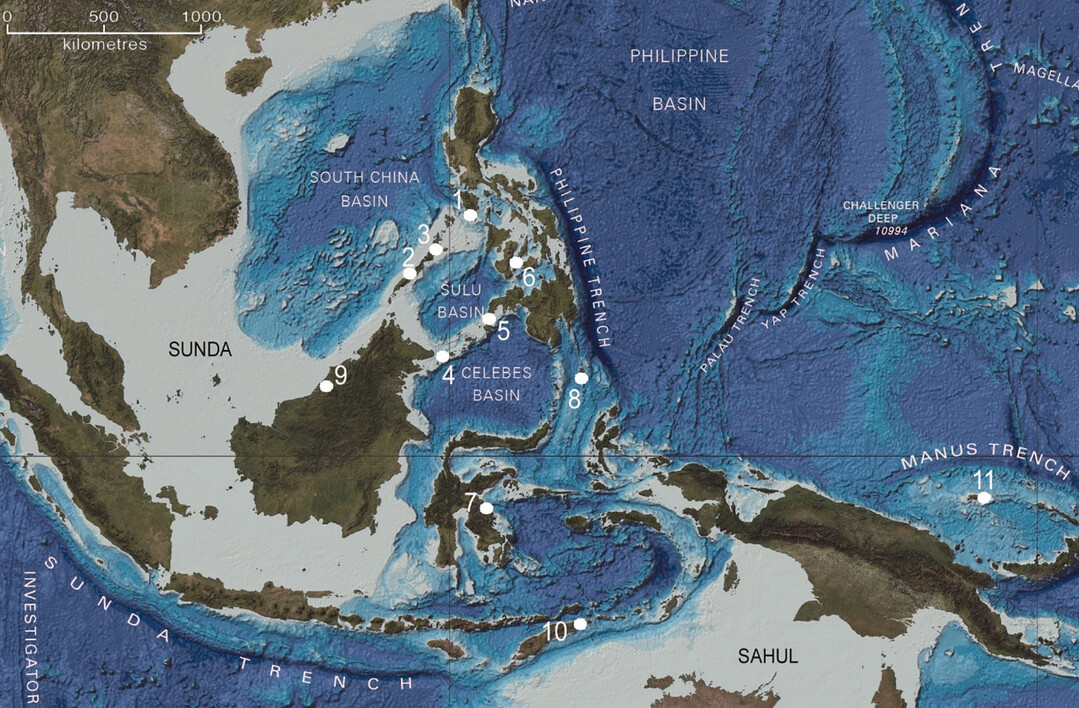
Astounding archaeological evidence, unveiled by researchers from Ateneo de Manila University, reveals that the Philippine archipelago fostered an advanced maritime culture as far back as 35,000 years ago. Through 15 years of archaeological research, collaborating with international experts and institutions, compelling evidence has been secured proving the pivotal role of the Philippine archipelago in ancient maritime Southeast Asia. These findings have been published in the journal 'Archaeological Research in Asia'.
This discovery unearths a story of effective human migration, advanced technological innovation, and long-distance cross-cultural relationships dating back over 35,000 years. The latest paper by the Ateneo research team presents extensive data and materials obtained from the Mindoro Archaeology Project, including some of the oldest traces of anatomically modern humans (Homo sapiens) found in the Philippine archipelago, particularly on Ilin Island, San Jose, and Sta. Teresa, Magsaysay in Occidental Mindoro.
Mindoro, unlike most of the main Philippine islands except Palawan, was never connected to the Southeast Asian mainland by land bridges or ice sheets; it has always been accessible only by crossing the sea. This geographical characteristic likely fostered the development of sophisticated technologies to traverse and survive in this environment.
Evidence of Sophisticated Ancient Technology Found in the Philippine Archipelago
Various artifacts, including human bones, animal bones, seashells, stone tools, bone tools, and shell tools, indicate that the early inhabitants of Mindoro possessed maritime navigation capabilities and specific fishing techniques as early as 30,000 years ago. They were able to catch pelagic predatory fish like tuna and sharks, and establish connections with distant islands and populations within Wallacea's vast marine region, separated by thousands of kilometers of deep sea. This suggests highly developed maritime technology at the time.
Particularly noteworthy is the innovative use of seashells as raw material for tools more than 30,000 years ago. This culminated in adzes made from giant clam (Tridacna species) shells dating back 7,000 to 9,000 years. These adzes show striking similarities to shell adzes found throughout Island Southeast Asia and on Manus Island, Papua New Guinea, over 3,000 kilometers away. Such resemblances provide strong evidence of extensive exchange networks at the time.
The research team also discovered human remains on Ilin Island, estimated to be about 5,000 years old. The body was buried in a fetal position and covered with limestone slabs. This burial practice is similar to other flexed burials found across Southeast Asia, suggesting shared ideological and social influences and the emergence of social complexity across a vast region. This indicates not only technological advancement but also the complexity of social structures.
Mindoro Implies a Vast Advanced Maritime Network
Archaeological sites in Mindoro present evidence of culturally sophisticated inhabitants who were behaviorally and technologically adapted to coastal and marine environments. These discoveries suggest that Mindoro and neighboring Philippine islands were part of an extensive maritime network that already existed during the Stone Age, facilitating cultural and technological exchange among early human groups across Island Southeast Asia for millennia.
By documenting long-term human habitation, advanced survival strategies, and the emergence of marine technology, the Mindoro Archaeology Project not only fills significant gaps in the Philippine prehistoric record but also redefines the region's importance in the broader narrative of human migration and adaptation in Island Southeast Asia. This is considered a crucial discovery, proving that the Philippines played a central role, not just a mere connecting link, in ancient maritime civilization.
This study clearly demonstrates that the Philippines was not just a route for human migration but also achieved its own technological innovations and cultural development, serving as a hub for the Southeast Asian maritime network. Further archaeological research is expected to provide a deeper understanding of the ancient maritime culture of the Philippine archipelago.
[Copyright (c) Global Economic Times. All Rights Reserved.]