![[등록] 2026-09-01 15:48:31](/support/_updata/banner2/tl181982910_6749.png)


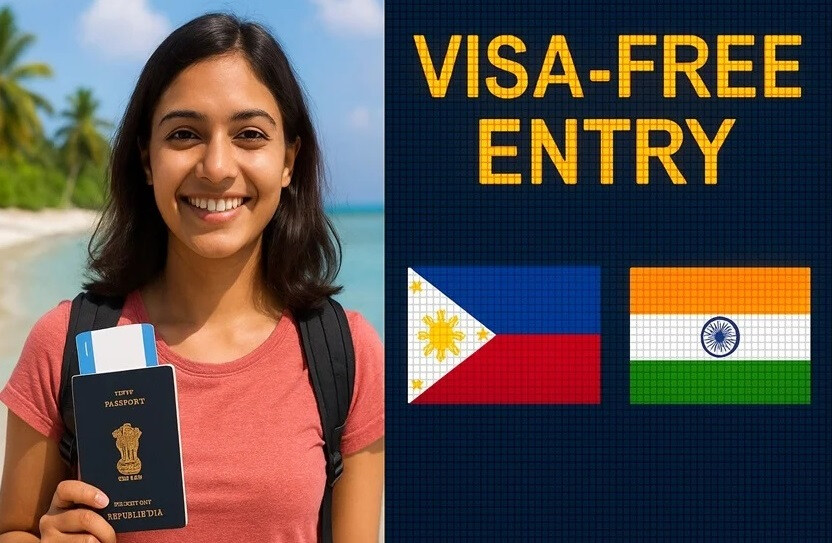
The Philippines announced on Saturday that it will grant visa-free entry to Indian nationals to boost its tourism industry. This measure reflects the Philippine government's strong commitment to revitalize the tourism market, which has been stagnant since the pandemic, and to actively attract the rapidly growing Indian outbound tourism market. While the exact implementation date has not yet been specified, related procedures are expected to proceed swiftly following the announcement.
Emphasizing the Importance of the Indian Market
The Philippine Department of Tourism (DOT) explained that this visa-free policy is part of a strategy to strengthen ties with India and diversify its tourist arrivals. India is one of the most populous countries in the world, and with economic growth, the demand for international travel is exploding. In 2023, the number of Indian outbound travelers reached approximately 27 million, and this is projected to exceed 30 million in 2024. This enormous potential in the Indian market will be an unmissable opportunity for the Philippines.
The Philippine Secretary of Tourism stated, "Indian tourists will be captivated by the Philippines' beautiful natural landscapes, rich cultural heritage, and warm hospitality." He added, "We are confident that this visa-free policy will foster exchanges between our two nations and bring economic benefits." Furthermore, the Philippines plans to focus on developing customized tourism products and improving infrastructure, considering the characteristics and preferences of Indian tourists.
Efforts to Recover the Tourism Industry Post-COVID-19 Pandemic
The Philippine tourism industry suffered a massive blow due to the COVID-19 pandemic. In 2019, the Philippines attracted a record high of approximately 8.2 million foreign tourists, but in 2020 and 2021, tourist arrivals were virtually non-existent. While recovery has been observed since borders reopened in 2022, it has not yet reached pre-pandemic levels. In 2023, the number of foreign tourists was approximately 5.45 million, remaining at around 60% of pre-pandemic figures.
The Philippine government recognizes the tourism industry as a key driver of the national economy and is pursuing various recovery strategies in addition to the visa-free policy. For instance, efforts are being made to expand direct flight routes in cooperation with major airlines, and continuous investments are being made to improve tourism infrastructure. Furthermore, the DOT is focusing on strengthening digital marketing and utilizing social media to promote the Philippines' attractions worldwide.
The Appeal and Potential of Philippine Tourism
The Philippines consists of over 7,000 islands, each boasting its unique charm. Boracay, Palawan, and Cebu are world-renowned resorts, offering an optimal environment for marine sports like scuba diving and snorkeling with their emerald waters, white sandy beaches, and diverse marine life. The Philippines also possesses a unique cultural heritage influenced by various cultures, including Spanish and American. UNESCO World Heritage Sites like the Philippine Baroque Churches and the rice terraces offer visitors a distinct experience.
Indian tourists can be segmented into various groups, including family travelers, honeymooners, and adventurous youth. The Philippines has the potential to offer a diverse range of tourism products that can meet the needs of each of these segments. For example, for family travelers, family-friendly facilities like theme parks and water parks can be enhanced, and for honeymooners, products offering luxury resorts and a romantic atmosphere can be developed. For adventurous travelers, activities like volcano trekking and cave exploration can be strengthened.
Expected Economic Ripple Effects
The tourism industry accounts for a very significant portion of the Philippine economy. In 2019, tourism contributed approximately 12.7% to the Philippine GDP and created about 5.7 million jobs. The attraction of Indian tourists is expected to further boost these economic ripple effects. An increase in tourists will stimulate spending in various sectors such as accommodation, food and beverage, transportation, and shopping, which will in turn lead to the creation of new jobs and increased income. This is particularly expected to inject significant vitality into small and medium-sized enterprises and local economies that struggled during the pandemic.
Furthermore, foreign currency spent by Indian tourists in the Philippines will increase the Philippines' foreign exchange reserves, contributing to the stabilization of the national economy. The Philippine government aims to attract over 1 million Indian tourists annually through this visa-free policy, expecting an increase of over $1 billion in tourism revenue.
Challenges and Outlook
Of course, there are also challenges in attracting Indian tourists. These include the need to expand direct flights between the Philippines and India, reduce airfares, and improve infrastructure for the safety and convenience of tourists. Providing services that consider Indian cultural characteristics and food preferences will also be crucial. Since many Indian tourists are vegetarians, a nuanced approach, such as offering a variety of vegetarian options, will be necessary.
Nevertheless, considering the Philippine government's proactive commitment and the growth potential of the Indian market, this visa-free policy is expected to have a positive impact on the Philippine tourism industry. The Philippines is anticipated to further solidify its position as a major tourist destination in the Asia-Pacific region through this opportunity. All eyes will be on whether the Philippines can successfully attract Indian tourists and achieve a resurgence in its tourism industry.
[Copyright (c) Global Economic Times. All Rights Reserved.]