
![[등록] 2026-09-01 15:48:31](/support/_updata/banner2/tl181982910_6749.png)


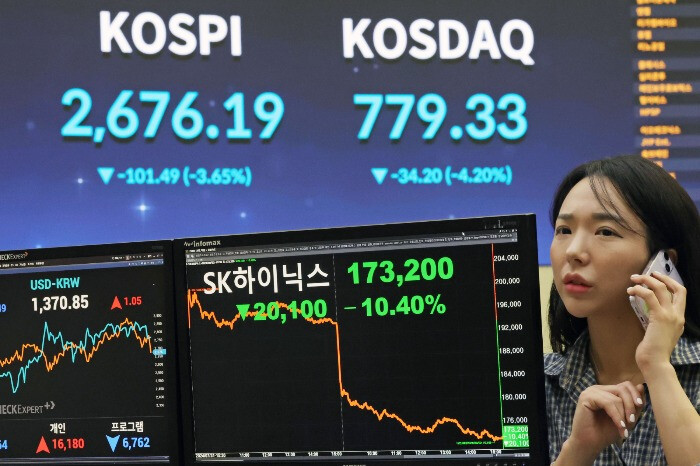
SEOUL—The South Korean stock market is undergoing a pronounced bifurcation, a dramatic tale of two markets. While large-cap stocks are capitalizing on a government-led market buoyancy, their smaller counterparts are struggling in a debilitating liquidity drought and mounting financial distress. This situation stands in stark contrast to the United States, where small-cap companies have become recent market darlings.
Since the KOSPI index commenced its rally—vaulting from the 2,700 level to a robust 3,400—the gains have been severely concentrated. Data from the Korea Exchange (KRX) reveals that the KRX Ultra-Small TMI Index has managed a paltry 0.67% gain since June. This is a dramatic lag compared to the KOSPI's 25.52% and even the KOSDAQ's 13.73% rise during the same period. Meanwhile, the KRX Mid-Large TMI saw a stunning 28.08% surge, demonstrating the sheer dominance of the market giants.
Within the KOSPI itself, the top 100 companies—the large-caps—have soared by 28.2%, effectively towing the headline index higher. However, the KOSPI’s small-cap index (stocks ranked 301 and below by market capitalization) has recorded a meager 4.58% increase. The message is clear: the current market surge is a large-cap event, leaving a vast number of smaller firms behind.
The Liquidity Chasm
This performance gap is compounded by an alarming drop in market interest. Small-cap stocks are suffering from a severe lack of trading. Over four months, while KOSPI large-caps, comprising just 100 companies, generated over 743 trillion KRW in trading value, the far larger cohort of ultra-small companies (604 stocks) recorded only about 52 trillion KRW—a clear signal of investor neglect and a deepening liquidity chasm. The sheer trading volume of the top 100 stocks eclipsed that of KOSPI small-caps by over nine times.
The US Exception and Domestic Headwinds
The Korean situation presents an atypical market dynamic when compared to the US. In America, the Russell 2000 Index, a key benchmark for small and mid-sized companies, has outperformed the giants. It surged 17.81% from June through September 28th, comfortably surpassing the S&P 500’s 12.38% and the Dow Jones’ 9.41% gains. This small-cap resurgence in the US is largely linked to renewed optimism surrounding interest rate cuts by the Federal Reserve.
In Korea, however, small-caps are grappling with severe domestic headwinds. Worsening financial stability among small and medium-sized enterprises is a major bottleneck. Loan delinquency rates for SMEs have been climbing, hitting 0.82% at the end of July. This financial strain, often coupled with a business model heavily dependent on the sluggish domestic economy, shakes their fundamental viability.
Left Out of "Value-Up"
Furthermore, small-caps have been significantly excluded from the government’s major market reform initiative aimed at boosting shareholder returns, often called the "Value-Up" theme. The financial fragility of these companies severely limits their capacity for buybacks or generous dividend payouts. This is reflected in the woefully low dividend yield of the KRX Ultra-Small TMI at 0.62%, which trails the Mid-Large TMI's 1.52% by a considerable margin. An IBK Investment & Securities chief research fellow noted that these financially disadvantaged small- and mid-sized firms lack the necessary capital to participate in meaningful shareholder returns, thus missing out entirely on the Value-Up boost.
The widening disparity underscores a vulnerability in the Korean market rally. While headline indices suggest a broad recovery, a vast segment of the market—comprising hundreds of smaller companies—remains starved of capital and investor attention, leaving them vulnerable to market stagnation despite the overall upward trend.
[Copyright (c) Global Economic Times. All Rights Reserved.]














