![[등록] 2026-09-01 15:48:31](/support/_updata/banner2/tl181982910_6749.png)


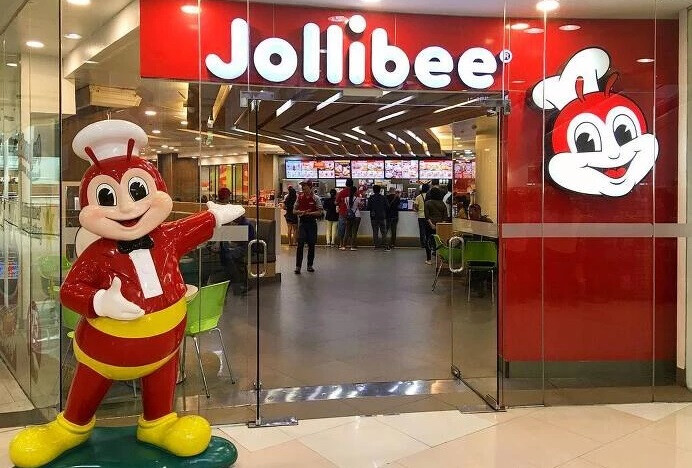
Jollibee Foods Corporation (JFC), the largest quick-service restaurant company in the Philippines, is aggressively pursuing Korean brands. Starting with the acquisition of Coffee Bean & Tea Leaf in 2019, followed by Compose Coffee in 2024, and the recent news of signing a Memorandum of Understanding (MOU) for the acquisition of Norang Tongdak's operating company, Jollibee's "love for Korea" has become a hot topic in the industry. Why is this giant company, which operates over 6,800 quick-service restaurant outlets worldwide, so fixated on Korean brands? We delve into Jollibee's hidden intentions, from its global market expansion strategy leveraging the "K-Culture" craze to the unique "testbed" effect of the Korean market and the favorable exchange rate.
K-Franchises: Riding the Hallyu Wave for Global "Re-export"
Jollibee's acquisition of Korean brands signifies more than just simple business expansion. It's analyzed as a meticulous strategy to use Korean brands as a stepping stone to "re-export" them not only to its home country of the Philippines but also to global markets. Jollibee has already established a global distribution infrastructure, operating over 230 overseas stores in 15 countries, including the United States, Canada, the Middle East, and Europe. By adding Korean brands, Jollibee aims to leverage the explosive global influence of K-Culture, represented by K-Pop, Korean dramas, beauty, and food.
Indeed, Hallyu's status in the Philippines is overwhelming. An operator of a Hallyu fan community in Manila mentioned that "90% of Filipinos consume Korean media," testifying to the high affinity local consumers have for Korean brands. The "Korean brand" label itself becomes a powerful global marketing asset. Notably, Compose Coffee has secured a strong fandom and high recognition, especially among the MZ generation, by featuring BTS's V as its model, while Norang Tongdak uses actor Cha Eun-woo. Jollibee's intention is also to utilize these sensuous marketing assets to compensate for the "aging risk" that its 47-year-old brand might experience and to imbue it with a younger, trendier image. This is interpreted as a strategic move to maximize brand value by combining the image of Korean culture, going beyond merely selling products.
Hyper-Competitive Korean Market: A "Testbed" for Global Success
Another important reason Jollibee covets Korean brands is due to the unique characteristics of the Korean market. Korea boasts the third-highest coffee consumption in the world, and its quick-service restaurant franchise market forms a hyper-competitive landscape at a global level. Brands that successfully survive in such a challenging environment are considered to possess excellent competitiveness and operational efficiency. Jollibee believes that by acquiring brands proven in Korea, they have a high probability of success in overseas markets such as Southeast Asia and the United States.
Korean quick-service brands, in particular, boast excellent operational efficiency, including IT-based ordering systems, consistent store designs, and strong logistics networks. Jollibee can transplant these advanced systems into its own brands to enhance overall competitiveness. For example, Compose Coffee has secured high efficiency through its own roasting facilities and a debt-free management structure, and its know-how in managing over 2,600 stores nationwide will be a significant asset for Jollibee. Norang Tongdak has also demonstrated excellent business scalability, operating over 700 stores and doubling its sales over the past five years. Jollibee's strategy is to learn from these successful Korean brand operating models and integrate them into its global network to create synergy.
"Affordable Price Tag" and Difficulties of Direct Entry into the Korean Market
The favorable exchange rate at the time of acquisition also positively influenced Jollibee's acquisition of Korean brands. As the Korean Won's value was on a downward trend during the acquisition period, Jollibee seized a golden opportunity to acquire promising Korean brands at a relatively low price. This can be seen as a rational choice for a company aiming to maximize investment efficiency.
Some speculate that Jollibee might be aiming to penetrate the Korean distribution network through coffee and chicken brands. However, the quick-service industry analyzes that Jollibee's direct entry into the Korean market is unlikely. Considering Jollibee's typically low-price policy in the Philippines and the need to immediately respond to the high competition and rapidly changing consumer trends in the Korean market, the main reason is the difficulty of maintaining a low-price policy. The Korean market, where leading domestic and international brands like McDonald's, Mom's Touch, and Lotteria are already fiercely competing, has very high barriers to entry for new players. Therefore, Jollibee is expected to focus more on absorbing proven brands and their operational know-how from Korea to leverage the ripple effect of "K-Franchises" in the global market, rather than directly targeting the Korean market itself.
Ultimately, Jollibee's pursuit of Korean brands is more than just an investment; it's part of a multifaceted strategy to strengthen its dominance in the global quick-service market. All eyes are on what global success stories Jollibee's shrewd moves will create, leveraging the power of K-Culture to enhance brand image, internalizing efficient operating systems proven in the Korean market, and capitalizing on favorable exchange rate conditions.
[Copyright (c) Global Economic Times. All Rights Reserved.]