![[등록] 2026-09-01 15:48:31](/support/_updata/banner2/tl181982910_6749.png)


"If I had to name the most precious and rewarding thing in my life, it would undoubtedly be the establishment of 'Touch of Love.'"
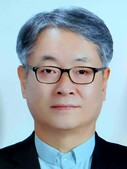
For Kang Duk-soo, CEO of Dong-gurami who has been running a garment business in Mexico for 26 years, business and volunteering are two inseparable pillars of his life. However, the turning point that pushed him to the frontline of volunteer work was the COVID-19 pandemic.
In a phone interview with this publication on the 16th, CEO Kang recalled, "Watching 10 people—including 5 Korean compatriots and 5 family members of our staff—pass away during COVID-19 led me to establish 'Touch of Love' and completely shift the direction of my volunteer work."
Even before the pandemic, his sharing continued. He supported various organizations including the Chalco Boys' Town, the Korean Association, and other groups, but mostly in a behind-the-scenes manner. However, experiencing the pandemic prompted him to dive directly into the fields where help was desperately needed. Since then, "Touch of Love" has delivered relief funds for forest fires in Gyeongbuk and the massive earthquake in Türkiye, and sent relief supplies to Acapulco, Mexico, which suffered severe damage from a super typhoon in 2023.
In Mexico's Korean community, he is sometimes called "Hong Banjang." This refers to a fixer who runs wherever help is needed, taking care of both big and small matters in the neighborhood. Jeong Sang-gu, President of the Korean Association in Mexico, hinted at this, calling CEO Kang "the Hong Banjang of the Mexican Korean community."
Volunteering Rooted Since School Days: "The Nourishment That Sustained My Life"
"Volunteering is an inseparable part of my daily life. Back in middle and high school, my dream job was to be the director of a neighborhood social welfare center. I graduated from Dongguk University with a degree in Buddhist Studies, and looking back, that choice also embodied a mission of volunteerism and dedication. My parents loved to give and share, so I suppose I inherited that DNA."
Throughout middle, high, and even university days, he formed and led volunteer clubs. For him, volunteering went beyond simply helping someone; it was the nourishment that sustained his life.
CEO Kang first set foot on Mexican soil in the year 2000. In his mid-30s, introduced by an acquaintance, he began his life in Mexico by taking over a large supermarket run by a Korean. However, he faced a harsh failure right from his first business venture. He invested 300 million won, but lost 200 million won in just a month, eventually forcing him to give up the supermarket business.
Later, upon a senior's recommendation, he jumped into the garment business. After repeated trials and errors, the business stabilized, and he grew into a successful overseas Korean merchant (Hansang) in the local Korean community. While he did not disclose his sales scale, he currently imports garments produced in around 10 factories in China and supplies them across all of Mexico.
Even while building his business, volunteering never stopped. The year after arriving in Mexico, he organized a cleanup group. When locals asked Koreans cleaning parks and streets, "Are you Japanese?" they replied, "Korea," and the locals raised their thumbs in encouragement.
At the time, Kim Jae-hyun, former Vice Chairman of World-OKTA, served as the president of the cleanup group, while CEO Kang served as vice president and general manager. The district office supported them with ladder trucks and water tank vehicles, and about 100 people, including volunteer group members and college students, participated. It was a community service that continued once every two weeks for about three years.
'Touch of Love' Shines Through the COVID-19 Crisis: Distributing 1 Million Masks
The biggest turning point in his volunteer life was COVID-19 in 2020. As a worldwide mask shortage struck, CEO Kang spent his own fortune to purchase 1 million masks and donated them to the diaspora community and others. However, watching people unable to receive proper treatment due to a lack of money brought an even greater heartache.
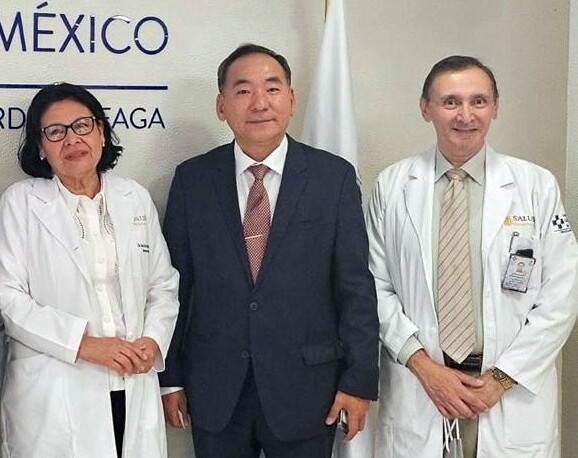
CEO Kang managed to make a difficult connection with Dr. Jesus Javier Vazquez Cortes at the National Medical Center of Mexico (Hospital General de Mexico).
"He was a doctor with an outstanding track record in COVID-19 treatment. By connecting with him with great difficulty, we were able to help 180 COVID-19 patients receive treatment, and in particular, saved 10 people who were at death's door."
As a national hospital, the Hospital General de Mexico provided free medical care. Thanks to CEO Kang's help, about 20 Korean compatriots overcame crises, and 70 others received free treatment. At the time, the Korean Association estimated that if they had used private hospitals, the cost would have amounted to about 5 billion won.
He did not stop there; he even promoted exchanges between the Hospital General de Mexico and South Korea's National Medical Center, helping to build a pathway for local Koreans to receive medical benefits from large-scale hospitals.
Supporting Chalco Boys' Town for 25 Years: Over 100,000 Pieces of Clothing
CEO Kang's support also continued for a long time in the education sector. A representative place is the Chalco Boys' Town and other educational facilities for students in difficult environments. Students here study without the burden of room, board, and tuition, despite their economic hardships. CEO Kang has continued his support for 25 years since 2002, early in his settlement in Mexico.
The founder of Chalco Boys' Town was Father Aloysius Schwartz, an American Catholic priest. He carried out projects to care for children in difficult environments in Korea as well, and later expanded his operational areas to Mexico, the Philippines, Brazil, and Guatemala.
"Compared to large American donors, the amount I give is negligible. Still, I have always done my best with sincerity. Since there are many students, donating just one piece of clothing per person exceeds 4,000 items. I think I have donated about 700 million won to this place so far."
The clothing he has donated, including pajamas, undershorts, and fleece-lined pants, exceeds 100,000 pieces. Cash, masks, cup noodles, and other support supplies are too numerous to count individually. Recently, he also donated 41 computers.
Support for the Korean community also continued. He provided 250 million won for Koreans who could not receive treatment due to a lack of hospital fees, and delivered 200 million won to 70 struggling Korean families, donating over 500 million won in total to the Korean community. He also contributed to the renovation of Korean language schools and scholarship support.
CEO Kang estimates that the total sponsorship funds he has provided since settling in Mexico, though not exact, exceed 2 billion won.
"Being Able to Donate is a Blessing": Beyond the Korean Community to the Local Society
His gaze is now directed toward the mutual prosperity of the entire Korean community. In particular, concerned about the weakening competitiveness of Korean merchants active in the market, he urges active interest and social contribution not only from Korean organizations but also from South Korean companies entering the local market.
As major domestic companies like Hyundai Motor, Kia, Samsung, LG, and POSCO advance into Mexico, expectations within the Korean community are also growing. He mentioned that whenever he attends events hosted by the embassy, he asks corporate relations officers to show interest in donations and volunteer work for both the Korean community and the local Mexican society.
"Even someone like me, running a small business, finds ways to do what I can. I hope large corporations will also take a greater interest in the Korean community and local Mexican society. I believe that simply being able to donate is a blessing in itself."
His "Touch of Love" does not end here. He is also pouring his efforts into activities such as helping veterans and families of the Korean War and independence patriots, and connecting compatriots suffering from alcohol issues or dementia who need repatriation to Korea with the Korean Rescue Corps.
Overcoming business failures in an unfamiliar Mexican land, CEO Kang Duk-soo rose as a successful overseas Korean merchant. However, what he proudly puts forward as the most glorious thing in his life is neither business success nor money.
It is running to lend a hand whenever someone in need appears. To him, volunteering is not a special event, but a way of life he has maintained for over 25 years. That is why the nickname "Hong Banjang," given to him by Koreans in Mexico, may be the name that most compactly encapsulates his life.
[Copyright (c) Global Economic Times. All Rights Reserved.]