• 2026.06.27 (Sat)
  • All articles
  • LOGIN
  • JOIN
Global Economic Times
fashionrunwayshow2026
  • Synthesis
  • World
  • Business
  • Industry
  • ICT
  • Distribution Economy
  • Well+Being
  • Travel
  • Eco-News
  • Education
  • Korean Wave News
  • Opinion
  • Arts&Culture
  • Sports
  • People & Life
    • International Student Report
    • With Ambassador
  • Column
    • Cho Kijo Column
    • Cherry Garden Story
    • Ko Yong-chul Column
    • Kim Seul-Ong Column
    • Lee Yeon-sil Column
  • Photo News
  • New Book Guide
MENU
 
Home > Industry

Incheon Port Authority Overhauls Incentive Program to Boost Cargo Throughput

KO YONG-CHUL Reporter / Updated : 2026-06-24 07:59:33
  • -
  • +
  • Print


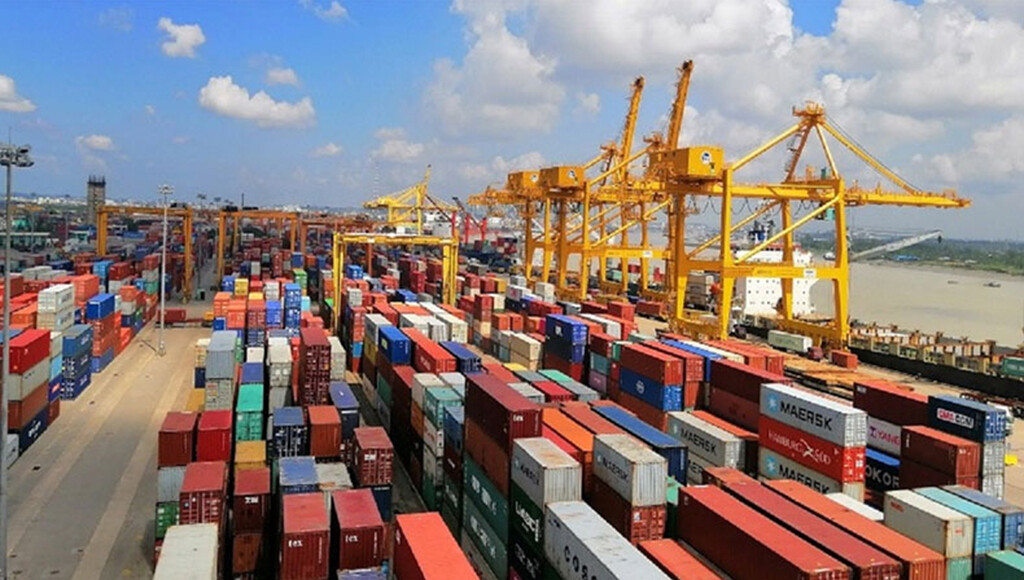
The Incheon Port Authority (IPA) has announced a significant restructuring of its long-standing incentive program, aiming to reinvigorate cargo traffic and solidify the port’s position as a premier logistics hub in Northeast Asia. The move comes as IPA seeks to modernize its support framework for shipping lines, shippers, and freight forwarders, ensuring that incentives are both performance-driven and strategically aligned with market demand.

A Data-Driven Strategic Shift

Since its inception in 2006, the IPA’s incentive scheme has been a cornerstone of its strategy to attract containerized cargo. A recent study conducted by the Incheon National University Industry-Academic Cooperation Foundation underscores the efficacy of these financial mechanisms. The research revealed that every 100 million won invested in incentives yielded approximately 128 million won in port facility fee revenue.

Over the past 19 years, the IPA has disbursed 30 billion won in total incentives, resulting in a substantial economic multiplier effect: 48.7 billion won in production inducement, 18 billion won in added value, and the creation of 244 jobs. These figures validate the necessity of refining the system to maximize future returns.

Introducing the 'Integrated Performance-Based System'

Historically, the IPA operated two distinct incentive tracks: a "volume-based" model (rewarding total throughput) and a "growth-based" model (rewarding year-over-year increases). However, this bifurcation often led to structural inefficiencies, where large-scale shipping lines or forwarders with high absolute volumes failed to qualify for growth-based rewards due to market saturation.

To rectify this, the IPA will launch an "Integrated Performance-Based System" this year. This new model evaluates both total volume and growth rates holistically, ensuring that market leaders and rising logistics players are incentivized fairly and effectively. Furthermore, the geographical scope of route support—previously limited to deep-sea routes in the Americas and Europe—will be expanded to include critical near-sea lanes serving Southwest Asia, Southeast Asia, China, and Japan.

Streamlining and Future Expansion

In an effort to optimize resources, the IPA has decided to abolish the "Special Voyage Incentive," which rewarded the creation of new routes or temporary voyage additions. Data indicated that this specific program had a meager 0.4% conversion rate for permanent new route establishment, prompting the IPA to reallocate these funds toward more impactful areas.

A key highlight of the new strategy is the pilot expansion of incentive eligibility beyond containerized freight to include bulk cargo and automobile transshipment—a move that industry experts view as a forward-thinking response to changing trade dynamics. The decline in bulk cargo volume at Incheon’s Inner and North ports, driven by the relocation of local manufacturing and the trend toward containerization, has necessitated this shift.

"This initiative is designed to overcome the limitations of the current system and sharpen Incheon Port’s competitive edge," said an IPA official. "Our pilot support for bulk cargo is a pioneering move among Korea's port authorities, reflecting our commitment to diversifying our cargo portfolio and adapting to the evolving global logistics landscape."

As Incheon Port navigates the uncertainties of the global trade environment in 2026, the refined incentive program stands as a strategic imperative to ensure sustainable growth and bolster the port's role as a vital gateway for the Seoul Metropolitan Area and beyond.

[Copyright (c) Global Economic Times. All Rights Reserved.]

  • #Hormuz Impasse
  • #globaleconomictimes
  • #micorea
  • #mykorea
  • #nammidonganews
  • #singaporenewsk
  • #Samsung
  • #Daewoo
  • #Hyos
KO YONG-CHUL Reporter
Reporter Page

Popular articles

  • Our Embassy met on Friday, May 29, with the Kkottongnae brothers, who run a nursing home in the city of Caacupé, to learn about their main activities and future plans.

  • Ambassador Hyuk-Sang Sohn participated on May 26 in the signing ceremony of the Discussion Memorandum

  • Personal Interest Engraved on the Dollar: Witnessing the Regression of American Democracy

I like it
Share
  • Facebook
  • X
  • Kakaotalk
  • LINE
  • BAND
  • NAVER
  • https://www.globaleconomictimes.kr/article/1065567515812762 Copy URL copied.
Comments >

Comments 0

Weekly Hot Issue

  • The True Face of Our Politics After Stripping Away the Mask of Fairness
  • The Word of a U.S. President Worth Less Than a Dollar
  • South Korea’s Bid for MSCI Developed Market Status Stalls Again
  • Canada’s Multi-Billion Dollar Submarine Race: Economic Benefits Take Center Stage as Decision Looms
  • UN Secretary-General Urges AI Industry to Adopt Environmental Transparency Amid Rapid Infrastructure Expansion
  • Europe Suffers Under Record-Breaking Heatwave: Paris and Rome Take Emergency Measures

Most Viewed

1
[In-depth Report] The Islamic ‘Halal Barrier’ Just Around the Corner… The Silent Screams of K-Beauty SMEs
2
Asking about the Future of ‘Hangeul City Ulsan’… Special Lecture by Novelist Kim Jin-myung to be Held
3
Embassy of Pakistan in Seoul Hosts Commemorative Event for the 150th Birth Anniversary of Muhammad Ali Jinnah
4
KOSPI Hits Historic 9,300 Milestone as Market Cap Surpasses 8,000 Trillion Won
5
'K-Medicine' Sweep Drives Foreign Medical Spending in Korea to Record High of 250 Billion Won
광고문의
임시1
임시3
임시2

Hot Issue

Devastating Twin Earthquakes Strike Venezuela: Death Toll Rises Amid Humanitarian Crisis

President Lee Steps Up Regional Growth Blueprint, Putting AI and Chips at the Center

Labor and Management Begin Fierce Tug-of-War Over 2027 Minimum Wage

Incheon Port Authority Overhauls Incentive Program to Boost Cargo Throughput

Fashion Runway Show 2026

Global Economic Times
korocamia@naver.com
CEO : LEE YEON-SIL
Publisher : KO YONG-CHUL
Registration number : Seoul, A55681
Registration Date : 2024-10-24
Youth Protection Manager: KO YONG-CHUL
Singapore Headquarters
5A Woodlands Road #11-34 The Tennery. S'677728
Korean Branch
Phone : +82(0)10 4724 5264
#304, 6 Nonhyeon-ro 111-gil, Gangnam-gu, Seoul
Copyright © Global Economic Times All Rights Reserved
  • 향기네무료급식
  • BCB부천방송
  • 반달곰 프로젝트
Search
Category
  • All articles
  • Synthesis
  • World
  • Business
  • Industry
  • ICT
  • Distribution Economy
  • Well+Being
  • Travel
  • Eco-News
  • Education
  • Korean Wave News
  • Opinion
  • Arts&Culture
  • Sports
  • People & Life 
    • 전체
    • International Student Report
    • With Ambassador
  • Column 
    • 전체
    • Cho Kijo Column
    • Cherry Garden Story
    • Ko Yong-chul Column
    • Kim Seul-Ong Column
    • Lee Yeon-sil Column
  • Photo News
  • New Book Guide
  • Multicultural News
  • Jobs & Workers