![[등록] 2026-09-01 15:48:31](/support/_updata/banner2/tl181982910_6749.png)


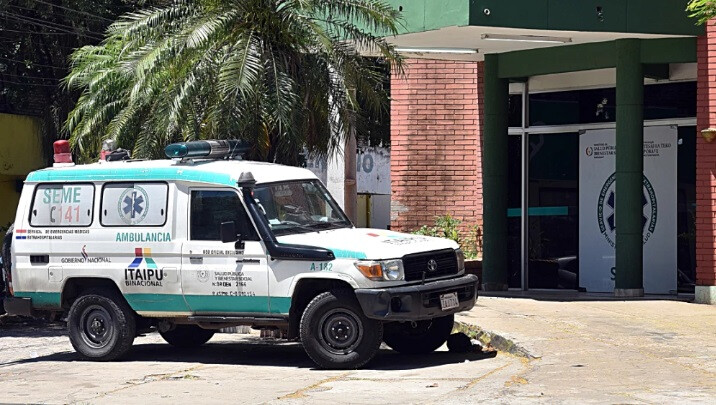
Health Minister Teresa Barán announced the commencement of the bidding process for the construction of a large hospital in Asunción. A large-scale hospital is also planned for the Chaco region, and additional ambulances will be purchased.
The Ministry of Health stated that it will secure 200 ambulances through cooperation with Itaipu Binacional. Minister Barán said, "We are already in discussions with the Director of Itaipu, and we expect to secure an initial batch of 39-40 ambulances as early as mid- or late May, which will substantially improve the healthcare system." Currently, approximately 500 ambulances operate nationwide in Paraguay, including vehicles from the Emergency Medical Services (SEME) in the capital and Central region.
SEME operates an IT system that provides real-time ambulance availability information and works closely with the intensive care unit (ICU) department to ensure timely transfer of patients requiring ICU care.
Minister Barán announced that the bidding process for the Asunción large hospital construction project will begin on May 27th. This hospital is expected to significantly alleviate the overload at the Barrio Obrero General Hospital. Following the contract signing, there will be a hospital design period, and after project approval, the construction period will take approximately 30 months. The project will be funded by a grant of approximately $46 million from the Taiwanese government.
Furthermore, the public bidding process for the construction of a large hospital in the Chaco region, funded by Itaipu Binacional, will also begin this week.
The Ministry of Health announced the signing of contracts for the purchase of ventilators, incubators, and other essential medical equipment worth 35 billion guaraníes. This is part of an effort to strengthen the intensive care capacity of the public healthcare system.
The Itaúguá National Hospital received equipment to strengthen its intensive care unit as part of a plan to reactivate ICU beds that had been out of service. The hospital has additionally secured 50 electric beds, including 40 for adult patients and 10 for pediatric patients, along with 550 mattresses, which are expected to improve the inpatient environment and enhance the responsiveness of the healthcare system.
The Social Security Institute (IPS) is expanding the implementation of a system that cancels appointments not confirmed within 48 hours of booking and offers them to those on the waiting list. Currently, this system operates in eight medical facilities in the capital and Central region: the Irendague Clinic, Luque Hospital, Capiatá Campo Vía Clinic, and the IPS Ambulatory Care Center (CAA)'s cardiology and back departments.
Juan Carlos Frutos, the IPS Technical Manager, stated, "The no-show rate was 25%, but it has been decreasing since the system was introduced." IPS is considering expanding the system to more clinics in the capital and Central region, with plans for nationwide expansion in the future.
Those with appointments will receive a text message 48 hours before their scheduled time with a confirmation or cancellation link via the number (0962) 152-152. In addition to clicking the link, confirmation or cancellation can also be done through the MI IPS app or the call center (0800-11-5000). Appointments not confirmed within 48 hours will be automatically canceled and offered to other patients.
IPS expects that reducing the no-show rate for outpatient appointments will allow more patients to receive medical services.
The Paraguayan government is accelerating its efforts to strengthen the healthcare system through various initiatives, including the construction of two large hospitals, the expansion of the ambulance fleet, the procurement of essential medical equipment, and the improvement of the appointment system. It remains to be seen whether these investments will improve access to medical services for the population and further contribute to the promotion of public health.
[Copyright (c) Global Economic Times. All Rights Reserved.]