![[등록] 2026-09-01 15:48:31](/support/_updata/banner2/tl181982910_6749.png)


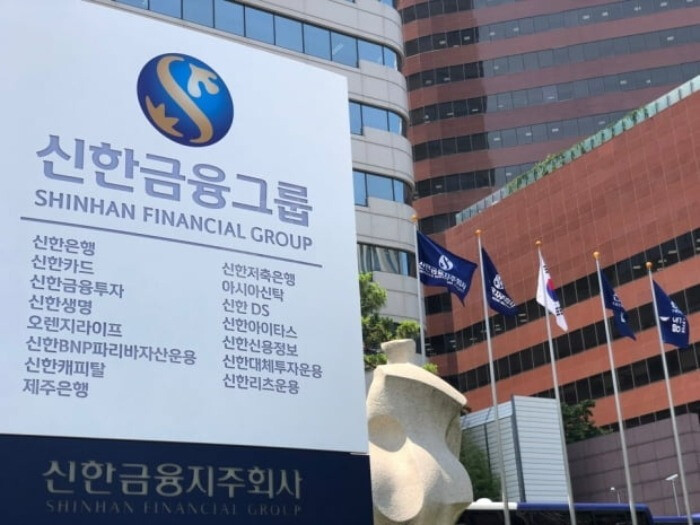
Shinhan Financial Group has undertaken the task of proving its investment efficiency after committing approximately 1.2 trillion won to acquire Lotte Non-Life Insurance. While the grand vision is to secure a non-life insurance business foundation and boost group profits, additional capital may be required to improve Lotte Non-Life’s capital soundness and recovery of profitability.
On the 13th, Shinhan Financial signed a Stock Purchase Agreement (SPA) to acquire a 77.04% stake in Lotte Non-Life Insurance from private equity firm JKL Partners for 6933 billion won. Considering the stake ratio, the total equity value of Lotte Non-Life is estimated at approximately 900 billion won.
Shinhan Financial plans to secure the remaining shares through a public tender offer next year, incorporate Lotte Non-Life as a wholly-owned subsidiary, and then pursue a merger with Shinhan EZ General Insurance. With 300 billion won slated for capital injection into the integrated non-life insurance company, the total investment is estimated to reach about 1.2 trillion won, including acquisition costs for remaining shares.
Shinhan Financial’s strategy is to elevate profitability in its insurance sector through the business normalization of Lotte Non-Life and its merger with Shinhan EZ General Insurance. It has also set targets to generate over 120 billion won in annual group net profit within three years post-acquisition and improve Return on Equity (ROE) by the mid-0.2 percentage points. The decision stems from the judgment that it can secure a previously vulnerable non-life insurance base and reduce overlapping costs via affiliate integration.
Questionable Investment Efficiency... Compliance with Tier 1 Capital Regulations Also at Stake
The recovery of Lotte Non-Life's profitability remains a challenge. Lotte Non-Life recorded a net loss of 18.5 billion won in the first half of this year, reverting to a deficit from a net profit of 47.5 billion won in the same period last year. The investment loss for the first half stood at 79.1 billion won. Analysts point out that without supporting the normalization of insurance income and the improvement of investment income, it may take time to expand the profit base post-acquisition.
Voices in the securities industry are expressing concerns over capital burdens and the uncertainty of investment recovery resulting from the acquisition. While NH Investment & Securities acknowledged the strategic effects of complementing the non-life insurance business and enhancing the stability of non-interest income, it noted that the efficiency of capital allocation must be scrutinized. This is because the growth potential of the domestic insurance market is limited, and it could take a considerable amount of time before receiving dividends from Lotte Non-Life.
An official from NH Investment & Securities stated, "Doubts remain as to whether this acquisition is the best choice for enhancing corporate value," adding, "Even if things proceed according to the company's plan in the domestic insurance industry—which is oligopolistic around a few companies with limited market growth potential—it is acquiring an insurance company where receiving dividends will not be easy until 2035."
Another burden is that additional funds may be required during the process of restoring capital soundness after the acquisition. Lotte Non-Life’s Tier 1 K-ICS ratio remains at a negative level even after applying transitional measures, making capital structure improvement inevitable to cope with new regulations. Financial authorities will implement a regulation starting next January setting the Tier 1 K-ICS ratio standard to 50%, applying transitional measures until the end of 2035 to ensure settlement of the system.
Hanwha Investment & Securities also views that there is still insufficient grounds to support profitability improvement post-acquisition. An official from Hanwha Investment & Securities stated, "To achieve the ROE enhancement planned by Shinhan Financial Group, it must simultaneously prove the normalization of Lotte Non-Life’s earnings and the management of capital adequacy to lower the possibility of additional capital increases."
DB Securities adjusted Shinhan Financial Group to a second-preferred stock within the banking sector. The reason is that uncertain factors surrounding earnings and the possibility of additional capital increases have emerged following the acquisition of Lotte Non-Life Insurance.
DB Securities estimated that additional capital expansion will be necessary to lift the Tier 1 capital ratios of Lotte Non-Life and Shinhan EZ General Insurance to the new 50% regulation. Even reflecting capital reduction and paid-in capital increase plans, the merged insurer's Tier 1 capital ratio is projected to stall at around 45.1%. Additional capital required to meet the 50% standard was analyzed at 340.6 billion won before transitional measures and 85.0 billion won under applied transitional measures.
Shinhan Financial plans to pursue capital structure improvements worth approximately 460 billion won through capital reduction of Lotte Non-Life, and inject 300 billion won into Shinhan EZ General Insurance. It also presented a mid-to-long-term target to generate an annual profit and loss of 100 billion won through business normalization, reduction of overlapping costs resulting from group incorporation, and replacement of subordinated bonds.
Synergy of Integrated Insurer Depends on Management Communication and Strategic Coordination
Communication between the two companies' management and strategic coordination during the integration process are also cited as challenges. Kang Byung-kwan, CEO of Shinhan EZ General Insurance, reportedly learned about the finalization of Lotte Non-Life Insurance’s acquisition through news reports. Although Shinhan EZ General Insurance employees participated in the due diligence prior to the acquisition, it was reportedly explained to CEO Kang as a procedure for establishing mid-to-long-term capital strategy. A Shinhan Financial official stated, "We are currently in the state of signing an acquisition contract," adding, "We will officially communicate matters that can be disclosed in accordance with future regulatory authorization procedures." How the business strategies and organizational operation directions of both companies are coordinated and how management roles are established post-acquisition are expected to dictate integration synergy and operational efficiency.
The crux is how realistically Shinhan Financial can realize its presented normalization scenario. Considering the capital actually injected by Shinhan Financial and the costs required for normalization, investment performance hinges on post-acquisition earnings. Variables include whether the profit base can be sustained through new contracts, whether target profits can be achieved without additional capital increases, and whether the Tier 1 capital ratio can be improved despite interest rate fluctuations.
A market insider remarked, "The success of the Lotte Non-Life acquisition depends less on securing the non-life insurance business than on how much actual profit-generating power and capital efficiency are improved after capital injection," adding, "The key will be whether the Tier 1 capital ratio can be raised without additional capital expansion and whether insurance earnings can be normalized."
[Copyright (c) Global Economic Times. All Rights Reserved.]