• 2025.12.07 (Sun)
  • All articles
  • LOGIN
  • JOIN
Global Economic Times
APEC2025KOREA가이드북
  • Synthesis
  • World
  • Business
  • Industry
  • ICT
  • Distribution Economy
  • Well+Being
  • Travel
  • Eco-News
  • Education
  • Korean Wave News
  • Opinion
  • Arts&Culture
  • Sports
  • People & Life
  • Column
    • Cho Kijo Column
    • Lee Yeon-sil Column
    • Ko Yong-chul Column
    • Cherry Garden Story
  • Photo News
  • New Book Guide
MENU
 
Home > Industry

EU Accelerates 'Battery Independence' with Multi-Trillion Won Public Fund Injection

Graciela Maria Reporter / Updated : 2025-11-19 08:26:43
  • -
  • +
  • Print


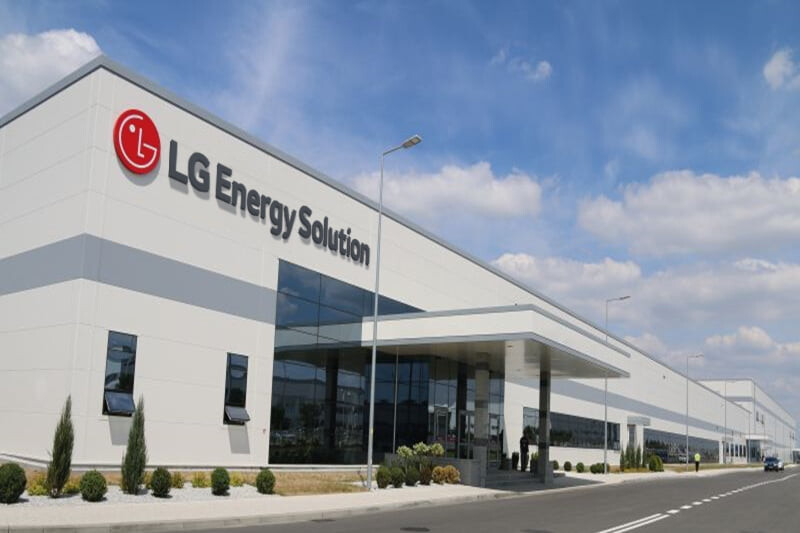
 (C) LG Energy Slution


The European Union (EU) is accelerating its drive for battery independence by allocating a massive €640 million (approximately 1.1 trillion South Korean won) in public funds to support domestic battery production projects. This strategic move, detailed in a recent announcement from the European Commission, is aimed at reducing the bloc's reliance on foreign sources for critical battery materials and breaking the current global dominance held by South Korea and China in the battery industry supply chain.

Key Investments and Strategic Focus 

The funding, drawn from the EU Innovation Fund, is scheduled for disbursement between 2027 and 2029, tied to the completion phases of five selected projects across Europe. The Commission stated this initiative is designed to strengthen the EU's autonomy in the battery sector and create jobs within the region.

The five recipient projects are:

ACCEPT
AGATHE (France)
WGF2G (Germany)
NOVO One (Sweden)
46inEU (Poland)

Notably, the 46inEU project in Poland involves the South Korean giant LG Energy Solution, which is exploring the conversion of some of its existing pouch-type battery production lines to manufacture the next-generation 46-millimeter cylindrical batteries.

Betting on Cobalt-Free Technology 

In a separate but related development earlier this month, the EU Commission also approved the 'NEXTGEN CAM' project for the construction of a next-generation cathode material factory in Portugal. This plant, which will also receive funding from the EU Innovation Fund (with the final subsidy amount to be confirmed in the first half of next year), is set to become Europe's first production hub for Lithium Nickel Manganese Oxide (LNMO) cathode material.

LNMO is considered a cutting-edge material because it is completely cobalt-free. It boasts superior energy density, faster charging speeds, and better thermal stability, positioning it as a potential successor to both Lithium Iron Phosphate (LFP) and Nickel-Cobalt-Manganese (NCM) battery chemistries.

This focus on LNMO is intrinsically linked to the EU’s efforts to reduce its foreign dependence on battery components. Under the Critical Raw Materials Act (CRMA), the EU plans to limit reliance on any single country for critical minerals like cobalt to below 65% by 2030. Industry observers suggest this measure is primarily targeting China, which currently controls an estimated 70–80% of the world's cobalt refining and processing capacity.

Shifting the Global Paradigm 

The confluence of these policy moves underscores the EU's strategic determination to internalize the core technology and supply chain of the battery industry. By striving for a higher degree of production self-sufficiency and securing industrial leadership, the EU is making an existential commitment to this strategic sector. The bloc's pursuit of next-generation technologies like LNMO is explicitly intended to disrupt the current 'two-power' structure dominated by Korean and Chinese manufacturers.

The escalating pressure from these EU policies means that Korean companies operating in Europe will likely need to scale up their local production lines or adjust their manufacturing focus to comply with EU requirements, potentially by increasing production of low-cobalt High-Nickel batteries or LFP cathodes. The continent is sending a clear signal: the future of battery manufacturing will be written on European soil.

[Copyright (c) Global Economic Times. All Rights Reserved.]

  • #globaleconomictimes
  • #micorea
  • #mykorea
  • #Lifeplaza
  • #nammidonganews
  • #singaporenewsk
  • #Samsung
  • #Daewoo
  • #Hyosung
  • #A
Graciela Maria Reporter

Popular articles

  • Mother Suspected of Trafficking 12-Year-Old Daughter for Sexual Exploitation in Japan

  • Japan Pioneers External Airbags for Cyclist Safety, Revolutionizing Auto Industry Protection

  • "Louvre" Was the Password: State Audit Slams Museum's Security Gaps, Full Upgrade Not Expected Until 2032

I like it
Share
  • Facebook
  • X
  • Kakaotalk
  • LINE
  • BAND
  • NAVER
  • https://www.globaleconomictimes.kr/article/1065569104924184 Copy URL copied.
Comments >

Comments 0

Weekly Hot Issue

  • JAPAN’S RISING PREDICAMENT: RECORD BEAR ATTACKS STRIKE FEAR ACROSS NATION
  • Trump NSS Declares Europe Faces 'Civilizational Erasure,' Vows to Aid Anti-Immigration Right-Wing Parties
  • Meta's Strategic U-Turn: The AI Race Re-Elevates Real-Time News
  • Gapyeong's Petit France and Italian Village Illuminate Winter with 'Starlight Festival'
  • Grand Opening: Gwangju Museum's Ceramics Culture Center Offers Comprehensive Look at Ceramic History
  • Choi Bun-do, Chairman of PTV Group, Assumes Presidency of the Korean Chamber of Commerce and Industry in South Central Vietnam

Most Viewed

1
Korean War Ally, Reborn as an 'Economic Alliance' Across 70 Years: Chuncheon's 'Path of Reciprocity,' a Strategic
2
A Garden Where the City's Rhythm Stops: Dongdaemun's 'Cherry Garden', Cooking Consideration and Diversity
3
The Sudden Halt of Ayumi Hamasaki's Shanghai Concert: Unpacking the Rising Sino-Japanese Tensions
4
Farewell to a Legend: South Korea Mourns the Passing of Esteemed Actor Lee Soon-jae
5
China’s Anti-Starlink Strategy: Simulation Suggests 2,000 Drones Needed for Taiwan Disruption
광고문의
임시1
임시3
임시2

Hot Issue

EU Unveils €90 Billion Ukraine Aid Plan Backed by Frozen Russian Assets

Seoul's 'Insane Rent' Warning: Why $30,000 Monthly Rent is a Looming Threat Residential Crisis Deepens as Tourist Housing Conversion Hits Supply

Seo Min-kyu Wins Gold at Junior Grand Prix Final... First Korean Since Kim Yuna 20 Years Ago

2026 Overseas Koreans Agency Budget Confirmed at 112.7 Billion Won... 5.3% Increase Year-on-Year

Let’s recycle the old blankets in Jeju Island’s closet instead of incinerating them.

Global Economic Times
korocamia@naver.com
CEO : LEE YEON-SIL
Publisher : KO YONG-CHUL
Registration number : Seoul, A55681
Registration Date : 2024-10-24
Youth Protection Manager: KO YONG-CHUL
Singapore Headquarters
5A Woodlands Road #11-34 The Tennery. S'677728
Korean Branch
Phone : +82(0)10 4724 5264
#304, 6 Nonhyeon-ro 111-gil, Gangnam-gu, Seoul
Copyright © Global Economic Times All Rights Reserved
  • 에이펙2025
  • APEC2025가이드북TV
  • 세종시
Search
Category
  • All articles
  • Synthesis
  • World
  • Business
  • Industry
  • ICT
  • Distribution Economy
  • Well+Being
  • Travel
  • Eco-News
  • Education
  • Korean Wave News
  • Opinion
  • Arts&Culture
  • Sports
  • People & Life
  • Column 
    • 전체
    • Cho Kijo Column
    • Lee Yeon-sil Column
    • Ko Yong-chul Column
    • Cherry Garden Story
  • Photo News
  • New Book Guide
  • Multicultural News
  • Jobs & Workers