(C) Gemini Image
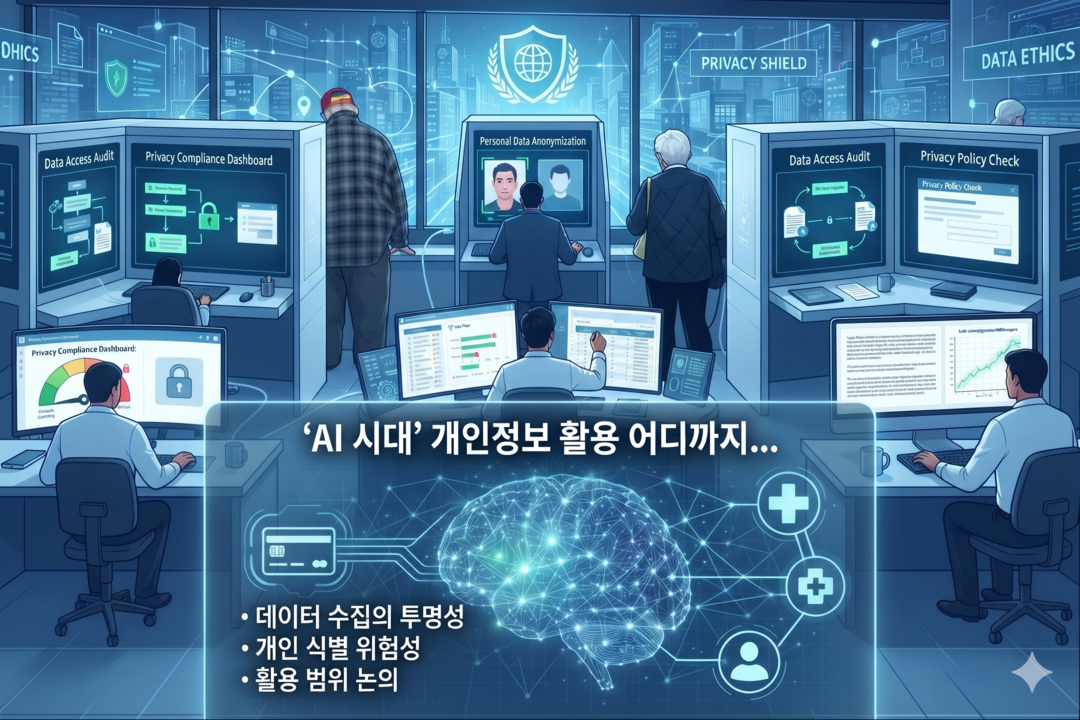
As the artificial intelligence revolution accelerates, society faces a complex and pressing dilemma: how to effectively protect individual privacy while unlocking the potential of personal data. To tackle this challenge, citizens and experts are coming together in a collaborative effort to find a balanced path forward.
On November 1, the Ministry of the Interior and Safety (MOIS) and the Personal Information Protection Commission (PIPC) hosted the 3rd "Public Debate" at the Baekyangnuri Center of Yonsei University in Seoul. Under the theme "Protecting and Utilizing Personal Information in the AI Era," the event convened key government figures, including Presidential Secretary for AI Future Planning Lee Hae-min and Presidential Secretary for Dialogue and Integration Jeon Sung-hwan, alongside domain experts and everyday citizens. The core objective of the forum was to strike a delicate balance—preserving fundamental privacy rights while meeting diverse public and commercial demands for data utilization.
The program was structured to maximize public engagement, moving from expert keynote presentations to small-group breakout discussions and open-floor debates. Participants utilized a real-time mobile voting system to voice their stances on contentious issues, complementing the insights gathered from a two-week pre-event online survey that drew over 1,200 participants.
The event opened with foundational presentations from leading scholars:
Prof. Kim Do-seung (Jeonbuk National University Law School, President of the Privacy Law Association) explored current data processing environments and legal requirements through concrete, real-world case studies.
Prof. Kim Byung-phil (KAIST Graduate School of Management, Head of the AI Privacy Public-Private Consultative Body’s Data Processing Division) analyzed the unique characteristics of data processing in the AI age and highlighted friction points with existing legal frameworks.
Building on these insights, 200 citizen participants engaged in breakout sessions to exchange perspectives on the necessity and risks of personal information usage in daily life, collectively brainstorming ideal governance principles.
Discussions centered around three core agendas for institutional reform in the AI era:
Exploring the New Value of Personal Information: Identifying the unique economic and social value generated by data in AI environments.
Reforming Consent Models: Transitioning away from the traditional, rigid "prior consent" framework toward a more flexible "prior notice with opt-out at any time" approach.
Establishing Collaborative Trust: Defining clear, shared roles and responsibilities among businesses, governments, and civil society to build a trustworthy data ecosystem.
"We hope this third installment of the 'Public Debate' serves as an open communication channel where the wisdom and experiences of our citizens can drive genuine policy changes," said MOIS Vice Minister Kim Min-jae. "The Ministry will always listen closely to craft policies that enhance public convenience and continue seeking answers hand-in-hand with the public."
PIPC Chairperson Song Kyung-hee echoed this sentiment, stating, "The ultimate goal of privacy policy is not to block the use of personal data, but to enable its safe utilization so that all citizens can enjoy the benefits of technological advancement with peace of mind. We will continue to listen attentively to the public and drive institutional reforms suited for the AI era."
[Copyright (c) Global Economic Times. All Rights Reserved.]