![[등록] 2026-09-01 15:48:31](/support/_updata/banner2/tl181982910_6749.png)


SEOUL, South Korea — South Korea’s leading technology and automotive companies, including Samsung Electronics, SK Hynix, Hyundai Motor, and Kia, are on high alert following China’s surprise expansion of export controls on rare earth elements and related technologies. This move, seen as Beijing’s counter-measure to U.S. restrictions on semiconductor technology, has once again left South Korean firms caught in the escalating U.S.-China trade and tech conflict.
New Controls Target Advanced Technology
On October 9, 2025, China’s Ministry of Commerce explicitly added rare earths used in advanced semiconductors and artificial intelligence (AI) to its controlled list. The new regulations specifically target elements crucial for manufacturing sub-14-nanometer system semiconductors, 256-layer or higher memory semiconductors, and the sophisticated equipment used to produce and test these chips.
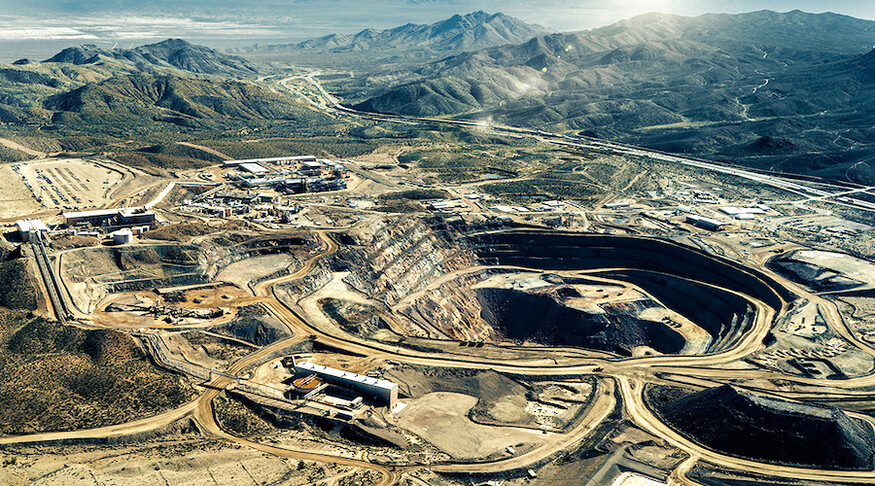
The restricted materials include rare earths that boost magnetism, such as samarium, dysprosium, and terbium. These elements are vital components in precision semiconductor manufacturing tools like lithography and etching machines, directly impacting the equipment’s performance and stability.
The most concerning element is dysprosium, an essential additive for enhancing the high-temperature durability of permanent magnets. China currently controls approximately 90% of the global supply chain for this critical mineral.
Direct Threat to South Korean Manufacturing
The explicit mention of 14nm and 256-layer chip technology is seen by industry analysts as a direct hit on South Korea, which is home to the world’s two largest memory chip makers, Samsung Electronics and SK Hynix.
Semiconductors: For Samsung and SK Hynix, the new controls pose a significant supply chain risk. Although the companies reportedly hold existing stockpiles and have sought to diversify their supply sources due to a long-standing awareness of China’s leverage, the new rules introduce uncertainty. Any equipment component containing Chinese-origin rare earths may now require an individual export approval license, a process that could lead to delivery delays and ultimately disruptions in production line operations. The industry is scrutinizing whether this extends to even minor parts within complex semiconductor equipment.
Automotive and Defense: The impact stretches beyond semiconductors. Dysprosium and other rare earths are also indispensable in the production of electric vehicle (EV) motors and batteries. A long-term supply shortage could severely affect global EV giants Hyundai Motor and Kia, hindering their transition to electric mobility. Furthermore, sectors requiring permanent magnets, such as wind power generation and the defense industry, are also anticipated to face unavoidable repercussions.
Government and Industry Response
In the short term, South Korean semiconductor companies are focused on expanding their rare earth reserves and accelerating efforts to diversify their supply chains away from China. Industry officials suggest that due to past experience with China using rare earths as a geopolitical tool, major firms have already taken pre-emptive measures, making an immediate, sharp shock unlikely.
However, the longer-term strategy is centered on investing heavily in alternative technologies that reduce the reliance on these constrained rare earth minerals.
Meanwhile, the South Korean government is engaging with its Chinese counterpart. Officials from the Ministry of Trade, Industry and Energy confirmed they are using existing dialogue channels to negotiate the specific scope and application of China’s new export control measures. The ministry has stated its commitment to thoroughly analyzing the impact on key industries like automotive and home appliances and is preparing comprehensive countermeasures to safeguard national supply chain security.
The move by Beijing underscores a global shift where critical materials are increasingly becoming a weapon in geopolitical disputes, forcing nations and companies like South Korea to rapidly reassess and build resilience into their deeply integrated global supply chains.
[Copyright (c) Global Economic Times. All Rights Reserved.]