![[등록] 2026-09-01 15:48:31](/support/_updata/banner2/tl181982910_6749.png)


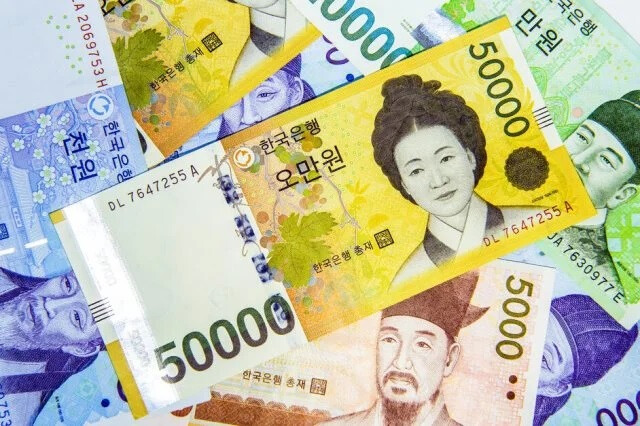
(C) TradingPedia
SEOUL, South Korea — The South Korean won (KRW) has been under severe pressure, with the won-dollar exchange rate soaring to levels not seen in seven months. Last week, the currency jumped into the 1,470 won range, hitting an intraday peak of 1,477.90 won against the US dollar. As experts closely watch for a potential breach of the 1,480 won mark, financial authorities are now accelerating efforts to stabilize the volatile foreign exchange (FX) market.
The central driver of the won’s weakness is a structural imbalance in FX supply and demand, primarily fueled by a massive increase in Korean overseas investment. This translates into persistently high demand for US dollars.
Overseas Investment Drives Dollar Demand
Data from the Bank of Korea (BOK) confirms this trend. As of the end of September, South Korea's External Financial Assets—reflecting Korean entities' investments abroad—grew by $115.8 billion to reach $2.7976 trillion. While External Financial Liabilities also increased, the aggressive pace of overseas asset accumulation by institutions and retail investors continues to push up dollar buying, structurally weakening the won.
This trend is leading to increasingly bearish forecasts. While short-term attention is focused on the 1,480 won threshold, some analysts are now projecting the rate could reach 1,500 won. The NH Futures Research Center has even set an upper-bound forecast of 1,540 won for the won-dollar exchange rate next year.
Key Expert Takeaway: "With an asymmetric supply and demand dynamic becoming entrenched in the foreign exchange market, and no signs of the upward momentum stopping, it is necessary to prepare for the possibility of further short-term appreciation," noted Min Kyung-won, a researcher at Woori Bank.
Government and NPS Unveil Stabilization Efforts
In response to the growing crisis, the South Korean government has pulled the National Pension Service (NPS), the country's largest institutional investor, into the center of its stabilization efforts. The NPS's massive overseas investment portfolio, estimated at over 580 trillion won ($395 billion), has made it the single biggest force influencing the currency market.
To mitigate the dollar-buying pressure stemming from the NPS's foreign allocation, several coordinated measures have been announced:
Four-Party Consultation Body: The Finance Ministry, the Bank of Korea, the NPS, and the Health Ministry (the NPS's supervisor) have established a new working group to coordinate FX stabilization efforts, a move intended to preserve the NPS’s profitability while reducing market volatility.
FX Swap Expansion: Authorities and the NPS are discussing an extension and potential expansion of their FX swap transaction limit, currently set at $65 billion. This mechanism allows the NPS to borrow dollars directly from the BOK's foreign exchange reserves, reducing the fund's need to purchase dollars on the open market.
Foreign Currency Bond Issuance: The government is considering revising pension laws to allow the NPS to issue foreign currency-denominated bonds. Raising foreign currency funds directly would disperse the dollar-buying pressure associated with new overseas investment allocations, a major structural change that would require an amendment to the National Pension Act.
Monitoring Task Force: A new task force has been launched to closely monitor the currency exchange activities of export companies and securities firms, encouraging them to convert their dollar holdings into won to bolster domestic supply.
The recent flurry of announcements, including the establishment of the four-party body and the consideration of drastic legal changes, underscores the government's recognition of the "structural imbalance" and its resolve to prevent the won from breaching psychological and economic crisis levels like the 1,500 won mark. While these measures aim to create a long-term buffer against FX volatility, the market remains on edge, keenly awaiting the announcement of concrete operational details.
[Copyright (c) Global Economic Times. All Rights Reserved.]