![[등록] 2026-09-01 15:48:31](/support/_updata/banner2/tl181982910_6749.png)


(C) Student Edge
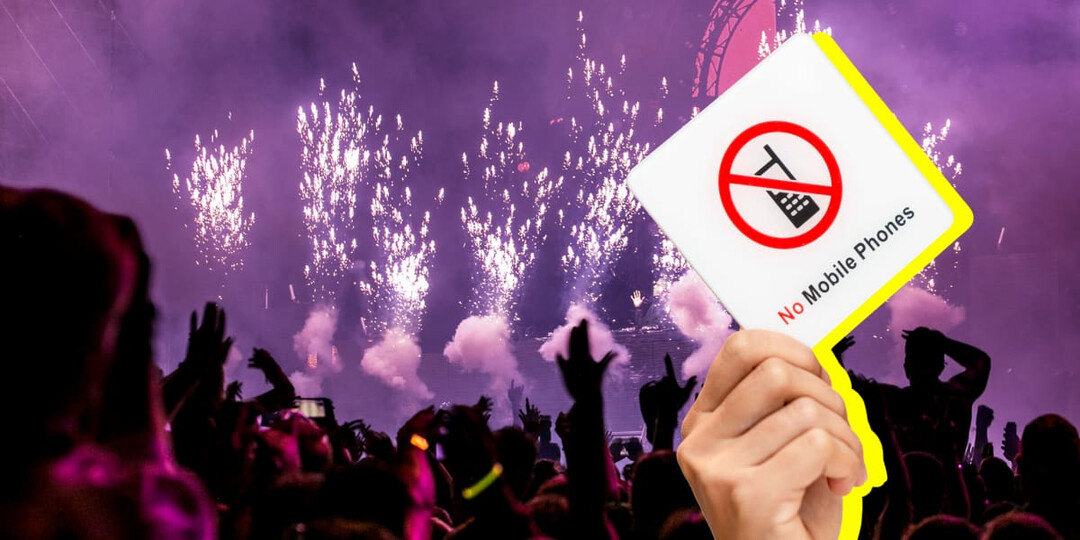
Seoul, Korea – A recent performance by world-renowned pianist Yunchan Lim has once again highlighted the persistent and disruptive issue of mobile phone "kwan-keu" (관크, a neologism combining kwan, meaning observation/viewing, and critical, referring to acts that disturb others' viewing experience) in South Korea's concert halls. The incident, where a YouTube video sound blared from a mobile phone during a high-profile performance, has reignited the debate over effective measures, including the controversial idea of signal jamming.
A Star Performance Disrupted
The incident occurred on December 4th at the Seoul Arts Center Concert Hall during the Santa Cecilia Orchestra's concert featuring Yunchan Lim. During a quiet moment of Ravel's Piano Concerto in G major, the sudden sound of a loud YouTube video from the audience shattered the concentration of both the performer and the spectators. Eyewitnesses noted that Lim glanced towards the section where the noise originated.
Following the disruption, the organizer, Vincero, took the unusual step of issuing a second, more specific announcement before the subsequent performance of the Philharmonia Orchestra, urging audiences to "check their mobile phones once again" and turn them off, emphasizing the audience's role as the "third performer." Vincero plans to implement a dual announcement system for all future concerts.
"The recent incident during the Ravel concerto shows how unpredictable sounds from highly-functional smartphones—not just simple ringtones—can ruin a performance," stated a concert hall official.
The Rise of Unpredictable Noise
Despite a culture of high concentration often dubbed 'corpse viewing' (시체관극, remaining motionless and silent), mobile phone disturbances persist. The sophisticated functions of modern smartphones—including AI-driven features that can spontaneously announce song titles, or the accidental playing of apps—have amplified the problem beyond simple ringtones. Reports have included incidents ranging from "phone fireflies" (illuminated screens in the dark) to the accidental playing of Buddhist chants during a Seoul Philharmonic Orchestra concert last summer.
Signal Jamming: A Legal and Safety Dilemma
In response to the frequent disruptions, the idea of "wireless signal jamming" in concert venues has resurfaced. Countries like Japan, where venues such as the Tokyo Suntory Hall operate a "mobile phone suppression device" with permission from the Ministry of Internal Affairs and Communications, offer a model.
However, attempts to introduce jammers in Korea, such as a trial at the National Theater and Seoul Arts Center in the early 2000s, were quickly scrapped by 2003 due to violations of the Radio Waves Act and serious public safety concerns. Korean law mandates that no device shall interfere with essential communications, including emergency disaster text messages. Furthermore, critics worry that jamming would impede the development of future performance services like digital program books and real-time subtitles.
Violations of the law regarding the unauthorized installation of jamming devices carry severe penalties. Even in Japan, unauthorized use can lead to up to five years of imprisonment or fines up to $250$ million yen (approximately $2.3$ million won).
Temporary Solutions and 'Phone-Free' Events
Since signal jamming is legally restricted, venues and production companies are relying on enhanced guidance as a stopgap measure. This includes:
Dual Announcements: Implementing announcements before both the first and second acts.
Enhanced Attendant Guidance: Stepping up in-seat instructions, especially for concerts featuring superstar performers like Lim and Seong-Jin Cho, which tend to draw a larger number of first-time or corporate-invited guests.
A growing number of productions are adopting 'phone-free' policies. For example, the immersive show Sleep No More requires audience members to power off their phones and seal them in a special "phone bag" with a locking mechanism upon entry. Similarly, the Swedish metal band Ghost enforces a 'Phone-Free Concert' policy for its world tour.
The core challenge remains the audience's willingness to comply. A concert planner cautioned that even switching to airplane mode is not foolproof, as alarms—often set by middle-aged and senior attendees for medication timing—still sound. "We implore attendees to at least check their alarm settings," the planner urged.
As mobile phones become increasingly integrated into daily life, finding a balance between technological convenience and the sanctity of the live performance experience remains a tough challenge for Korean concert halls.
[Copyright (c) Global Economic Times. All Rights Reserved.]