![[등록] 2026-09-01 15:48:31](/support/_updata/banner2/tl181982910_6749.png)


Washington D.C., USA – A recent study has shed light on the alarming impact of last year's powerful G5 solar storm on autonomous agricultural tractors, revealing significant deviations in their GPS-guided movements. The research, published this month in "JGR Space Physics" by a team from Boston University, underscores a critical vulnerability in modern, technology-dependent farming practices and raises concerns about future solar events.
The May 2024 Geomagnetic Storm: A Wake-Up Call
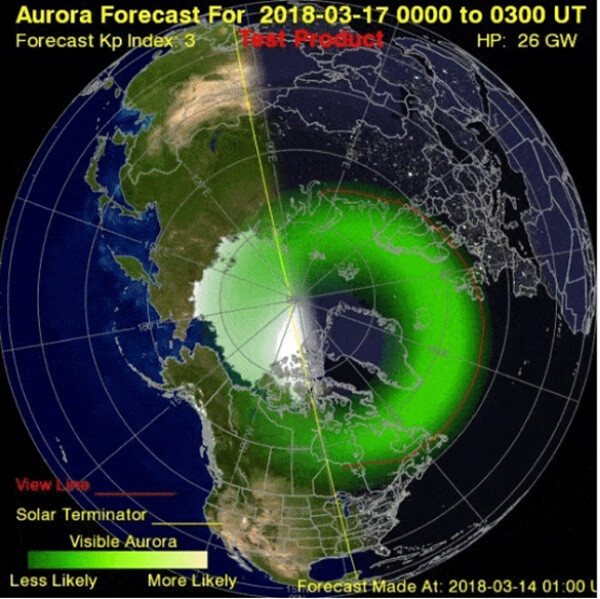
On May 10, 2024, the Earth experienced a G5-class geomagnetic storm, the most intense in over two decades since 2003. This extreme space weather event, driven by a surge of high-energy particles—electrons and protons—ejected from the sun's surface during a solar flare, caused widespread disturbances to Earth's magnetosphere. This disruption, known as a geomagnetic storm, had a direct and immediate effect on Global Positioning Systems (GPS) relied upon by a burgeoning fleet of autonomous farm machinery.
Autonomous Tractors Veer Off Course
The study revealed that during the G5 storm, GPS-guided tractors in the central United States experienced positional errors of up to 70 meters (approximately 230 feet) from their actual locations. Tractors in the southwestern U.S. also saw significant errors, with deviations of up to 20 meters (about 65 feet). Such inaccuracies are catastrophic for precision agriculture, where GPS systems typically guide tractors with centimeter-level accuracy for tasks like planting, fertilizing, and harvesting. Farmers reported their tractors acting erratically, some describing them as "possessed," and were forced to halt operations, causing substantial delays and estimated losses exceeding $500 million for American farmers.
The widespread adoption of GPS-equipped tractors in the U.S., with over half of American farmers now utilizing them, highlights the severity of this issue. These autonomous vehicles are designed to work independently, reducing labor costs and enabling operations even at night. The incident serves as a stark reminder of the interconnectedness of advanced technology and natural phenomena. South Korea is also increasingly adopting such GPS-guided agricultural machinery, making these findings particularly relevant globally.
The Ionosphere's Turbulent Role
The direct cause of these navigational mishaps was identified as severe disturbances within the Earth's ionosphere. This layer of electrically charged particles, stretching from approximately 50 to 1000 kilometers (30 to 620 miles) above the Earth's surface, plays a crucial role in transmitting GPS signals. The intense geomagnetic storm churned the ionosphere, creating "atmospheric waves" or irregularities. These disturbances caused GPS signals beamed from satellites in Earth's orbit to refract or scatter, preventing them from reaching the ground-based tractor receivers accurately. This unprecedented level of positional error underscores the vulnerability of single-frequency GPS receivers, which are more susceptible to ionospheric interference compared to newer, multi-frequency systems.
The Ongoing Threat and Future Mitigation
Given that solar storms are natural and recurrent phenomena, the implications for modern agriculture and other GPS-reliant industries are profound. The Boston University researchers emphasize the urgent need for enhanced GPS signal processing technologies. They advocate for the development of methods that can continuously monitor and compensate for real-time changes in the ionosphere, thereby improving the resilience of navigation systems.
Mitigation strategies being explored include:
Improved Receiver Design and Signal Processing: Developing more robust GPS receivers capable of better detecting and rejecting interference, perhaps through adaptive filtering and advanced signal processing algorithms. Newer dual-frequency receivers are generally more resilient.
Augmentation Systems: Expanding the use of ground-based augmentation systems (GBAS) like the Wide Area Augmentation System (WAAS) or Real-Time Kinematic (RTK) networks. These systems use a network of ground reference stations to provide localized corrections to GPS signals, enhancing accuracy and reliability.
Alternative Navigation Technologies: Integrating alternative navigation systems such as inertial navigation units (IMUs) with optical gyroscopes. These systems can provide a reliable backup, offering dead-reckoning capabilities when GPS signals are degraded or lost.
Space Weather Forecasting and Awareness: Improving the accuracy and timeliness of space weather forecasts allows for proactive measures, such as pausing operations of highly sensitive autonomous equipment during predicted high-intensity solar storms.
The May 2024 solar storm served as a powerful reminder that while technological advancements bring immense benefits, they also introduce new vulnerabilities to natural phenomena. As reliance on autonomous systems continues to grow across various sectors, investing in resilient navigation and communication infrastructure becomes paramount to safeguard against the unpredictable forces of space weather.
[Copyright (c) Global Economic Times. All Rights Reserved.]