• 2026.05.09 (Sat)
  • All articles
  • LOGIN
  • JOIN
Global Economic Times
fashionrunwayshow2026
  • Synthesis
  • World
  • Business
  • Industry
  • ICT
  • Distribution Economy
  • Well+Being
  • Travel
  • Eco-News
  • Education
  • Korean Wave News
  • Opinion
  • Arts&Culture
  • Sports
  • People & Life
    • International Student Report
    • With Ambassador
  • Column
    • Cho Kijo Column
    • Cherry Garden Story
    • Ko Yong-chul Column
    • Kim Seul-Ong Column
    • Lee Yeon-sil Column
  • Photo News
  • New Book Guide
MENU
 
Home > Synthesis

Korean Football Fields Under Scrutiny Amidst Grass Quality Concerns

ONLINE TEAM / Updated : 2024-12-04 09:27:42
  • -
  • +
  • Print


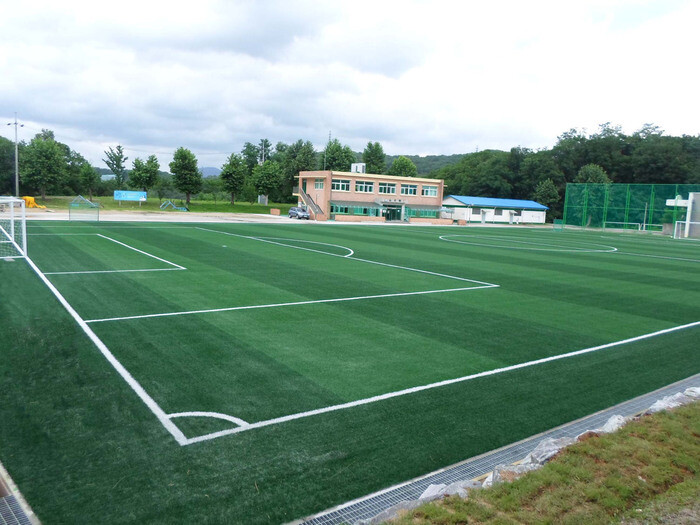
Seoul, South Korea – The state of football fields in South Korea has come under intense scrutiny following widespread complaints about poor grass quality. Experts from various sectors recently gathered to discuss the underlying issues and potential solutions.

The roundtable discussion revealed a complex interplay of factors contributing to the deteriorating condition of football pitches. Extreme weather conditions, particularly heavy rainfall and scorching heat, have taken a significant toll on the grass, especially the cool-season grasses commonly used in Korean stadiums. Overuse of fields, combined with inadequate maintenance practices, has further exacerbated the problem.

Participants stressed the need for a more collaborative approach to field management. Football clubs, local governments, and field maintenance companies must work together to ensure optimal conditions for players. A standardized evaluation system, similar to FIFA's, was proposed to provide a more objective assessment of field quality. This would allow for better allocation of resources and the implementation of stricter quality standards.

The use of artificial turf was also discussed as a potential solution, particularly in areas prone to extreme weather. While there are concerns about the impact of artificial turf on player injuries, experts argued that advancements in technology have made modern artificial turf safer and more realistic.

"The quality of our football fields directly impacts the performance of our players," said [Name of footballer], who has played on both natural and artificial grass. "It's time we invest in better facilities and adopt international standards."

[Name of researcher] from the Korea Construction and Living Environment Institute emphasized the importance of scientific data in assessing field quality. "We need to move beyond subjective evaluations and establish objective criteria for field maintenance," he said.

As Korean football continues to grow in popularity, the demand for high-quality playing surfaces is expected to increase. By implementing the recommendations put forth by experts, South Korea can create world-class football facilities that meet the needs of both players and fans.

[Copyright (c) Global Economic Times. All Rights Reserved.]

  • #globaleconomictimes
  • #koyongchul
  • #cherrylee
  • #seoulkorea
  • #periodicoeconomico
  • #글로벌이코노믹타임즈
  • #GET
  • #GETtv
  • #liderdel
ONLINE TEAM
ONLINE TEAM
Reporter Page

Popular articles

  • MAFRA Unveils Success in Integrated Rural Care: Synergizing Social Farming and Medical Services

I like it
Share
  • Facebook
  • X
  • Kakaotalk
  • LINE
  • BAND
  • NAVER
  • https://www.globaleconomictimes.kr/article/1065572825881237 Copy URL copied.
Comments >

Comments 0

Weekly Hot Issue

  • Samsung Electronics Shifts Strategy in China: Moving from Hardware Sales to Platform-Based Business
  • Banking War 2.0: South Korean Banks Race to Transition into 'AI-First' Institutions
  • Tesla Model Y Becomes First to Pass Grueling New U.S. Autonomous Safety Tests
  • Celltrion’s Zymfentra Sees Explosive 300% Growth, Hits Record Quarterly Prescriptions in the U.S.
  • BMW Korea Ignites May with Exclusive 9-Model Online Limited Edition Lineup
  • Hyundai Mobis Completes Independent EV 'Heart' Lineup: A Major Leap Toward Global Leadership in Power Electric Systems

Most Viewed

1
Iran Imposes Transit Fees on Strait of Hormuz Amid Escalating Maritime Tensions
2
Korea and Vietnam Forge Strategic Partnership in Science, Technology, and Innovation
3
80% of Enterprises Hit by 'AI Agent Anomalies': SailPoint Calls for Integrated Identity Governance
4
Kurly Abandons 'All-Paper' Packaging Strategy Amid Rising Cost Pressures
5
Tradition Meets the Public: Chungju’s Gugak Busking
광고문의
임시1
임시3
임시2

Hot Issue

Tensions Flare in Strait of Hormuz: U.S.-Iran Clashes Threaten Fragile Truce

Tesla Model Y Becomes First to Pass Grueling New U.S. Autonomous Safety Tests

U.S. Trade Court Strikes Down Trump’s ‘Global 10% Tariff,’ Citing Executive Overreach

Hyundai Motor Group Bets $700 Million on Mexico Amid Trade Policy Volatility

Fashion Runway Show 2026

Global Economic Times
korocamia@naver.com
CEO : LEE YEON-SIL
Publisher : KO YONG-CHUL
Registration number : Seoul, A55681
Registration Date : 2024-10-24
Youth Protection Manager: KO YONG-CHUL
Singapore Headquarters
5A Woodlands Road #11-34 The Tennery. S'677728
Korean Branch
Phone : +82(0)10 4724 5264
#304, 6 Nonhyeon-ro 111-gil, Gangnam-gu, Seoul
Copyright © Global Economic Times All Rights Reserved
  • 에이펙2025
  • APEC2025가이드북TV
  • 반달곰 프로젝트
Search
Category
  • All articles
  • Synthesis
  • World
  • Business
  • Industry
  • ICT
  • Distribution Economy
  • Well+Being
  • Travel
  • Eco-News
  • Education
  • Korean Wave News
  • Opinion
  • Arts&Culture
  • Sports
  • People & Life 
    • 전체
    • International Student Report
    • With Ambassador
  • Column 
    • 전체
    • Cho Kijo Column
    • Cherry Garden Story
    • Ko Yong-chul Column
    • Kim Seul-Ong Column
    • Lee Yeon-sil Column
  • Photo News
  • New Book Guide
  • Multicultural News
  • Jobs & Workers