![[등록] 2026-09-01 15:48:31](/support/_updata/banner2/tl181982910_6749.png)



In recent years, a profound paradigm shift has been underway in how South Korea’s younger generations approach their financial futures. According to recent data compiled from Statistics Korea’s National Statistical Office (KOSIS), the proportion of individuals in their 20s and 30s choosing stocks, bonds, and other financial assets as their primary retirement preparation tools has experienced a dramatic surge. While traditional safety nets like the National Pension and bank savings products remain dominant, the Millennial and Generation Z demographics are increasingly embracing market-based risks to secure their long-term financial stability.
Statistical records indicate that last year, approximately 12.8 percent of people in their 20s (aged 19 to 29) selected stocks and bonds as a method for retirement planning. When compared to 2011—the baseline year for comparable official demographic tracking—when only 2.6 percent of the same age group relied on these assets, this represents an explosive roughly fivefold increase over a span of 14 years. A strikingly similar trajectory was observed among those in their 30s, where the adoption rate jumped from 2.8 percent in 2011 to 13.4 percent last year, also marking a roughly fivefold expansion. Roughly one in eight young adults in these cohorts now views the capital markets as an indispensable vehicle for weathering their post-retirement years.
This behavioral transformation gained immense momentum following the widespread retail investment craze colloquially known as the "Donghak Ant Movement," which swept across the country around 2021. Before this epoch, in 2019, participation rates for individuals in their 20s and 30s languished at a meager 1.4 percent and 2.7 percent, respectively. However, by 2021, those figures spiked vertically to 11.6 percent and 11.3 percent, establishing a high plateau of market engagement that has successfully sustained its upward momentum through subsequent years.
While middle-aged and older demographics have also demonstrated a rising interest in utilizing equities and fixed-income securities for post-retirement security, the velocity and magnitude of their adoption have been notably more moderate. For instance, individuals in their 40s saw their utilization rate increase from 2.4 percent in 2011 to 8.0 percent last year. Meanwhile, cohorts aged 50 and above registered more modest bumps, shifting from 2.4 percent to 6.0 percent for those in their 50s, and from 1.4 percent to 3.1 percent for senior citizens aged 60 and above. Interestingly, participation among forty-somethings actually experienced a minor regression compared to its 2021 peak of 8.2 percent, underscoring how aggressive youth participation stands out as the primary catalyst in this structural trend.
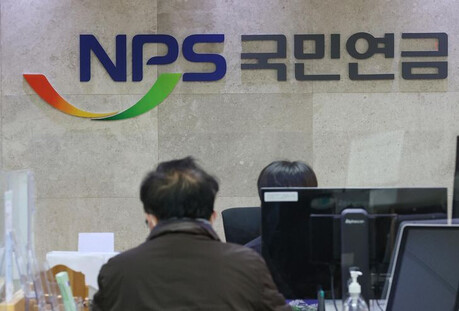
Despite the rapid ascent of equity and bond investments, conventional anchors continue to form the foundation of South Korea's retirement landscape. Across the general population aged 19 and older, the National Pension remains the absolute pillar of retirement security, embraced by 71.0 percent of citizens, while standard bank deposits, savings accounts, and insurance products account for 44.1 percent. Young adults are no exception to this overarching baseline: among those in their 20s, 69.0 percent depend on the National Pension and 45.9 percent rely on bank savings, while parallel figures for thirty-somethings stand at 68.7 percent and 41.2 percent, respectively.
Financial analysts and market observers attribute this structural evolution among South Korea's youth to a combination of persistent macroeconomic pressures and changing perceptions of wealth accumulation. With traditional employment structures evolving, historical low-interest rate regimes making conventional deposit yields insufficient to beat inflation, and skyrocketing real estate prices restricting access to traditional property investments, younger generations find themselves compelled to seek alternative streams of return. By integrating active capital market participation early in life, today’s young South Koreans are redefining the baseline of retirement preparedness, signaling a permanent departure from the risk-averse strategies of past generations.
[Copyright (c) Global Economic Times. All Rights Reserved.]